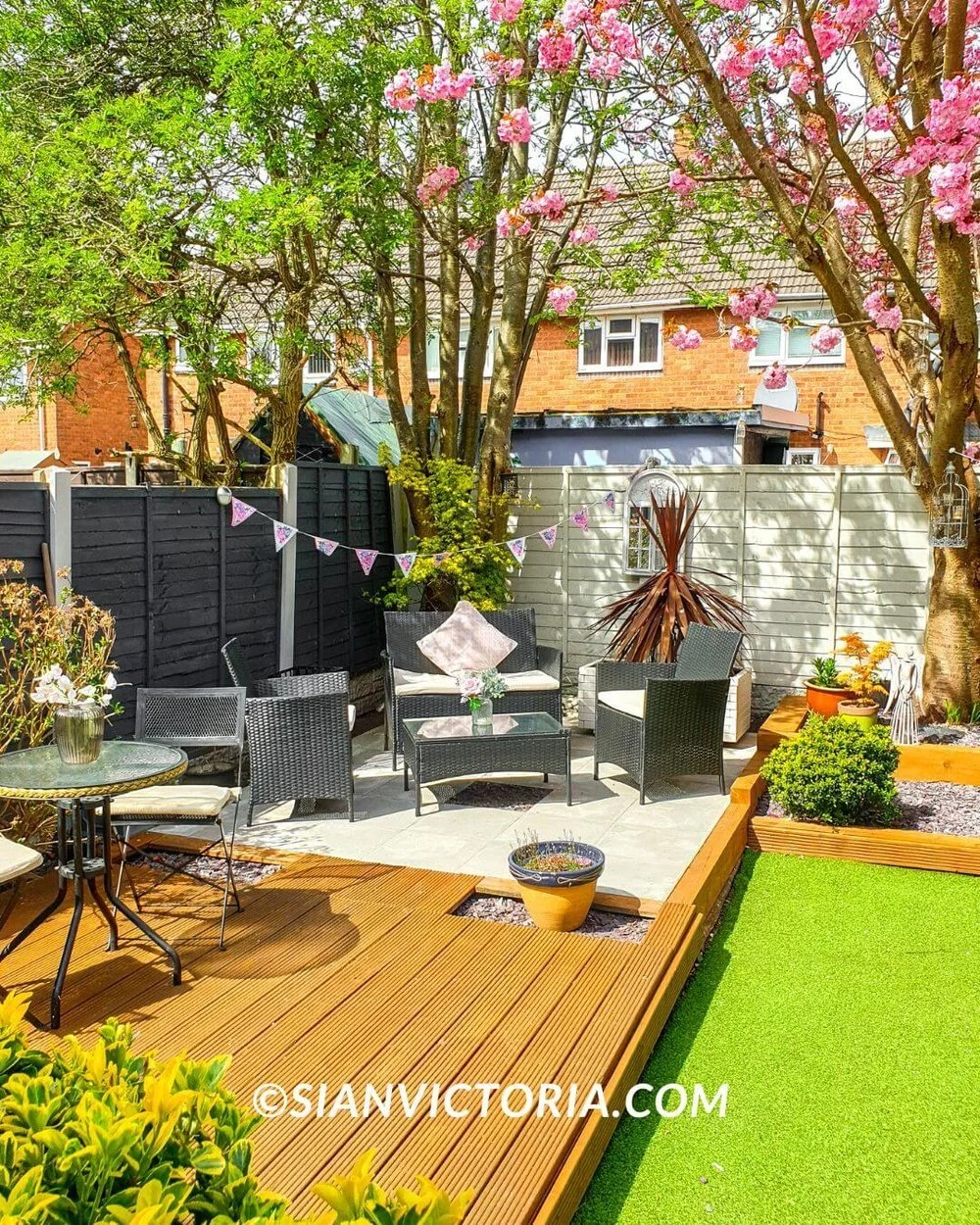
10 Small Garden Ideas to Make Your Outdoor Space Look Bigger
Even a tiny garden can feel spacious and inviting if you think carefully about how you use it. Whether you're working with a compact patio, a narrow strip of lawn, or a modest courtyard, a few clever choices can help you get far more out of the space you've got. The trick isn't to cram every inch full of stuff; it's to make the garden feel open, balanced, and easy to wander through.
1. Keep the Layout Simple
Complicated layouts tend to make small gardens feel busier than they need to be. It's usually better to stick with clear lines and just a handful of distinct areas.
You might have a seating spot, a bit of planting, and a straightforward path linking the house to the far end of the garden. Try not to squeeze in too many separate zones, unless there's genuinely enough room for each to feel comfortable rather than cramped.
Sticking to the same materials throughout also helps things feel joined up. If you use the same paving, timber or gravel in a few different spots, the garden reads as one connected space rather than a patchwork of smaller ones. Well-placed garden borders can be handy here too, framing a lawn or path and adding a bit of colour without boxing the space in; just try to keep the middle of the garden fairly open so it doesn't start to feel cluttered.
2. Use Vertical Space
When floor space is tight, look up instead. Fences, walls and trellises are all opportunities for planting that don't eat into the ground you're standing on. Climbers can take the edge off a bare fence, while hanging baskets and wall-mounted pots add interest at different heights. A bit of shelving works nicely for smaller pots or a few herbs, too.
Planting upwards draws the eye with it, which tends to make a garden feel taller and more generous than it actually is. It's especially useful in courtyards and narrow plots, where every bit of ground really counts.
3. Choose Furniture Carefully
Big, bulky furniture can swallow a small garden whole. It's worth hunting for pieces that actually suit the scale of the space rather than just what looks nice in a shop. A neat bistro set often works better on a small patio than a full table-and-chairs set, and a slim bench against a wall takes up less room than several separate chairs would. Folding furniture is worth considering too, if you'd like the option of clearing the space entirely when it's not in use.
Furniture with slender legs helps as well; you can see more of the ground underneath, which makes everything feel a touch lighter and less hemmed in.
4. Create a Clear Focal Point
Give your eye somewhere to land. In a small garden, that could be a large planter, a nicely shaped tree, a bench, or some kind of feature at the far end of a path.
Put something eye-catching towards the back of the garden, and you'll find people's attention travels through the whole space to reach it, which has a funny way of making the garden feel longer than it really is. It's best to keep the focal point fairly simple rather than crowding it with lots of other things competing for attention. One good feature usually beats several fussy ones.
5. Use Curves to Create Movement
Straight lines have their place, but a gentle curve can soften a small garden and make it feel more relaxed. A path that curves slightly, or a rounded planting bed, encourages the eye to move through the garden bit by bit rather than taking it all in at a glance. That sense of gradual discovery can make a space feel bigger than its measurements suggest. You don't need anything dramatic; even a subtle change to the shape of a lawn or border can soften the whole layout.

6. Keep Planting Under Control
Plants bring a garden to life, but too much variety can quickly tip a small space into looking messy. It often works better to pick a fairly limited range of plants and repeat them around the garden. That repetition brings a sense of calm and order that a hundred different species rarely manages.
Layering by height adds depth without adding chaos: lower plants towards the front, taller ones behind. And it's worth thinking ahead to how big each plant will eventually get; something modest now might swamp a small garden in a couple of years.
7. Make Use of Mirrors
An outdoor mirror, positioned well, can genuinely trick the eye into thinking a garden goes further than it does, particularly useful in enclosed courtyards or spaces with tall walls. Tucking a mirror in among some planting, rather than leaving it starkly on show, makes the reflection feel more natural. Just make sure whatever you use is designed to cope with the weather and is fixed securely.
8. Keep Colours Consistent
A tighter colour palette tends to make a small garden feel more pulled together, and that goes for furniture, fencing and pots, not just the flowers. Lighter tones can lift a gloomy corner, and repeating similar shades throughout the garden gives everything a sense of continuity. If you love bold colour, you don't have to give it up entirely; just pick two or three shades and use them again and again rather than scattering lots of unrelated tones about.
9. Avoid Overfilling the Space
Probably the most important rule of all: know when to stop. It's tempting to keep adding pots, ornaments and furniture, but leaving some areas empty often has more impact than filling them. Open space gives everything else room to breathe and makes the garden easier to move around in. It also just feels calmer. Having a clear-out every so often, getting rid of things you no longer use, stops the space creeping back towards clutter.
10. Make Every Part of the Garden Work Harder
Small gardens do best when things pull double duty. A storage bench gives you seating and somewhere to stash cushions or tools; raised beds with wide edges can double up as informal seats. Large pots can offer planting and a bit of screening at once, and a folding table means you can free up space whenever you need it.
None of this requires a big budget or a total redesign, just a bit of thought about layout, planting and furniture. Get those choices right and even the smallest garden can end up feeling open, welcoming and genuinely enjoyable to spend time in.