How to Support Fairtrade by Making One Simple Swap
*AD: In collaboration with Co-op
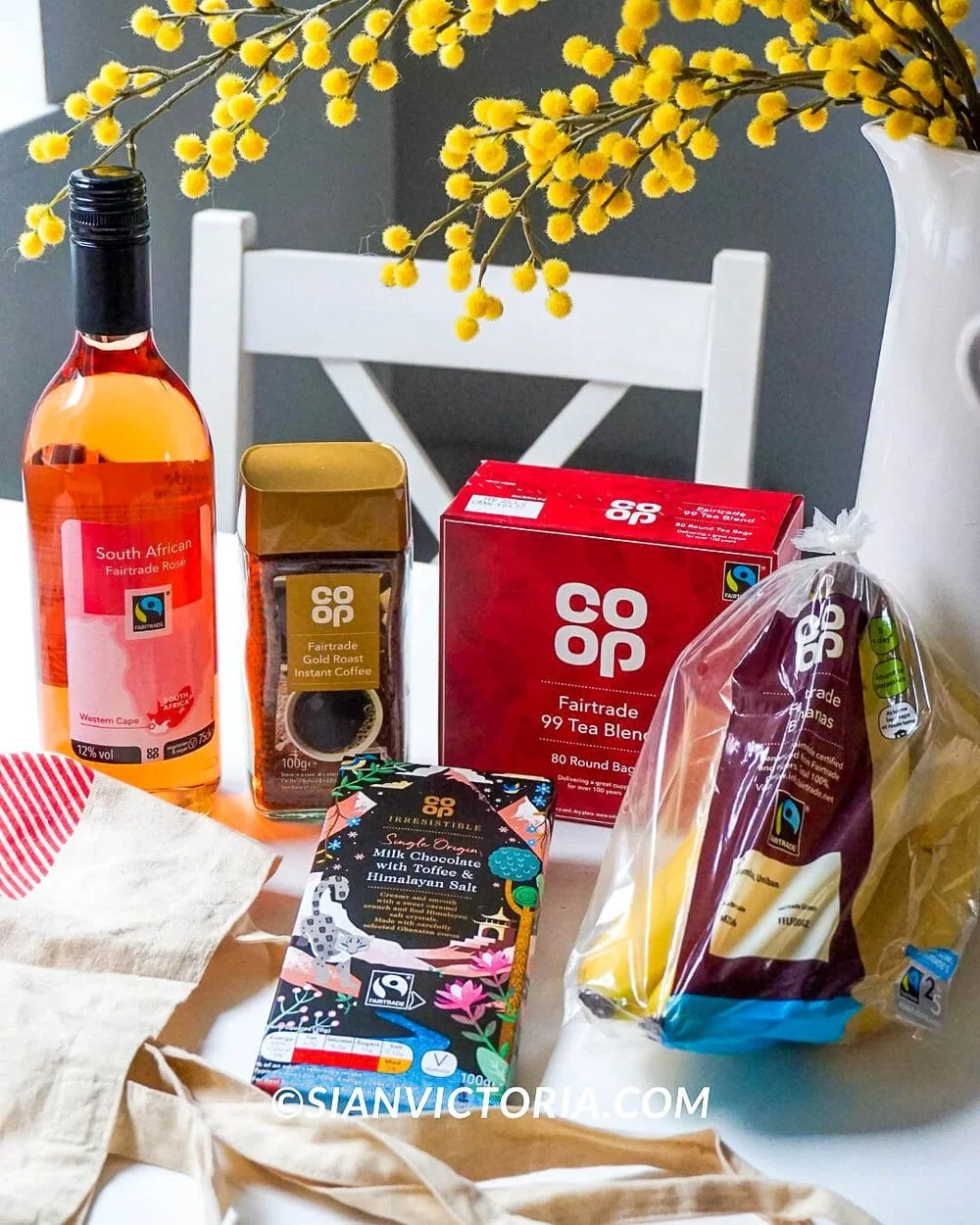
Sian Victoria © - Co-op Fairtrade food & drink shopping
How to shop more sustainable
Food is a necessity that most of us take for granted. As long as our kitchen cupboards are stocked and there’s food for us to eat three times a day than we give little thought about the journey of the products we eat, where it came from and the people involved in the process of getting food onto our plate to enjoy.
Most of us are completely unaware that some of our most regular food purchases such as coffee, fruit, vegetables, chocolate, honey, tea, wine, sugar, rice, nuts and seed oils come from developing countries where people work long hours in hot climates uphill growing and collecting natural food ingredients to deal with the demand from Western countries like ours.
For us to indulge in a bar of chocolate a typical cocoa farmer in West Africa will have to work strenuously all day for just 74p. Yet a living wage in West Africa is £1.86, so as you can imagine hard-working Mothers and Fathers do not earn enough to provide the necessities for their families. That’s why Co-op Midcounties has been supporting Fairtrade for over 25 years and is continuously creating awareness on the importance of choosing Fairtrade products.
This October Co-op Midcounties is asking customers to simply swap at least one product in their basket for a Fairtrade alternative in store. By using #1Swap you can let others know why you are getting involved so that together we can make a difference.

Sian Victoria © - Crunchy peanut butter on toast with bananas & coffee
What is Fairtrade?
A product that has the Fairtrade certification logo means that the companies involved have paid a sustainable fair price to the producers who grow and collect raw ingredients so that they can extend their crop and improve their position and the lives of local people.
Being a certified Fairtrade producer in the developing world means they must comply with the Fairtrade standards by providing decent working conditions for their farmers and workers and pay them a fair living wage.
Why should we buy Fairtrade?
We the consumers who crave the luxuries of chocolate, wine and coffee on a regular basis means that we have the power to change the demand for certain types of products.
By simply shopping with a conscience and making small changes to our shopping baskets we can improve the lives of hardworking families in developing countries that are less fortunate so that they can earn a living wage, see their local communities improve and overall have a greater opportunity to make a better future for themselves.
All this can be achieved by simply choosing a Fairtrade product over an alternative which in time could encourage more companies to pay a fair price to food producers.

Sian Victoria © - Coop Fairtrade 99 tea blend
Since turning vegetarian five years ago I’ve become a lot more aware and educated on the ingredients in my food and how it’s made which has led me to purchase a lot of more ethical food, beauty and fashion products with the majority of my shopping choices being vegan. Since I’m always checking the ingredients and looking at labels to ensure its cruelty-free and not tested on animals.
I must admit looking for the Fairtrade logo is something I can forget to do. Yet, trying to find an animal cruelty-free stamp is equally important as a Fairtrade stamp for the reassurance that no humans involved in the making of the product were subject to unethical working or living conditions.
Like most parts of England, you’ll conveniently find a Coop store either in town or not too far from home. Mine is in walking distance around the corner from my house, so I do find myself popping in for chocolate, coffee, tea bags, wine and bananas as well as other items when needed so I do tend to buy Fairtrade coffee, bananas and chocolate often without consciously giving it much thought.
So, from now I pledge to continue buying Fairtrade products but to also make an effort to look out for the logo design and buy the Fairtrade alternative on other items too that a lot of us may not even realise can be bought Fairtrade such as flowers and cotton wool.

Sian Victoria © - Coop Fairtrade Rose and Coop Fairtrade Chocolate
Most people (I included at one point) have the perception that Fairtrade products are going to be a lot more expensive. But if you take a moment to look at the alternatives on the shelf next to the Fairtrade product, you’ll find that this isn’t always the case.
For example, the Coop Fairtrade Gold Roast Instant Coffee is £2.29 for 100g whereas a branded Gold blend alternative is £4.59 for the same quantity and as I’ve tried it before there really isn’t much difference in the quality either.
To conclude
So, whether the Fairtrade product is cheaper or costs a little extra, for instance say there’s a 20p difference. Is adding 20p on to your shopping bill really going to affect you? Just think of it as a good deed that will make a positive impact to the lives of those in developing countries and a way to be more sustainable.
Co-op Midcounties has been leading the way the past 25 years when it comes to Fairtrade products. They were amongst the first to sell Fairtrade bananas and are the largest seller of Fairtrade wines in the world and all their coffee, chocolate and cocoa-based products are Fairtrade.
So, if we all pledge to make at least #1Swap in our baskets for a Fairtrade alternative than together we can make a difference.


