17 Self-care Tips to Improve Mental Well-being

Sian Victoria © - Exercise at home, Scandinavian home interiors
How to care for health during isolation
Like many, fluctuating mental health is something I’ve struggled with all my life. Our mental health can be negatively impacted by certain triggers such as poor sleep, stressful situations at work or financially. Feeling insecure about how we look or self-doubting what we can achieve, genetics, medication, heartbreak from an ending of a relationship, dealing with a traumatic experience, living with a disability, the loss of a loved one, the fear of missing out and not having what others the same age as you have, and the many types of bullying such as physical, cyber, sexual or prejudicial.
Our mental health can be affected by any of these and many more or just be a state of mind that is difficult to explain or figure out the root cause. Everyone’s different and we all deal with things in different ways.
For some a person’s poor mental state may be evident whereas for others you may think they are perfectly fine, however, they may just be better at hiding the many symptoms of depression and anxiety or have little awareness of spotting the signs.

Sian Victoria © - Scandi style bedroom
I’ve never felt comfortable talking about my mental health struggles. I discussed one cause in my 2015 post on why you should remove negativity from your life and have previously written similar posts to this in my slow living tips to improve wellbeing.
But I feel like I need to start talking about it more. Especially how so many people are suffering from poor mental health due to living in a pandemic world and having our lives suddenly turned upside down.
If you’ve suffered from your mental health for some time, you’ll know that it fluctuates. One day you can feel great and you can manage to feel ‘normal’ going about your everyday life. Yet, the next day you can feel like you just want to close yourself off from the world and the simplest things can be a struggle, like taking a shower, getting work done and cleaning or making food. This state of mind can last for days or months.
So, I wanted to share how I deal with having a ‘negative episode’ and the positive life changes I’ve made that can improve how I’m feeling. Whether you’ve suffered from mental health long term or are trying to find positive ways to improve how you feel during mandatory quarantine or isolation by choice than incorporating some of these tips should help improve how you feel.
1. Remove negative people from your life

Sian Victoria © - Using mobile, mid-century living room
Over the years I’ve had to remove negative people from my life, mostly old school friends that I’ve outgrown, who tried to bring me down and stop me from being myself and progressing in life. There are also family members who majorly affect my health.
However, it can be a lot harder to block them out. But I feel that restricting your time with them and what information you share helps so that they can’t use anything against you to reply negatively with.
There are also negative relationships that need to end if you are unhappy. For instance, if your living with someone and you are having to walk on eggshells being careful with what you say to prevent a reaction or dread the thought of them coming home and spending time with them.
This means the relationship isn’t healthy and you need to end it for your mental-wellbeing because you deserve happiness and someone that you look forward to spending time with and who can naturally make you smile. I’ve done a post on the importance and signs of a healthy relationship.
You need to clarify in your mind the difference between am I not wanting to spend time with certain people because of their negative personality that brings you down triggering your mental health or are they the root cause of it. Or is it that you just generally can’t stand being around anyone.
Either way, you need to be Intune with your emotions when you are around people to figure thing’s out and make the decision on whether you need to remove people from your life. It may seem harsh, but you need to put yourself first in situations like this. If they are making you ill, then they aren’t worth having in your life because they don’t care how they are making you feel.
In some cases, they may be negative towards you or everyone because they are unhappy with their own life, so if that could be the case than communication is key.
2. Remove negative media from your feed

Sian Victoria © - Photo collage board
Just like removing people from your life you also need to remove negative media from your life if you find yourself depressed every time you switch on the news or scroll your Twitter news feed. At the start of the pandemic, I was spending hours every day, reading news articles, comments, watching videos and seeing distressing photos and conspiracy theories posted on Twitter and Facebook.
It was the last thing I would do at night and the first thing I’d look at in the morning. My alarm would go off at 8 am and somehow it would be past 10 am when I eventually physically got myself out of bed. I’d be up until 3 am most nights-mornings too, voluntarily making myself depressed seeing what’s happening in the world.
Before the pandemic, I would never go on Twitter to read the highlights or watch the news. It took me almost four months to realise I need to stop this bad habit as I’m voluntarily upsetting myself every time, I click the app and it doesn’t help that everything we do is tracked.
When I finally deleted the Twitter app and ‘hid’ Facebook from my home screen (because those guys won’t let you delete the app!) I’d then find the news articles on my Chrome search feed full of negativity, so there was no escaping. Now that I’ve cleaned my cookies it’s not too bad.
3. Unfollow influencers or change how you feel into a positive

Sian Victoria © - Waiting at train station using mobile
Although it's not just the news feeds that can affect our mental health. It can also be the celebrities, bloggers and influencers we follow too. I choose not to follow celebrities as I don’t watch TV nowadays and the influencers, I follow are mostly local to me that I know in the real-world. I also follow followers who have been supportive of my content over the past 10 years.
If following the 'picture perfect' lives of a celebrity, blogger or influencer makes you feel rubbish about yourself and your own life than you either need to transform this negative emotion into a positive one by saying to yourself how can I look, live or aspire to be like that person by making healthy changes in my own life to feel better about myself.
For example, do they ‘appear’ to be successful? Let them be your inspiration to achieve your success. Do they have the ‘perfect body’ and make you feel ‘ugly’ or ‘unfashionable’? Don’t be fooled by what you see. Most of these online personalities use beautifying apps, they rarely have to pay for the experiences or clothing you wish you could afford to buy, some go as far as hiring rooms made to look like private jets or just completely photoshop themselves into amazing photos all together and bear in mind anyone can exaggerate their success online.
They’ve curated a feed in a way that you may assume they have the ‘best lives ever’. I’m guilty of it myself. My life is far from perfect, my feed is about sharing experiences I’ve had and encouraging people to get out and live their lives.
Yet, I don’t share my everyday reality of being at my desk for 8-18 hours a day grinding. I choose to hide my struggles and negative emotions from my feed as I want it to be a happy place with positive memories. My blog mantra has always been ‘dare to live the life you’ve always wanted’. I’m working on myself every day so that I can, and I want to encourage people to do the same.
Alternatively, unfollow these personalities and search for more relatable individuals that bring you up, make you laugh, aren’t self-centred and share useful and informative content and who create a positive community that you can feel a part of. This can help you turn your feed into a positive place that inspires you in another way.
I try to avoid the accounts that share a picture-perfect photo with an effortless quote taken from the web as I feel that these materialistic personalities are just about ‘look at me’ and are not offering any real value to the audience other than making them feel negatively about themselves.
For instance, rather than following people that give me FOMO I have a personal account where I follow environmental activists, artists, creators and musicians who are making a real difference and are encouraging positive change in the world. These people are helping to open my mind, improve my lifestyle in a way that’s not negative to the environment and how to develop as an individual.
4. Get at least 8 hours sleep

Sian Victoria © - Pampering, reading magazine in bed
Insomnia is something I developed in college when I was juggling day and night courses with obsessively going to the gym, trying to have a life while also trying to work and save. At times its impossible to shut my mind off especially when I’m a night owl so am more productive workwise at that time.
However, in recent years I’ve found that listening to rain sounds app has helped a lot to drift my mind off overthinking things at night so that I feel a lot more refreshed when I wake up. Although I’ve not been taking my advice during this pandemic but staying away from your phone for at least an hour before bed makes all the difference as the blue light devices emit are no good for us. I recommend turning them off to night mode.
Going to bed hungry, having something on your mind and stressing about the following day doesn’t help either. That’s why I always have a notebook next to my bed and get everything planned the night before if I’ve got a big day ahead. That way knowing everything’s ready to go there’s less for me to have on my mind while trying to sleep.
Keeping your room tidy, using fresh sheets, spraying some lavender before bed, and sipping on chamomile tea really make a big difference when it comes to relaxation.
Another fantastic way to unwind is by adding a sauna to your backyard. It creates a peaceful space to chill out before you sleep. The gentle heat truly helps melt away tension and gets your body and mind ready for a good night’s rest.
5. Exercise with home fitness equipment

Sian Victoria © - Home fitness equipment
Since we tend to be spending a lot more time at home nowadays and some of us have anxiety about going back to the gym and are missing out on the everyday exercise, we would usually have by commuting and being at work. Our bodies and mind need to keep active and move.
Starting the day with exercise or at whatever time fits best into your lifestyle is a positive change to incorporate into your new routine. Finding a little space in your home, garden or local park to exercise will make all the difference to how you’ll feel that day. If space is limited, consider using an indoor basketball hoop or other compact exercise equipment.
Since exercise releases Endorphins which trigger a positive feeling I choose to get it done in the morning, because it makes me feel a lot better about myself when I’m faced with spending the rest of the day at my desk sitting on my bum stagnant, it makes me a lot more productive too.
Find a physical activity you can enjoy and do it often. Mines running around the park, hiking at the weekends and using resistance bands, dumbbells, kettlebells and a pilates ball.
6. Feed your mind and body plant foods
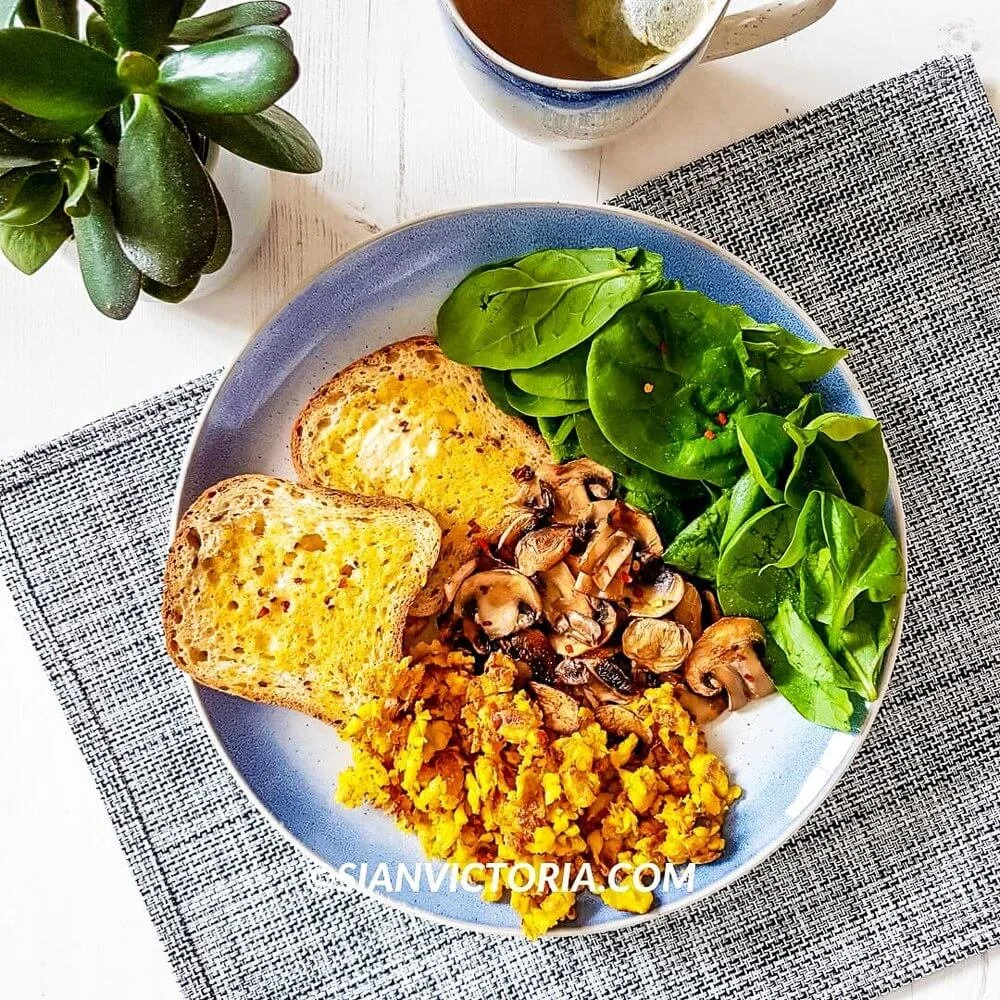
Sian Victoria © - Tofu scrambled, sourdough, mushrooms and spinach
In recent years, living the vegan lifestyle has made me appreciate food and has encouraged me to experiment in the kitchen and research into how natural foods such as plants can positively affect our health, inside and out from head to toe. What we put in (and on) our bodies play a major part in our health and how we feel mentally. I’ve created a plant-based foods with health benefits post on everything I’ve learnt so far.
This isn’t my sneaky way to encourage you to become vegan because not all vegans are eating plant food as a medicine to naturally treat symptoms. I’m simply recommending you look at the types of food you eat and research to find out if the foods you eat are beneficial to your mental health and overall health.
When I analysed the foods, I was eating I discovered that they were messing with my hormones and increasing testosterone in my body that was encouraging hair loss, weight gain and acne skin which then had a further knock-on effect to my mental health.
I’m passionate about eating plants for health benefits as you’ll find out in my plant food post, so I won’t go into too much detail here. However, I can confirm that my overall health, mind, skin, body and hair have all improved significantly since treating food as a medicine alongside a one a day advanced multivitamin supplement. If you are still confused, consider mental health services to get better results.
7. Get outdoors and surround yourself in nature

Sian Victoria © - Hiking Telford Wrekin
I’ve always loved being outdoors surrounded by nature, so I’ve naturally loved swapping the concrete jungle for beautiful lush green spaces in my local area. Each week I’ve been searching TripAdvisor and using Google maps to find canal paths, places to hike with countryside views and nature reserves with natural pools.
Swapping the hustle & bustle of the Highstreet where everything’s stressful and fast-paced for a slow-living lifestyle with a peaceful walk in the countryside or suburban woodland does wonder for your mental health.
8. Keep yourself clean & refreshed

Sian Victoria © - Pampering applying haircare
If you’ve been suffering from your mental health for a long time, you’ll understand that some days simply brushing your hair and having a shower can be a difficult task and you can find yourself making excuses and putting it off for days.
Since I was 19, I’ve worked full-time for myself from home so thankfully very few people have seen me in a stinky-greasy haired state.
But do you know what feels the world of good? Forcing yourself to shower or bathe. Once your clean and refreshed you feel recharged and gives you the feel-good mental boost you need.
9. Consume plenty of water & herbal teas

Sian Victoria © - Herbal tea and chocolate
According to research keeping hydrated can help improve depression and anxiety as our energy, concentration and memory can be affected when we are dehydrated. I drink from a reusable stainless-steel flask and take it everywhere with me so I’m able to monitor how much I drink throughout the day. Its recommended we drink at least 8 cups of water a day.
In addition to staying hydrated by drinking plenty of cool water, there are numerous other effective methods to replenish fluids and support your overall well-being.
Electrolyte-rich beverages, such as sports drinks or coconut water, can help restore the body's electrolyte balance. In more severe cases of dehydration, intravenous (IV) hydration therapy may be necessary to quickly replenish fluids and electrolytes. Additionally, herbal teas that are low in caffeine, such as chamomile or peppermint tea, are excellent alternatives to water and can be enjoyed throughout the day to help maintain hydration.
I drink peppermint tea not just because its an enjoyable beverage to sip at any time of the day but its also proven to be effective at reducing anxiety, stress and improving sleep just like lavender and chamomile.
10. Be mindful of your emotions and what triggers stress & anxiety

Sian Victoria © - Sketch book
To keep track of how you are feeling and to figure out what triggers your poor mental health, stress and anxiety you may find it helpful to keep notes on your emotions in a mindfulness journal. You may also find getting your thoughts onto paper and off your chest is a good way to get things off your mind.
Health experts also say that doodling is a sign of anxiety, however, the concentration and rhythmic motions of doing it is an effective way to relax and counter the body's fight-or-flight intuition.
11. Digital detox

Sian Victoria © - Reading with matcha tea and a bagel
Digital devices consume our lives. So, it feels great to simply get back to basics, turn off the tv, un-glue our fingertips from our phones and just be free from social media for a couple of hours or even days. During the lockdown, I took plenty of time away from Instagram and Facebook so that I had the extra time to invest in my health.
Instead of spending my evenings scrolling social media I swapped it for evening walks and running. It’s something I’ve kept up doing and still look forward to, not only does it help my mental health, but it has improved my physical health too.
12. Escape to a happy place
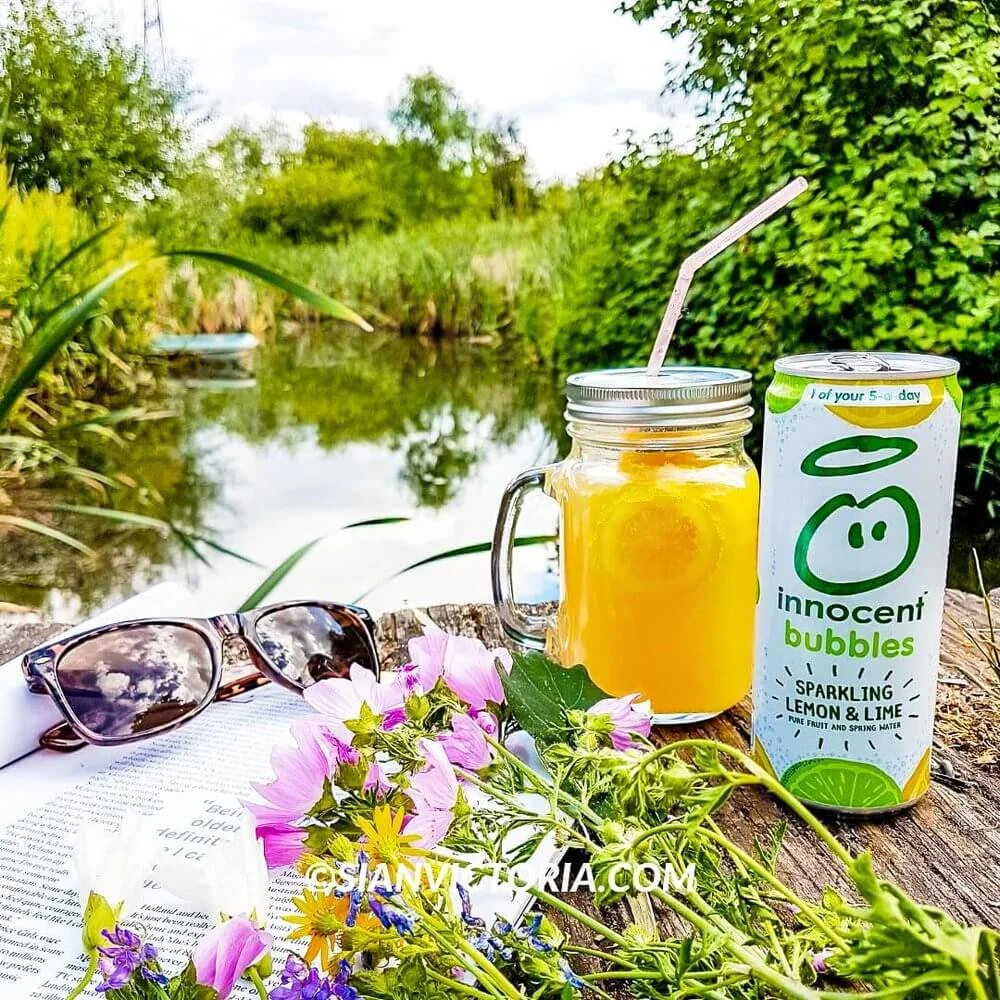
Sian Victoria © - Canal views
If you’re in quarantine than escaping to a happy place may not be possible. However, meditation may be effective if this is the case as it can reduce anxiety, stress and improve concentration and focus. Escaping to a happy place does wonders. For me, a happy place is being among nature with my favourite people to give myself a boost and have fun.
If your experiencing a bad week with your mental health it can sometimes feel impossible to get yourself ready and force yourself out the door. There have been many times when I’ve been asked to go somewhere with friends, and I’ve used a silly excuse not to go just because I’m unable to open up and explain how I feel. By missing out on a catch up with friends or family it only makes me feel regret and unhappy that I’ve allowed my depression to win.
On the days I’ve taken back control and forced myself to go I’ve always felt so much better and it ends up being the highlight of that week when my mental health is struggling.
Escapism doesn’t have to mean getting yourself out the door, getting lost in a good book, listening to music or baking something can be a positive way to take some time out for self-care.
13. Write a to-do list and tick off stuff you want to do get done

Sian Victoria © - Home office with houseplants
Every night I write in a to-do list planner of all the tasks that must be done the following day. Doing this at night before bed helps me to de-stress by getting the list out of my head and onto paper. This helps me relax a lot more so that my mind isn’t overthinking and worrying about forgetting to do something.
Being organised, having a structure to my day and ticking tasks off along the way improves my productivity and allows me to see what I’ve visually accomplished that day which makes me feel good about taking time out for myself on the evenings to do fun things.
14. Volunteer, giving back to make others happy

Sian Victoria © - Stroking a black cow in a field
It is proven that spending time with animals can ease loneliness, reduce depression, anxiety and stress. From the age of 3 to 21 I had a cat and didn’t have another pet until I was 24. Those 3 years were perhaps the hardest years of my life so far and coincidently I was working from home alone without a furry companion by my side. Therefore, I agree with the studies. Animals do boost your mental health as well as physical health if you have a dog.
Animals are living beings. They’re just like humans they want warmth, happiness and love so having that companionship triggers positive feelings that improve mental health, not just for you but for them too.
Taking on the responsibility of a pet may not be possible for all. However, volunteering at animal shelters and making unique friendships with animals that aren’t used to receiving friendly attention and care will make you and them feel great and they certainly do appreciate it. If this is something you would like to do, you may find my post volunteering at SAWA inspiring.
15. Declutter your mind and habitat

Sian Victoria © -Ladder shelf with houseplants
A tidy room truly does contribute to a tidy mind. When facing a rough week, I often notice that my home reflects the clutter within my thoughts. However, taking the initiative to clean and organise brings immense relief and boosts my productivity, especially when my desk is in disarray.
A cluttered environment adds to stress, but tidying up creates a fresh start and a sense of control. It is therapeutic and promotes clarity and calmness.
Plus, a clean and organised space enhances self-esteem and fosters a productive mindset. Embracing the saying 'tidy room, tidy mind' brings profound benefits to our overall well-being.
16. Fill your home with life

Sian Victoria © - Blue merle border collie making a mess
Not only do house plants improve the quality of air in our homes. But they’re also beneficial to our mental health too as they are proven to increase productivity, improve mood, concentration and reduce stress.
As being among nature is my ‘happy place’ I find that filling my home with houseplants and having to nurture them is fun as its rewarding watching them grow.
If brightening up your home with plants is something you would like to do than my post on easy to care for house plants might be useful.
17. Invest in white LED light therapy

Sian Victoria © - LED light theraphy
If you are in quarantine or simply don’t get to have enough time outdoors to enjoy daylight hours. Then a white light therapy device may be the solution as the white LED light is effective at improving moods and productivity. Especially during autumn and winter when some of us can experience Seasonal Affective Disorder (SAD).
The therapy can also be effective at increasing the effectiveness of antidepressants, energy levels and improving depression and sleeping disorders. I’d recommend researching light therapy yourself first to see if its right for you.


