12 Tips for a Stress-Free Move: Moving Across the UK

Sian Victoria © - Moving home with bags packed
How to Move Across the UK: What to Do Before Relocating
Relocating within the UK may be considered quite an adventure, no matter which regions you move from and to: be it a move from Cornwall to the Scottish Highlands, from London to Manchester, or to Wales. Although starting life again in a new region sounds very exciting, the actual process of transporting all your personal belongings to another part of the United Kingdom may seem quite challenging.
Based on my personal experience of having made some major relocations in the past, I know well how chaotic the whole process may become once you start procrastinating. This is exactly why I have decided to create such a guide for you. The following tips may serve as your practical guide, offering valuable advice on how to keep yourself sane, save money, and comfortably settle into a new place in the UK. So, here are my top twelve tips for a successful relocation.
1. Be Ruthless with Decluttering Before You Pack a Single Box
The number one mistake you could make when relocating within the UK is hiring someone to move unwanted items for you. This is because distance is a factor in the cost of removal, and transporting unnecessary items will therefore directly affect your pocket negatively. Before the packing process, you should start by searching through all drawers, wardrobes and cupboards in your home.
Think about which items you’ll need and start decluttering. Items that haven’t been used for more than a year should be sorted into three different piles to be sold, donated or recycled. Clothes and household items are readily accepted in the majority of charity shops in the country, and selling furniture to nearby people via places like Facebook Marketplace will bring in some income towards moving expenses. For the little things, eBay and Vinted were amazing for me to get rid of all my secondhand items and earn money from them.
2. Book Your Removal Company as Early as Humanly Possible
Moving goods over long distances within the UK takes a lot more coordination compared with moving them just a few miles down the road. A good removal firm will be fully booked weeks or even months in advance, particularly during times such as summer or bank holiday weekends.
It is important to start getting estimates from reliable movers as soon as you have an approximate date for completion so that you can start moving in. Choose movers who are registered with industry organisations, read unbiased online reviews, and whose insurance includes long-distance moves.
For those who would prefer using a van and driving themselves, be sure to get the vehicle booked in advance and find out about its mileage limit.
3. Create a Master Moving Timeline and Checklist
It’s easy for important information to get lost in the mix when you’re dealing with solicitors, estate agents, boxes, and utilities. So creating a checklist for your move is one of the best ways to ensure you don’t become overwhelmed. Create a document on your smartphone or keep a dedicated notebook.
Make a list of all the things you need to do, along with a deadline for each one, beginning six weeks from your moving date and counting backwards to the day you move. Organise the items on your checklist into categories such as administration, packing, and local cancellation services.
4. Pack an Essentials Box for Your First Night and Day
It is important that, when you arrive at your destination after driving for five hours from one end of the country to the other, you do not have to rifle through twenty packed cardboard boxes looking for your toothbrush. You will be exhausted, and will just want to relax and lie down when you get to your new home.
Create a separate box for necessities that should come with you in the car, and not in the removal van. This box should include basic toiletries, some changes of clothes, medicine, charger cords for mobile phones, bedding, towels, toilet rolls, and basic utensils. Most importantly, in a typically British move, pack a kettle, cups, tea leaves, coffee, and biscuits, and you’ll be perfectly set up before you handle the task of unboxing.
5. Sort Out Utilities and Council Tax Well in Advance
There is nothing more frustrating about moving day than arriving at your new house in darkness without any power or heating. Notify your current suppliers of gas, water and broadband at least two weeks in advance of your moving date. Provide your moving date and make arrangements for the final bills.
Also, notify the suppliers for your new property and arrange everything so that you will have all services starting on the day you actually move into your new property or when your lease begins. Broadband connection can take up to two weeks to be set up at your new place, so arrange an engineer's appointment or a broadband installation kit in advance if you are working from home.
6. Set Up a Postal Redirection with Royal Mail
Keep yourself updated with all banks, services, and governmental organisations using your current address; there is still a chance that some letters will be sent to your old address. An official Royal Mail mail redirection service is essential for long-distance moves. It can be arranged online, and your mail will be redirected to your new address in the UK for either three, six, or twelve months. It is ideal to apply for this service at least ten days before your move to ensure that the system works properly. It will give you peace of mind, knowing that important letters will be delivered safely to you.
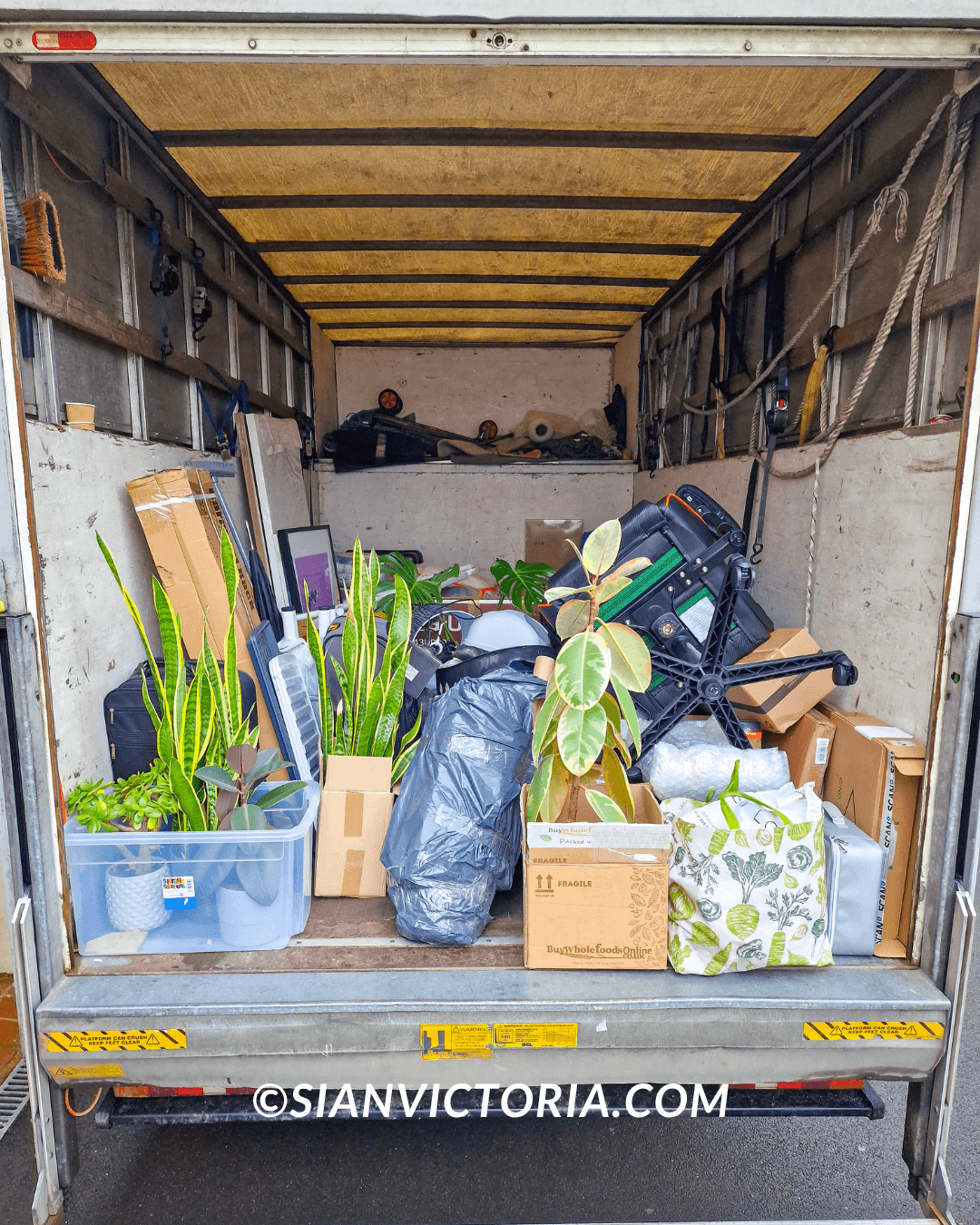
Sian Victoria © - Moving home with boxes in back of hire van
7. Label Every Single Box with Destination Rooms and Details
If you’re relocating locally, then there is no problem in going back to retrieve an unlabelled box at a later time. If you’re relocating across the UK, then all of your items will come at once; hence, labelling everything clearly becomes crucial.
You should label your boxes using a large, bold black marker, writing the destination room as well as the box contents on the side of every single box, rather than only on top of them. Labelling your boxes on their sides will ensure that you can always see your labels, even when your boxes are stacked in the removal van or the garage. You can colour-code your boxes according to each room with sticky dots.
8. Map Out Your Travel Route and Schedule Rest Breaks
Driving around the country in a fully loaded car or travelling with young children and pets will mean some additional preparation. Traffic on major roads in the UK such as the M1, M6 or M25 can bring your journey to a halt without much notice.
Find out what the current traffic situation is on the day of the move and prepare two routes for the journey – your preferred one and the alternative one. Allow more time to plan your trip, so that you do not have to rush to collect your keys. If your journey takes more than four to five hours, plan in advance where you can stop at motorway service stations to relax, eat and stretch your legs.
9. Record Final Meter Readings and Document Property Condition
When the moving day arrives, photograph the gas, electricity and water meters of your current and new residence. It is essential that you can read the meter readings and their dates from the images clearly. Forward the readings to your service providers to ensure accuracy in your bills.
If you are renting your new home, document all rooms with pictures and videos before unpacking your boxes. Note down any existing damage to the room or its surfaces on the inventory sheet. This will serve as proof of the condition of your new place in case any issues arise when your tenancy comes to an end.
10. Update Your Address on Important Official Documents
Changing your personal information is one of the most boring and stressful things you will have to do while moving, but it saves you from problems later on. Change your driving licence at the DVLA as soon as possible, since it is a legal obligation in the UK and can be done for free online.
Don’t forget to change the registration logbook of your car, your car insurance, and to register yourself on the electoral roll. You should also take into account that your car insurance policy may be changed according to the postcode where you are relocating to.
11. Explore Your New Neighbourhood and Register with Local Services
Moving within the UK will involve settling into a new community, finding your way around a new transport network, and discovering new idiosyncrasies in the area. Try to make time to explore the immediate vicinity of your house in the first few days. And if you haven't already, find out the nearest supermarkets, pharmacy, post office, and bus stops or railway station.
Enrol yourself and your family at a local GP practice and a dental clinic as soon as possible, as popular clinics may have waiting lists. In case you have pets, try to locate a vet nearby and update their microchips at your new location online.
12. Be Patient with Yourself and Take Time to Settle In
It will take a while to unpack all the boxes, and hoping that everything is ready and perfect in forty-eight hours will definitely tire you out. Prioritise your bedroom and kitchen so that they are ready, so that you can rest and make simple meals in your new home.
You do not have to unpack all the decorative things you have, especially if there are still boxes that need to be unpacked in the spare room. Take some time to explore some parks, try out a nearby coffee shop, and introduce yourself to the neighbours in your new area.
To conclude
It goes without saying that moving across the UK is a huge task indeed; however, it all comes down to preparation, which will determine whether the move turns into a living hell or an exciting experience. Thanks to early decluttering, hiring reliable movers, having everything needed within reach, and dealing with all administrative issues bit by bit, you'll be able to avoid unnecessary stress on the road.
Hopefully these twelve tips will help you deal with your relocation across the UK. Keep in mind that acclimatisation in the new area will take some time; it is more like a marathon than a race. Do things one box at a time, appreciate every achievement along the way, and allow yourself time to get acquainted with your new environment.


