10 Benefits of Collagen and How to Include It in Your Diet

Sian Victoria © - Supplements in a organiser
Guide to Collagen: Health & Beauty Benefits & Dietary Tips
Collagen is a protein that’s absolutely necessary for keeping our skin, bones, muscles, and tendons strong and healthy. It’s one of the most abundant proteins in our bodies, giving our bodies elasticity and support.
As we age, our bodies make less collagen, which can make us look older and cause problems with our joints and bones. That’s why it’s a good idea to find ways to boost our collagen levels, whether through food or supplements. You can get collagen from things like bone broth, chicken skin, and fish, or through a variety of supplements and plant-based alternatives.
Like me, I’m sure you're craving to get more collagen to complement your appearance inside and out. So, this guide will look into all the benefits of collagen and how it can positively impact different aspects of our health.
Plus, I’ll share some easy tips to add collagen to your daily diet, so you can enjoy its perks without any hassle. Whether you want to improve your skin, support your joints, or just feel better overall, collagen is definitely worth checking out.
What is Collagen?
Collagen is the most common protein in our bodies, making up about 30% of all the protein we have. It's a key part of connective tissue that helps keep things strong and stretchy, like our skin, ligaments, and tendons. While there are at least 16 types of collagen, the main ones we have are types I, II, and III.
As we age, our bodies generate a reduced amount of collagen, leading to signs of ageing like wrinkles, sagging skin, joint pain, and weaker bones. That’s why a lot of people start using collagen supplements to boost what their bodies are missing and keep that youthful glow and overall health. The great news is that getting collagen is super easy now, making it a simple and handy addition to your day-to-day diet.

Sian Victoria © - Collagen supplements
How to Add Collagen to Your Diet
Getting more collagen in your diet can be super easy and even a little fun! Here are a few different ways to add it in so you can enjoy all its awesome health and beauty benefits, which I’ll explain in the next section!
- Drink Bone Broth:
One of the easiest ways to get collagen is by drinking bone broth, which is packed with natural collagen. You can make it at home just by simmering animal bones for a few hours, or you can grab some ready-made versions from health stores. If you’re into it, dishes with chicken skin also have a good amount of collagen. Although if you're vegan like me, there are other ways.
- Source Vegan Collagen Alternatives:
If you’re looking for plant-based options, some alternatives are vitamin C and hyaluronic acid, which help your body create its own collagen. With all these choices, you can easily tailor your collagen intake to fit your lifestyle and dietary needs.
If you're exploring unusual sources of vegan collagen, consider orange peel skin. This often-overlooked part of the fruit is rich in antioxidants and may provide beneficial compounds that support skin health. You can blend dried orange peel into a powder and add it to your smoothies or teas for a tasty and nutritious boost.
Additionally, you can create DIY skincare items by infusing orange peel in oils or using it in homemade face masks. Other interesting sources include ingredients like amla berry, which is known for its high vitamin C content, and spirulina, a nutrient-dense algae that supports skin elasticity. Integrating these unique collagen sources into your skincare routine and diet can upgrade your overall health while complementing your vegan lifestyle.
- Take Collagen Supplements:
If you want something quick and easy, collagen supplements are a great option. To boost protein, you can mix collagen powders into all sorts of foods and drinks without changing their taste. Just stir a scoop into your morning coffee, tea, or smoothie for a quick collagen boost. It’s also great in soups, stews, or even baked goods.
You’ll find collagen supplements in different forms. For example, hydrolysed collagen is basically collagen that's been broken down into smaller bits for better absorption. This type works pretty well and comes in capsules, powders, and even flavoured drinks.
Another popular option is liquid collagen, which is often touted for its convenience and ease of use. Liquid collagen can be quickly absorbed by the body and is available in various flavours, making it an attractive choice for those looking to boost their collagen intake. Whether you prefer powders, capsules, or liquids, there are numerous options that fit perfectly into your lifestyle.
Incorporating collagen-rich foods and supplements can be creative and convenient, too. You can whip up tasty, protein-packed snacks by adding collagen powder to energy balls or protein bars. Plus, collagen-infused water or juices are a refreshing way to stay hydrated while getting those collagen benefits.
- Mix Gelatin into Your Cooking:
Gelatin, derived from collagen, can be used as a thickening agent in recipes. Incorporate it into homemade jellies, puddings, or sauces for an added collagen boost.
- Consume Fish:
Not only is fish a great source of omegas, but fish, especially the skin and scales, is a great source of collagen. Add these to fish recipes, like grilled salmon or fish tacos, to increase your intake.
- Add Eggs to Your Diet:
Egg whites are packed with proline, which is super important for making collagen. You can enjoy eggs in all sorts of ways, like boiled, scrambled, or whipped up in an omelette.
- Eat Leafy Greens:
Veggies like spinach, broccoli, green beans, parsley, wheatgrass, alfalfa, peas, kale, and Swiss chard are packed with chlorophyll, which might help give your body's collagen levels a little boost. Toss these greens into salads, blend them up in smoothies, or serve them as a tasty side dish.
- Use Citrus Fruits:
Foods packed with vitamin C, like oranges, grapefruits, and strawberries, are ideal for making collagen. Sprinkle these fruits in your breakfast or snack on them throughout the day!
- Opt for Berries:
Berries are loaded with good stuff called antioxidants, which can help protect collagen from degradation. So, be sure to throw blueberries, raspberries, or blackberries into your meals or smoothies.
- Snack on Nuts and Seeds:
Nuts like almonds and walnuts, plus seeds like pumpkin, linseed, also known as flaxseed and sunflower seeds, are loaded with nutrients that boost collagen production. Enjoy them as snacks or sprinkle on salads and yoghurt.
- Add Whole Grains to Meals:
The most common options of grains are quinoa, brown rice, and oats, but there are also barley, farro, millet, bulgur, and whole wheat. Other examples of pantry staples include rye, amaranth, and spelt. These grains are nutritious and can be mixed into a variety of dishes for added texture and health benefits.
- Drink Smoothies:
Combine a variety of collagen-rich foods and ingredients into a smoothie. For example, blend spinach, banana, collagen powder, and almond milk for an energising drink.
- Try Collagen-Infused Snacks:
Look for protein bars or snack products that specifically highlight collagen as an ingredient. These can be convenient and tasty ways to boost your intake on the go.
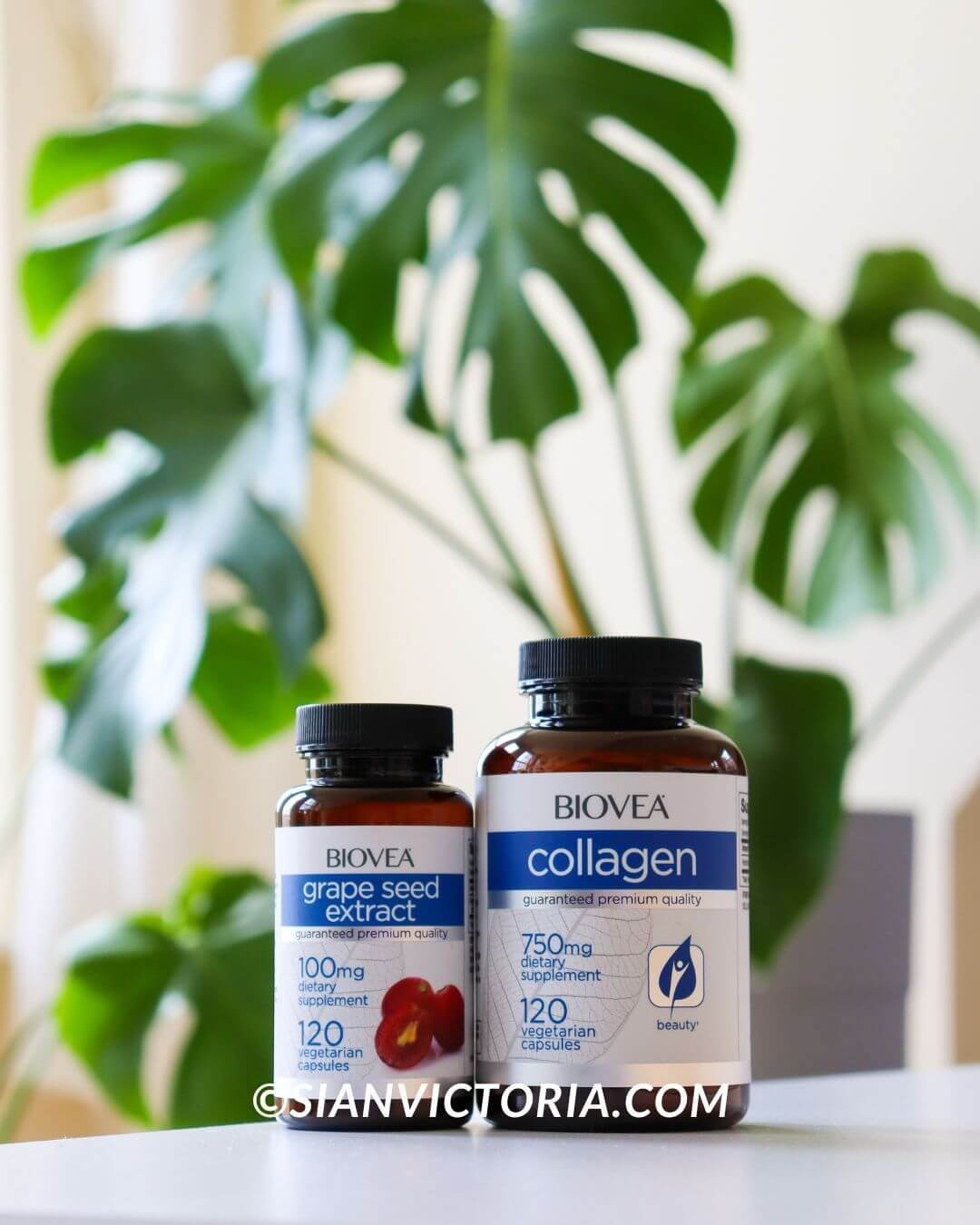
Sian Victoria © - Collagen and grape seed extract capsules
Health and Beauty Benefits of Collagen
So, now you know how to get more collagen into your diet. Here’s how consuming more of it will benefit your hair, skin, nails, joints and overall health and beauty.
1. Boosts Skin Bounciness
Collagen is well-known for helping out with skin elasticity, which makes your skin look more youthful. As the years go by, our bodies make less collagen, which can lead to undesirable things like wrinkles and other signs of ageing and sagging skin. Throwing some collagen into your diet can really help fight against these changes.
Research suggests that using collagen supplements can definitely help keep your skin hydrated, keeping your complexion plump and smooth. Plus, collagen helps your skin repair itself, making it tougher and less likely to get damaged. This is super useful for anyone dealing with things like pollution and UV rays that can age your skin faster. If you want a natural way to keep your skin looking young, collagen is definitely something to think about.
2. Helps Keep Your Joints Healthy
Collagen is super important for our cartilage, which basically acts as a cushion in our joints. As we age, our bodies start to make less collagen naturally, which can lead to worn-out cartilage and joint pain. Taking collagen supplements might help keep cartilage healthy and ease joint discomfort.
Some studies have found that people who take collagen feel a noticeable drop in joint pain, especially those dealing with osteoarthritis. Collagen is loaded with amino acids such as glycine and proline that keep our joints and their tissues strong. This can lead to smoother movement and less stiffness, which is great for overall health.
Plus, collagen has anti-inflammatory perks that can help with swelling and discomfort. If you’re staying active, getting enough collagen can help prevent joint injuries and speed up recovery from strains. So, adding collagen to your routine can be a smart way to keep your joints functioning well and tackle the effects of ageing. Keeping up with your collagen means you can enjoy a more comfortable, active lifestyle while increasing longevity.
3. Makes Your Hair and Nails Stronger
Collagen plays a big role in keeping your hair and nails healthy and strong. The amino acids in collagen, like proline and glycine, are necessary for making keratin, which is the main stuff that makes up your hair and nails. This helps maintain their structure and makes them more resilient. People who add collagen to their diet often notice their hair feels thicker and their nails are less brittle.
Studies have shown that collagen supplements can actually promote hair growth by stimulating hair follicles. This is great news for anyone dealing with thinning hair or slow growth. Plus, collagen helps protect hair from environmental damage caused by things like pollution and harsh weather, leading to stronger, healthier hair.
Nails also get a nice boost from collagen. If you struggle with brittle or weak nails that tend to split or break, regular collagen intake can really help. It supports the nail matrix, the tissue under your nails that encourages new growth, making nails grow faster and with fewer imperfections. So, adding collagen to your diet could be a smart move if you're looking to improve the strength and look of your hair and nails.

Sian Victoria © - Revive Liquid Collagen sachets
4. Helps Build Muscle
Collagen is needed for building muscle and recovering after workouts. It’s packed with key amino acids like glycine and proline, which help keep your muscles strong and repair any damage. For those who work out regularly, adding collagen to their diet can really help increase muscle mass and speed up recovery times, letting them hit those training sessions harder.
Studies show that collagen supplements can boost muscle strength and function, especially for older folks dealing with muscle loss as they age, as it gives your body the stuff it needs to grow and thrive. For muscle repair, collagen promotes the growth of muscle fibres, which is great for overall muscle health and performance.
Plus, collagen is not just about the muscles themselves; it also supports the connective tissues around them, like tendons and ligaments. This can improve flexibility and lower the risk of getting injured, making it a solid addition to any workout routine.
Collagen comes in various forms, like powders and drinks, that are easy to mix into your pre- or post-workout meals. So, adding collagen to your diet not only helps with muscle growth but also speeds up recovery, eases soreness, and boosts overall performance. It’s definitely a worthwhile supplement for anyone wanting to keep or improve their muscle health.
5. Boosts Bone Strength
Collagen is ideal for keeping our bones strong and healthy. It’s a big part of the bone structure, acting like a framework for calcium and other minerals to attach to, which is what makes our bones tough. As we age, our bodies generate decreasing amounts of collagen, leading to weaker bones and a higher chance of fractures. Taking collagen supplements can help fight this decline by boosting the activity of bone-building cells called osteoblasts, which can improve bone density.
Research shows that collagen supplements can actually make bones denser and stronger, which is great for people who might be at risk for osteoporosis, an issue where bones become brittle and break easily. Collagen helps keep the bone matrix intact, ensuring our bones stay sturdy enough to handle everyday pressure.
Plus, it has anti-inflammatory benefits that can ease swelling around the bones, offering some relief for those dealing with bone issues. The amino acids in collagen, like proline and glycine, also play a role in repairing and regenerating bone tissue. Adding collagen to your diet, whether through supplements or foods rich in collagen, can be a smart move for maintaining bone health, especially as you age.

Sian Victoria © - Skin Accumax and Collagen Support supplements
6. Good For Your Heart
Collagen plays a big role in keeping your heart and blood vessels healthy. It helps make sure that your arteries and veins stay strong and flexible, which is super important for good blood flow. Thanks to collagen, your blood vessels can handle the pressure from your heart pumping, which can help prevent stiffness that leads to heart problems. It’s also great for fixing up any damage to blood vessels, particularly useful for those dealing with atherosclerosis, where arteries get thick and less flexible because of plaque.
Besides just keeping everything together, collagen has some special amino acids, like proline and glycine, that help out the heart. Proline helps reduce fat buildup in arteries, which can help keep cholesterol in check. Glycine helps fight inflammation in blood vessels, which is another plus for heart health. Taking collagen supplements can also boost the function of the cells that line blood vessels, making sure blood flows smoothly and lowering the chances of clots forming. All in all, collagen is a great ally for a healthy heart and cardiovascular system.
7. Aids Digestion
Collagen is great for your digestive system, especially when it comes to keeping your gut lining healthy. The amino acids found in collagen, like glycine and glutamine, are perfect for making sure your intestinal lining stays strong. This can really help with issues like leaky gut syndrome, where the gut lining gets damaged and lets harmful stuff sneak through. When reinforcing this barrier, collagen helps block toxins and germs from entering the bloodstream, which can lead to inflammation and other health problems.
Plus, collagen helps your body produce stomach acid, which is key for digesting food and absorbing nutrients properly. This can ease symptoms like indigestion and heartburn. It also encourages the growth of good bacteria in your gut, which is essential for a balanced microbiome.
These friendly bacteria assist with breaking down food, absorbing nutrients, and even producing important vitamins. When creating a healthy gut environment, collagen can boost overall digestive function, making it easier to absorb nutrients and reducing any tummy issues you might have.
8. Helps Speed Up Wound Healing
Collagen is necessary when it comes to healing wounds because it helps your body create new tissue. When you get injured, collagen jumps into action to rebuild the extracellular matrix, which is kind of like a framework that allows new cells to grow. This speeds up the healing process and makes it more effective. Plus, collagen encourages fibroblasts to get to work. These cells are crucial for repair since they produce more collagen and other proteins to create a strong base for the new tissue. This not only helps you heal faster but also makes the new skin tougher and more reliable.
Collagen can also attract and activate other cells that help with healing, like keratinocytes and macrophages. Keratinocytes are key for covering a wound with new skin cells, while macrophages clean up debris and dead cells, which lowers the chance of infection and inflammation. All these actions working together make sure wounds heal up more smoothly and with fewer issues.
On top of all that, collagen helps keep the wound moist, which is great for speeding up healing and cutting down on scarring. So, by adding collagen to your diet, you're giving your body the support it needs to heal effectively and quickly.
9. Makes You Sleep Better
Research shows that collagen can actually help you sleep better, thanks to its glycine content. Glycine is an amino acid that tends to relax you and can lead to a much better sleep session. Collagen can actually help with that by lowering your body temperature and calming your nerves, which makes it much easier to fall asleep and stay asleep.
Lots of people find that taking collagen before bed helps them drift off faster and improves their overall sleep quality. This can be a total game-changer for anyone like me dealing with insomnia or restless nights. Plus, better sleep can do wonders for your health, boosting brain function, lifting your mood, and even super-charging your physical performance. So, if you’re looking for a natural way to improve your sleep, giving collagen a try at night might just be the answer.
10. Aids in Shedding Pounds
Collagen can be really helpful for managing your weight because it helps you feel fuller, which means you might eat less overall. Since collagen is high in protein, it makes it easier to control your portions and fight off those pesky cravings. This is especially great for anyone trying to stick to a calorie-controlled diet.
Plus, collagen helps keep your lean muscle mass intact, which is super important for losing weight and keeping your metabolism working well. When you lose weight, holding onto muscle means your body can burn more calories even when you’re just chilling. Thanks to collagen’s amino acids like glycine and proline, it also supports muscle repair and growth, keeping that metabolism active.
So, adding collagen to a balanced diet and staying active can really help you hit your weight goals. Plus, it can reduce the chances of losing muscle while you’re trying to lose weight, making it a great fit for any weight management plan.

Sian Victoria © - Facetherory collagen eye cream
How to Maximise Collagen Absorption
Maximising collagen absorption is best if you want to enjoy all the benefits of this must-have protein, which helps with skin elasticity, joint health, and overall body function. Check out these simple tips to help your body absorb more collagen!:
Pick the Right Type: Collagen supplements come in different forms like powders, capsules, and liquids. Hydrolysed collagen or collagen peptides are often the best choices since they’re broken down into smaller pieces, making them easier for your body to use.
Team Up with Vitamin C: Vitamin C is super important for making collagen. If you want to boost how well your body absorbs collagen, try eating foods that are high in vitamin C, like oranges, strawberries, bell peppers, and leafy greens. They'll really help!
Add Some Healthy Fats: Foods rich in healthy fats—think avocados, nuts, and olive oil—can help your body absorb collagen better by creating a healthy digestive environment. Plus, they help transport nutrients around your body.
Stay Hydrated: Drinking plenty of water is needed for keeping your skin healthy and helping your body make collagen. Being well hydrated aids your body in absorbing nutrients, including collagen.
Keep Your Diet Balanced: Eating a variety of protein sources like fish, chicken, beans, and dairy can provide the amino acids that work along with collagen to help keep your skin and joints feeling great.
Cut Back on Sugar and Junk Food: Eating a bunch of sugar and processed foods can mess with the collagen in your body. Cutting back can help preserve what you already have and support better absorption.
Think About Bone Broth: Bone broth is a natural source of collagen and comes packed with other good stuff like glucosamine and minerals. Regularly including bone broth in your diet can help with collagen absorption and joint health.
Watch the Timing: Taking collagen supplements on an empty stomach might improve absorption. Just make sure you stick to the product directions and pair them with other foods for the best results.
Be Consistent: Taking collagen supplements regularly over time is essential for seeing real results. Try to make it a part of your daily routine for maximum benefits.
When following these tips, you can help your body absorb collagen better and enjoy all the health perks that come with it.
To conclude
Collagen is a must-have for anyone looking to live a healthy lifestyle. It helps keep your skin elastic, makes your joints feel comfy, and even strengthens your hair and nails. Plus, it’s great for building muscle, boosting bone density, and supporting heart health. Collagen also aids in digestion and helps with wound healing. Not to mention, it might even improve your sleep and help manage weight.
Adding collagen to your diet is super easy, think bone broth, chicken skin, or even convenient supplements like powders and capsules. You can mix it into drinks, meals, or snacks, so it fits right into your daily routine. Overall, incorporating collagen can really boost your health and make a difference in how you feel.