How to Brew the Best Cup of Tea Every Time & Different Types
*PR: Gifted-only tea class

Sian Victoria © - T2 Tea store, Bullring, Birmingham
Tea Masterclass Guide: Tips, Techniques & Brewing Methods
Are you eager to set free your inner tea master? Whether you are an experienced tea drinker or just beginning to explore the varieties of tea, this guide is here to assist you in improving your tea-making skills.
As someone who has always enjoyed and appreciated a good brew, in this guide, I’ll share my tips for creating a perfect cup of tea with my personal experiences and ways of making delicious and refreshing tea drinks that will potentially lead you to be tea obsessed like me and maybe even help you to start reaping the health and beauty benefits of floral and herbal teas.
At the end of this post, I will also share my experience of visiting the new T2 tea store in Birmingham, where I participated in a tea masterclass led by a tea expert. So, grab your favourite mug, and let's learn about tea together!
Different Types of Tea
I have developed a strong love for tea since I had my first sip of green tea in a wellness café. Over time, I have appreciated the robust black tea, especially on rainy afternoons at home. Tea comes in various types, each with its unique taste and aroma. So, if you're keen to know what makes each one special, below is a list that can help you find your perfect blend.
Black Tea: The most oxidised of all tea types, black tea is known for its intense flavour and high caffeine content. Whether it's the classic English Breakfast or the spicy chai blend, black tea has a warmth and depth that has comforted me on many a cold morning.
Green Tea: Less oxidised than black tea, green tea, known for its health benefits, retains a beautiful, subtle colour and a gentler taste. I find the refreshing Japanese Sencha rejuvenating after a long day or the delicate Chinese Dragonwell utterly soothing.
White Tea: The least processed tea, white tea, offers a light, sweet taste perfect for quiet moments of reflection. Its delicate flavour reminds me of the first time I tried Silver Needle tea in a monastery garden in Chengdu.
Oolong Tea: This partially oxidised tea sits somewhere between green and black tea, offering diverse flavours. From the light, floral notes to the rich, roasted aromas, each cup is a new experience.
Pu-erh Tea: This fermented tea from China has an acquired taste I've grown to appreciate because of its earthy, deep flavours. It’s a tea that tells a story of ancient traditions, one that I enjoy exploring cup by cup. I often buy this type of tea from my local Chinatown in Birmingham.
Herbal and Fruit Teas: Technically, these are not "true teas" as they don't come from the Camellia Sinensis plant; these infusions are a mixture of flavours and aromas. From the soothing chamomile to the zesty lemon ginger, herbal and fruit teas have become my go-to for a caffeine-free treat. These healthy drink alternatives have benefits such as de-bloating, calming anxiety and improving sleep quality.

Sian Victoria © - Loose leaf tea, T2 Tea store, Bullring, Birmingham
Essential Tea Brewing Equipment
Having the right equipment is ideal for fully appreciating the art of tea-making. Over the years, I've gathered various tools that have become essential in pursuing the perfect cup of tea. At the core of this collection is a dependable kettle, which ensures my water is always at the ideal temperature required for brewing. With its elegant design, a teapot enhances the beauty of my tea ritual and serves as the perfect container for steeping, allowing the flavours and aromas to develop fully.
For those who value the notes of their tea, a temperature-controlled kettle may be a worthwhile investment, providing the ability to adjust the water heat for different tea types. I've discovered that a simple yet precise kitchen scale is invaluable for measuring tea leaves to ensure consistent strength. Also, a mesh strainer or infuser is essential for those who, like me, prefer loose-leaf tea for its superior flavour and depth. These filters keep the leaves contained, making cleaning up a breeze.
Through trial and error, I've realised that high-quality equipment can significantly enhance the tea-drinking experience. Although the initial setup may require some investment, the improvement in taste and the satisfaction it brings have been well worth the effort. They remind me fondly of my time in Chengdu, where I experienced traditional teahouses.
Water Temperature and Steeping Time
Grasping the art of water temperature and steeping time is like solving the secret life of teas. Doing so reveals their fullest potential in flavour and aroma. Through my explorations, I've learned that black teas thrive in boiling water, around 100°C. This coaxes out their robust, comforting notes. On the other hand, the delicate profiles of green and white teas are best preserved with cooler water, typically between 70°C and 80°C. This helps prevent bitterness.
My experimentation and research have shown me that steeping times are not one-size-fits-all. A brisk three minutes is perfect for a refreshing black tea. Green teas often require just two minutes to reveal their subtle, clean taste. Oolong teas, with their complex character, can vary widely. However, they generally find their sweet spot around three to five minutes. These guidelines became my go-to, helping me to brew perfection.
Through this attentive dance of temperature and time, I’ve come to appreciate each sip of tea as a reflection of science and art. Whether preparing a morning pick-me-up to begin my daily routine or a soothing evening blend to help me sleep better and wind down for the night, paying attention to these details has improved my tea experiences.
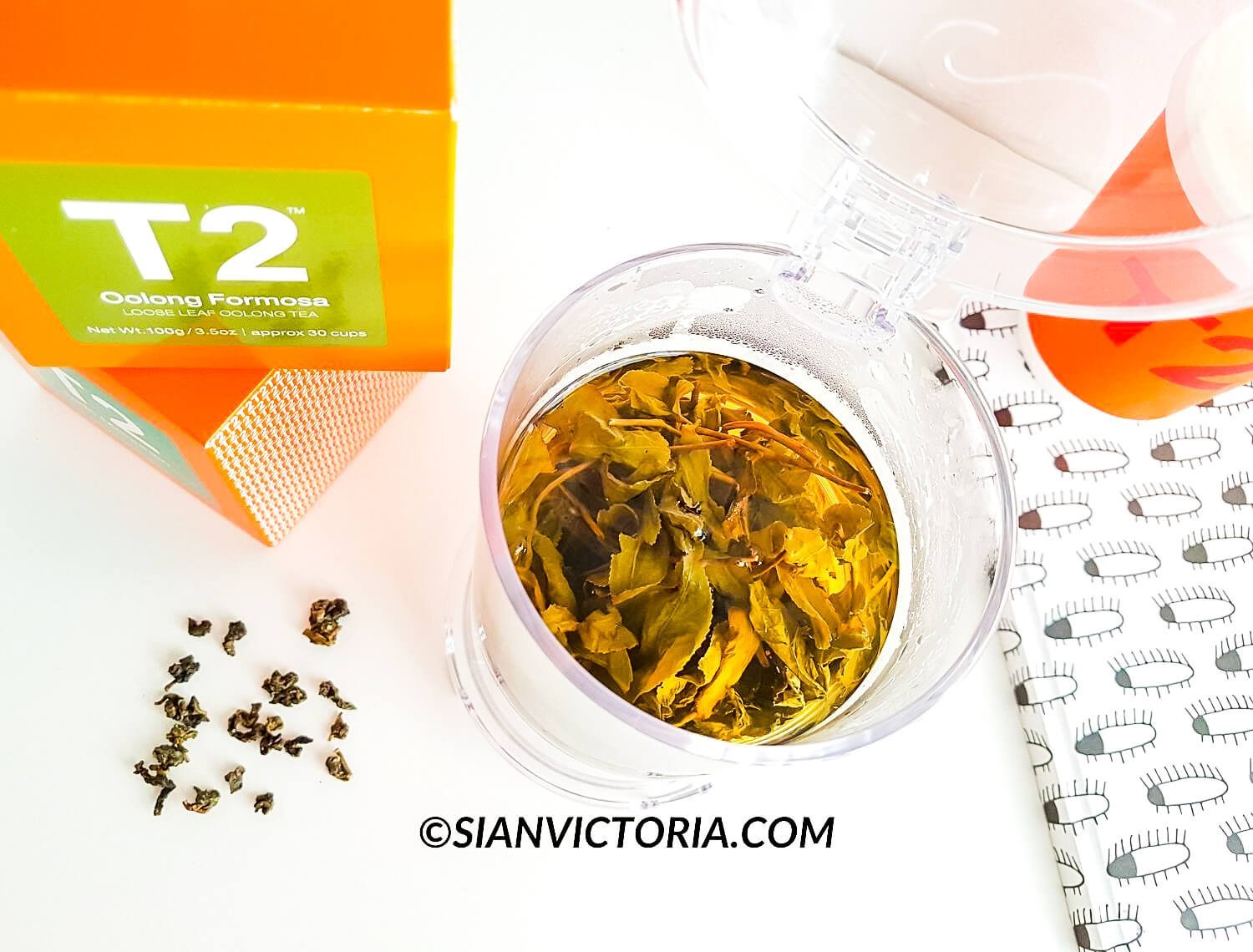
Sian Victoria © - T2 Tea Loose leaf tea & filter, Oolong & Jade Mountain green tea
Crafting the Perfect Milk Tea
Milk tea is a pleasant addition that combines the richness of milk with the intense flavours of tea. Although I don’t drink milky tea often, my partner does, so I have learned that balance is necessary to master this drink to his preferences.
The type of tea you use is fundamental to the overall taste. Black tea is famous for its bold flavour that pairs perfectly with milk, whereas green tea, I believe, isn’t a good match as I find it better alone without extras.
To create the perfect cup of milk tea, I start by brewing it a bit stronger than if I were drinking it plain. This compensates for the dilution effect that milk has on the tea. The ratio of tea to milk is also essential. A good starting point is 1:4 tea to milk, which can be adjusted to your taste.
When it comes to temperature, it's essential to heat the milk gently to avoid scalding. This ensures the milk blends seamlessly with the tea without overpowering its delicate notes. My partner prefers semi-skimmed milk for its silky texture, but I like oat milk, an excellent plant-based alternative with a lighter feel.
Trying out other milk varieties, such as almond milk, is a great way to add new flavours to your cup while exploring the potential health benefits of different beverages. Experimenting with other types of tea and milk has been a fun process for me; the technique for finding your ideal combination is to adjust the strength, milk type, and sweetness to your liking.
Different Herbal and Infused Teas
Exploring herbal and infused teas has been the most fun part of my tea adventure. These brews offer a vast palette of flavours and aromas, each stemming from a different herb, fruit, or spice. In contrast to conventional teas made from the Camellia sinensis plant, they provide a comforting escape and a caffeine-free alternative that doesn't compromise taste or variety.
Chamomile Tea: A classic choice for relaxation, its gentle, floral notes ease the mind after a long day. Its soothing properties are particularly beneficial before bedtime, promoting a peaceful sleep.
Peppermint Tea: With its vibrant, refreshing taste, peppermint tea is my go-to for digestive comfort. Its fantastic, invigorating flavour never fails to lift my spirits or soothe a troubled stomach.
Hibiscus Tea: Hibiscus tea's deep, ruby-red colour and tart, cranberry-like flavour make it a visually appealing and tangy treat. It's especially delightful over ice on a hot summer's day.
Ginger Tea: A potent brew with a spicy kick, ginger tea is warming and invigorating. I've turned to it countless times for its reputed benefits in aiding digestion and combating cold symptoms.
Lemon Balm Tea: With its mild, lemony flavour, lemon balm tea is a wonderfully aromatic choice that I find calming and uplifting. It's a fantastic stress reliever after a hectic day.

Sian Victoria © - T2 Tea Loose leaf tea & filter, Oolong & Jade Mountain green tea
Adding Sweetness and Other Flavours to Your Tea
In some instances, I have discovered that experimenting with different flavours and sweetness levels can make a simple cup of tea more enjoyable. Adding honey to my peppermint tea instead of sugar has transformed it into a refreshing delight.
Similarly, a couple of drops of vanilla extract in a cup of black tea can create a comforting, dessert-like experience. For those who like a citrusy flavour, a lemon slice or a small amount of lemon juice can add a refreshing twist to green tea.
It's important to gradually add small amounts of flavourings and sweeteners, tasting as you go, to get the ideal balance that pleases your palate. The aim is to enhance the natural tea flavour, not overpowering it. The options are endless and exciting, whether it's the creamy smoothness of milk, the gentle sweetness of agave syrup, or the warm spiciness of cinnamon.
The Cultural Significance of Tea Around the World
Tea is more than just a drink. It’s a global ritual and tradition, telling a story of communal ties and personal comfort. As I’ve travelled and explored different cultures, I’ve noticed that tea is a universal language that speaks different dialects worldwide.
In Britain, "tea time" means relaxation and conversation. Meanwhile, in Japan, the tea ceremony, or "Chanoyu," is a choreographed art emphasising respect, purity, and tranquillity. In Morocco, mint tea symbolises hospitality, served with a setting that turns pouring into a performance. And let's not forget the bustling tea houses of Turkey, where strong, sweet tea is shared among friends and strangers, fostering a sense of community.
This journey through the world's tea cultures has enriched my understanding, revealing that tea embodies a rich cultural heritage that connects us beyond tea leaves and hot water.
Advanced Tea Mixing Techniques
The complex world of tea blending can be both intriguing and rewarding. I’ve experimented in my kitchen and discovered a few tricks that have taken my tea blends to new heights. One technique is layering flavours. It’s not just about mixing different teas but more about understanding how their flavours can complement and enhance each other. For example, blending a robust Assam with a hint of aromatic Jasmine can create a beautifully balanced, bold, and fragrant cup.
Another aspect that I’ve explored is the addition of spices and herbs. Including a couple of cardamom pods or a cinnamon stick to your tea as it brews can introduce a warm, comforting complexity. However, using these sparingly is essential as the objective is to accentuate, not overpower, the tea’s natural essence.
My tea blending experimentation has, sometimes, been less than spectacular, but each failure has been a learning curve, guiding me towards better blends. What’s crucial is patience and an open mind, allowing each cup to be not just a beverage but an experience that tickles the senses. Through this process, I’ve developed my palate and discovered a creative outlet that brings joy with every sip.
Most recently, I’ve been mixing hibiscus and rose hip together. This fruity, sweet duo has helped me ward off sweet cravings in the evenings, while nettle, spearmint and green tea have been a refreshing yet healthy blend at lunchtime to cleanse my palette after a meal and prevent me from craving soft drinks.
Visit to the New T2 Store in Bullring Birmingham
As a Birmingham food and lifestyle blogger, T2 invited me to their new store in the Bullring for a gifted tea masterclass. They are a unique Australian tea brand with over 200 tea flavours, tea brewing tools, and beautiful tea sets. I was excited to learn more about T2, as I had never heard of them before, so I was intrigued to learn more about brewing tea the T2 recommended way.
When I arrived at the T2 store in Birmingham’s biggest shopping centre, I was impressed with the store layout and the overall look and feel of the brand. The floral tea sets caught my eye with their pretty vintage style, and I thought they would make a lovely gift idea for a friend.
The T2 tea expert explained the five essential stages of tea processing, from picking to drying. They said that all tea leaves come from the camellia Sinensis plant, but how the leaves are processed determines the final variety of the tea. There are white, green, oolong, and black teas. White tea has been oxidised the least, and black tea has been fully oxidised, giving it a more pungent taste.
During the tea masterclass, I learned the art of brewing the perfect cuppa using a tea brewing set. We brewed a white tea called Pai Mu Tan, a green tea called Jade Mountain, an oolong tea called Oolong Formosa, and a black tea called Daintree. The masterclass ended with a stronger tea, Daintree, for those who prefer darker teas.
If you're looking for a light tea, I recommend Jade Garden or Oolong Formosa. If you prefer more robust teas, then Daintree may be for you. However, I encourage you to sample the teas to find your perfect brew companion. We also discussed making iced teas during my visit, which I’ll share in another post soon.
To conclude
With its vast range of types and brewing techniques, tea offers endless possibilities for exploration and enjoyment. My experiences in tea, from my initial encounters to my advanced blending experiments, have brought me much joy and learning.
I hope this guide will inspire you to experiment with your tea-making process, discover your unique preferences, and perhaps even find your inner tea master to ensure you enjoy perfectly brewed tea every time!
*SHOP THE POST
Upgrade your tea experience with these must-haves! Steep any blend flawlessly with a fine-mesh tea infuser. Reveal green tea's delicate notes in a beautiful glass teapot. Ensure perfect temperature control for every type with an adjustable electric kettle. Find your moment of calm with a pleasing mug set in soothing colours. And for the tea lover in your life, explore a world of flavours with a curated tea gift set!


