Hair Loss Guide - 39 Best Effective Hair Growth Treatments
*All products bought by me

Sian Victoria © - Hair loss treatments for re-growth, scalp stimulating plant oils
How to naturally stimulate hair follicles & re-grow hair
Whether you’re dealing with hair thinning due to ageing, stress, or something else, hair loss is something that can happen to anyone at any age. Despite the commonality of hair loss, many of us can still have our confidence knocked when experiencing this.
However, the market is becoming increasingly populated with hair loss and hair thinning treatments that can help restore your confidence and your hair to its former beauty, meaning you won’t have to look far if you start experiencing these problems. But it must be noted, these aren’t miracle cures so you shouldn’t get your hopes up, only continued use of these items is going to show a noticeable difference and that’s only if you have hair loss happening due to certain health problems – as you’ll find when I go into more detail in this article.
So, if hair loss is an issue you’re facing, you’ve come to the right place. Continue reading to discover 3 of the best science-backed hair loss treatments, followed by 19 natural hair oils to promote a healthy scalp for hair growth and 13 dietary supplements your body needs to prevent hair fall and thinning. As well as 3 tools that can be used at home that have been scientifically proven to stimulate hair follicles for new hair growth.
But first, before looking into ways to prevent hair loss, it's important to know why your hair may be falling out in the first place so that you know what treatment will be most effective and beneficial to you.
So, here are a few of the most common causes of hair loss.
Reasons why hair could be falling out – causes of hair loss
There are several reasons why you could be experiencing hair loss. The most common causes of hair loss in both men and women are due to hormonal imbalances, side effects of medication or supplements, a nutrition deficiency as well as a poor-quality lifestyle and sleep pattern. Other reasons could be stress, heredity and how you treat your hair while washing, brushing, and styling.
Mentioned below are reasons why your hair could be falling out. So, I recommend you research some of the causes I’ve listed to see if that could be the cause for you like they were for me. If so, creating a treatment plan with the natural remedies I’ve suggested in this post along with guidance and approval from your doctor could be the hair loss solution you need.
DHT, Testosterone and PCOS
Polycystic Ovary Syndrome is a hormonal imbalance causing the female body to have too much testosterone. One of the many symptoms of PCOS is causing a build-up of DHT (Dihydrotestosterone) on the scalp leading to hair loss. You can check your levels by doing a Testosterone At-home Test.
Besides improving your lifestyle, stress levels, sleep, diet and avoiding food and drinks that increase testosterone. Natural ways to lower DHT levels in the scalp that you should investigate are by taking saw palmetto or Inositol supplements, drinking burdock, nettle, and green tea, and eating more red onions, pumpkin seeds, and soy products such as tofu, edamame and soy milk and plant meat alternatives containing high levels of the protein.
It's important to reduce your intake of foods high in testosterone. For example, I discovered that eating bananas with oatmeal every morning was bad for me because it increased my testosterone levels significantly and therefore added more DHT to my scalp, leading to my hair loss. I was doing this daily for years, unaware that I was aiding my excessive hair shredding until I decided to finally do something about it and researched my lifestyle and food habits and discovered that this was one of the many causes.
High cortisol levels
Cortisol is a hormone, like testosterone having too much of it can cause hair loss. High cortisol levels known as Cushing's syndrome can cause many symptoms such as weight gain around the belly, at the back and on the hump between your shoulders, as well as acne, thinner skin, increased irritability, and a more rounded face among many others.
Cortisol levels increase with stress and poor lifestyle choices such as not getting enough nutrition or exercise. So, if these symptoms sound familiar to you, I recommend looking into this more and taking a cortisol at home test kit.
When I began my research, looking into why I may be losing my hair the symptoms of high cortisol levels confirmed everything and ticked all my boxes. It’s also evident from the photos of me taken over the years as my face and body shape have changed significantly. I also mentioned in my expert facial review back in 2016 that I was told I had worryingly thin skin, so now I finally know why.
Deficiency in vitamin D and melatonin
Being deficient in vitamin D and melatonin can be due to not getting enough hours of natural daylight which is essential for health. If you are awake throughout the night and are asleep during the day this can result in your body being low in vitamin D and your body struggling to produce enough melatonin which is created naturally in the body following the natural day-to-night cycle. Even if you do get daylight, lacking melatonin can also be caused by poor quality sleep if you have insomnia or due to disruptive shift patterns at work.
I am a night owl who works from home, so I do lack valuable daylight hours, however, I’ve also experienced insomnia for most of my life too. Thankfully, I came across melatonin after researching for my partner who spent four months excessively working at night and not seeing enough daylight. His hair was shredding at an alarming rate, so I decided to investigate why it was happening and found that his body and mine lacked essential melatonin.
After taking 5mg of melatonin supplements daily, over a few weeks his hair shredding reduced day by day and is now at a ‘normal’ rate no longer clogging up the hoover and sink. Mine too reduced and seems to be working well together with the rest of these natural remedies I’m doing.
I feel that since starting to take melatonin supplements in October 2022 I’m seeing the results of my efforts so much more quickly. What’s more, my quality of sleep has vastly improved, I’ve only had the odd night when I’ve struggled due to stress, otherwise, it sends me to sleep within 30 minutes. This alone has made a major difference to my life as I’ve previously only ever had 1-4 hours max of sleep at night if I was lucky – over the past fifteen years or so.
Hair is weakest when wet and hot
The hair is at its weakest when wet and hot due to the shaft of the hair follicle being at its most sensitive when they are open like the pores on our face. So, you're more prone to hair fall while in the shower, swimming or when styling. It’s recommended that you brush your hair before it’s wet so that it is tangle-free when washing and then as soon as you get out of the shower brush it gently and dry it as soon as possible.
But don’t use excessive heat while trying to get the perfect blow dry. Hot water and hot styling tools can cause unnecessary hair to fall too. It’s a common misconception that allowing hair to dry naturally is best, but this isn't the case. The longer the hair remains wet the longer your hair remains at its most sensitive. So, dry it quickly and gently using a medium to low heat setting and never brush your hair while in the shower only do so the moment before you dry it.
How you choose to style your hair may also be a causing factor in hair loss too. Wearing your hair high in a tight ponytail or in a style that is resulting in the strands of hair being pulled and stressed can cause them to split and pull. So, choose your hairstyle wisely and allow your strands to be let free as much as possible.
This is something else I was completely unaware I was unintentionally doing that was causing harm to my hair. I would always wear a high top-knot at home to keep hair out of my face. I would also let it dry naturally most days, and then use excessive heat styling products to curl my hair whenever I was being photographed and attending blog events.
Dry shampoo blocking hair follicles
Another huge culprit that I found to be encouraging my hair loss was using dry shampoo. The tiny chemical particles in dry shampoo can cause a build-up on your scalp, leading to blocking the hair follicles and trapping in bacteria causing inflammation and thus weakening the hair at the roots.
Because the hair follicles are blocked your scalp is unable to breathe or soak up essential nutrients - washing the hair with shampoo can help a little but isn’t going to make a big difference in unblocking the hair follicles. Ideally, I would advise against using them as chemical aerosols are bad for your health anyway not just your hair.
A safer natural alternative is by sprinkling bentonite clay onto your roots instead as it naturally absorbs the oil. But do still always avoid getting dry shampoo or clay on your scalp as with it being left on it will still block.
Scalp massagers can help but I’ve found hair exfoliators to be effective at gently scrubbing away the blocked particles as well as a clay mixture that I recommended further down.
Scalp issues from Sodium Laureth Sulphate (SLES)
Sodium Laureth Sulphate (SLES) is a commonly used surfactant and foaming agent that can be found in various personal care products such as shampoos, soaps, and toothpaste. Although it is an effective cleansing agent that produces a rich lather, its potential role in causing hair loss has been a topic of ongoing debate and concern.
The primary concern with SLES is its potential to cause scalp irritation, which can be severe and prolonged. It can also lead to dryness, redness, or itching in some individuals who use products that contain high concentrations of this surfactant. Consistent scratching or rubbing due to severe scalp irritation can damage hair follicles and weaken the hair shaft, ultimately leading to hair loss.
Whilst SLES is known for its ability to remove dirt, oil, and debris from the scalp and hair, it can also strip away natural oils that protect and nourish the hair and scalp. This cleansing action can contribute to dry, brittle hair that is more prone to breakage, leading to hair loss over time.
In some cases, people may develop allergies or sensitivities to SLES. Such allergic reactions can manifest as redness, itching, and inflammation on the scalp, resulting in hair loss for those affected.
Whilst direct evidence linking SLES to hair loss is limited, some experts suggest that the combination of scalp irritation, natural oil depletion, and potential allergic reactions could contribute to overall hair thinning and a reduction in hair density over time. This may lead to a perception of hair loss, although the actual hair loss may be due to various other factors.
So, it is important to be aware of potential irritants in personal care products and consider using a natural shampoo instead if you think this may be the cause for you.
How to reduce hair loss and encourage hair growth

Sian Victoria © - Hair loss treatments for re-growth, scalp stimulating plant oils
As someone who has experienced years of hair loss due to the many causes of hair loss above, I’ve spent a lot of time researching ways to resolve this. Luckily, various natural ingredients and formulated products are designed to reduce visible hair loss and encourage growth instead. And, even better, many of these products use natural, organically sourced ingredients to make sure you aren’t infusing your scalp with any potentially irritating chemicals.
Have a read on to see what some of the best, natural ingredients and treatments are to build your confidence back up and try to bring your fullness back into your hair.
Best effective hair loss treatments
Scientifically proven and recommended by industry experts to improve thinning hair, reduce hair fall and encourage hair growth in male and female pattern baldness, as well as benefit receding hair lines and those suffering from alopecia. Here are the most effective hair loss treatments to prevent hair loss that I’ve tried and tested over the years and continue to use to this day.
To enhance the benefits of these science-led topical hair solutions I mix them with a variety of natural oils that have been recommended to promote hair growth - the different types of hair oils have been mentioned further down. To apply the oils and solution, I pour them into a rollerball bottle and apply it directly along the scalp after using a derma stamp – a product I recommend using at the end of this post.
But first, here are three medical hair loss treatments you can use at home. From this list, the medical hair treatments Minoxidil and Finasteride are the only two FDA-approved hair growth products that exist.
1. Minoxidil

Sian Victoria © - Foligain Minoxidil 5% Hair Regrowth Treatment
The Minoxidil Topical Solutions 5% Hair Regrowth Treatment is a tried and tested hair loss product, particularly effective for treating male pattern baldness. Over the years I’ve used Minoxidil by Foligan, Minoxidil by Kirkland and Regaine these are the three most popular brands that use the formula that I would recommend.
Minoxidil is an incredibly beneficial ingredient, used to promote hair growth. This enzyme increases blood flow to the scalp and hair follicles, in turn encouraging new growth of thicker, healthier hair. This treatment harnesses the benefits of minoxidil and resolves these hair issues with an effective 5% strength (also available in higher and lower concentrations).
The treatment can either be applied in a lotion or spray format or ingested as a daily oral tablet. After a month or two, you’ll start to see results but only if you have used it at least 3 times a week. While this product is a popular treatment for those seeking to treat hair loss, it’s relatively costly to keep on using. Because once you start using it and start seeing the results you must continue using it for them to stay.
But honestly, I feel that if you are going to buy a medicated hair loss treatment it needs to contain Minoxidil as it is the only FDA-approved topical ingredient out there, with real results.
I use the Minoxidil Topical Solutions 5% Hair Regrowth Treatment which is recommended for males, however as I dilute it heavily with natural oils I’ve given it the risk. As a woman, I have never had any problems doing this. But everyone’s different so please do your research and seek advice from a doctor before choosing to use this product. I also only buy the multi-packs so it’s more cost-efficient and diluting the solution with oils helps to make it last longer too while also providing the benefits of plant-based ingredients.
2. Finasteride
Finasteride is a popular medicine used by those suffering from hair loss, particularly male pattern baldness. When the medicine is ingested orally, it gets to work by stopping the production of DHT – linked to hair loss and hair thinning – and it in turn halts this common cause of pattern baldness.
Finasteride can be accessed from your local pharmacy, at relatively affordable prices. If your hair loss is particularly noticeable and you’re looking for a product that will immediately get to work and show results, you might want to investigate purchasing finasteride tablets.
Not only will it stop your hair from falling out, but you might even notice it helps you to regrow hair, too. However, like all medications, Finasteride has many side effects and should not be taken by or encountered by a pregnant woman as simply touching the tablet can pose fatal to babies.
I’ve never taken this medication as I prefer a more natural approach to ‘fixing’ my hair loss and health problems. So, I can’t provide you with my personal experiences of taking this. But just know that it’s an option for you and it is an FDA-approved solution to hair loss.
3. Foligain DHT blocker serum with 12% Trichogen

Sian Victoria © - Foligain DHT blocker serum with 12% trichogen
If you find too much DHT on your scalp to be the problem, Foligain DHT blocker serum with 12% Trichogen may be a helpful topical solution for you. Retailing for £29, this treatment works wonders for both men and women suffering from thinning hair and hair loss.
Considering a ground-breaking product, trichogen® is utilised as a key ingredient to promote hair regrowth. The treatment works by increasing blood flow to the scalp and stimulating the follicles to create stronger, healthier hair that combats fallout.
The key ingredients formulated to make Trichogen® are acetyl tyrosine, panax ginseng root extract, arginine, biotin, and soy protein all known for their DHT-blocking abilities. Applying the solution to your scalp at least once a day is when you’ll experience the most benefits.
Regular and consistent long-term use of all the products mentioned on this list is what’s going to make the biggest difference to your hair and confidence. The Foligain DHT blocker serum with 12% Trichogen is another liquid I mix with Minoxidil 5% and diluted with hair oils. This has so far made the greatest difference and has been amplified since I started taking melatonin. But not everyone needs supplementing with melatonin so only do so if your lifestyle and sleep pattern cause you to lack it.
Over the years I’ve tried and tested many hair loss shampoos and sprays and non-have made the visible difference that these topical solutions have that are applied directly to the scalp. The mainstream shampoos and treatment sprays often have a low concentration of effective ingredients so don’t often live up to their miracle claims. Yet, you’ll find FDA-approved products often do.
Although I do still use hair growth shampoos, I don’t rely on them as a standalone product to help as they are just not effective enough in comparison to highly concentrated formulas that remain on the scalp and are left for the benefiting ingredients to be soaked in and get to work.
Best natural ingredients to reduce hair loss and encourage hair growth
As someone who has experienced years of hair loss due to the select few causes of hair loss, I mentioned above. I’ve spent a lot of time researching natural ways to reduce excessive hair shredding and how to encourage hair growth.
So, here are some of the tried and tested natural ingredients I’ve used over the years and continue to use because consistency is key to making a difference when it comes to using hair oils for promoting thicker and fuller hair.
4. Burdock Root oil and Burdock Root tea

Sian Victoria © - Burdock root loose tea and pure oil
Thanks to being made up of essential fatty acids, potassium, iron and vitamin A, burdock root oil is a great natural treatment for hair. Known for its effectiveness in strengthening the hair’s follicles and keratin structure, burdock promotes new hair growth right from the root.
If you're struggling with thinning hair or hair falling, applying burdock oil directly to the scalp not only stimulates healthy hair growth but also soothes any potential irritation on the scalp. You can also enjoy the benefits of the root by drinking them, as loose burdock root tea.
The burdock plant also known as Arctium lappa contains high levels of antioxidants and phytochemicals helping to protect your cells from free radicals. Free radicals can cause damage to our healthy cells and therefore cause many health problems. So, drinking burdock root tea is a natural and healthy choice that may benefit you.
Applying directly to the scalp and through the length of hair will also promote silky smooth, shiny, and healthy hair, improving thinning or bald spots when you use it often. Burdock root is also considered to have DHT-blocking benefits and is available as a burdock root supplements and burdock root fluid extract.
5. Pumpkin seeds and pumpkin oil

Sian Victoria © - Pumpkin seeds
An everyday whole food highly acclaimed as a natural DHT-blocking ingredient is pumpkin seeds and pumpkin oil. Eating pumpkin seeds and applying pumpkin oil to the scalp is surprisingly effective in combatting the gradual thinning of hair loss. Due to being incredibly rich in minerals, vitamins, antioxidants, and nutrients. For this reason, pumpkin which is considered a fruit works well for ensuring the hair and scalp are as healthy as possible.
The micronutrients within the seeds are responsible for increasing keratin levels and strengthening the texture of hair. The seeds also provide additional benefits of moisturising and nourishing the hair and can treat damage or breakage thanks to their fatty acids. There are many benefits to be enjoyed when looking to pumpkin seeds and oil as a treatment for hair loss, with healthier, strengthened, and nourished hair ensured as a result.
Either apply natural pumpkin seed oil directly to the scalp overnight or for at least 3 hours before washing or enjoy the benefits of eating pumpkin seeds, which can be easily and cheaply bought from your local supermarket.
Testosterone levels in both males and females are highest in the morning, therefore I add pumpkin seeds to my breakfast to help reduce the levels of DHT when they are at their peak and most likely to cause the most havoc to my strands. If you don’t fancy eating them, pumpkin seed oil supplements are also an option.
6. Argan Oil

Sian Victoria © - Facetheory Calming Argan Oil
Argan oil is an essential, naturally sourced ingredient that has been used for centuries to encourage hair growth and rejuvenate hair right from the roots thanks to the vitamins within working brilliantly to moisturise the scalp and nourish and hydrate the hair. Argan oil helps strengthen the follicles and promote new growth by encouraging cell production.
This natural oil is produced by the argan tree and is found in abundance in Morocco and is widely used in the food and cosmetic industry and can be easily accessed in most beauty stores and supermarkets for a relatively affordable price, meaning these argan oil benefits can be enjoyed without having to break the bank. Simply use up to 10 drops of oil – depending on how oily or dry your hair is - and massage directly into the scalp and through the hair.
Alternatively, you can use Argan oil as a hair mask under a thermal hair bonnet before rinsing off. Ideally, you should use argan oil at least three times a week, with adjustments according to your hair type and the severity of your hair loss or hair damage. If you don’t want to commit to investing in a hair supplement or topical treatment just yet, you might find that something more accessible and natural like argan oil may tackle your haircare concerns if the problem is minimal.
7. Coconut Oil

Sian Victoria © - Virgin coconut oil
Used by many seeking natural ways to promote hair growth and promote hair strength, liquid coconut oil is a great remedy for improving the condition of hair and scalp. Composing of essential fatty acids and vitamins, coconut oil boasts nourishing, soothing properties making it a good product to use for dry hair prone to breakage due to its ability to moisturise.
The oil is also beneficial in protecting the hair from protein loss, meaning growth is encouraged and hair loss is slowed as build-up on the scalp that may be affecting the follicles is removed. Simply apply virgin coconut oil (or liquid whichever form you prefer) throughout the hair and let this sit before washing it out after several hours.
However, it’s important you are careful with this application – start only using a small amount of coconut oil as over-usage can cause a build-up of oil on the scalp and prevent it from giving you the results you want.
If you want healthier, thicker, and more nourished hair, reaping the benefits of coconut oil are certainly the way to go. Available to cheaply buy, you can get to work transforming the quality of your hair, preventing breakage and creating a healthier scalp environment to encourage hair growth.
Like coconut oil which is pressed from fresh coconut ‘meat’, coconut water is just as beneficial to improving the condition of your hair. This can be applied to the scalp too but may be more cost-effective to drink instead.
8. Peppermint essential oil and peppermint tea

Sian Victoria © - Spearmint loose leaf tea and peppermint essential oil
Although peppermint essential oil may not immediately spring to mind as quickly as coconut or argan oil when thinking of natural treatments for hair loss, its benefits shouldn’t be overlooked since this plant contains many antioxidants and minerals that are beneficial to the hair and scalp.
Following research, applying peppermint essential oil to the scalp has been shown to increase blood flow to the area and subsequently increase the production and depth of hair follicles. Due to the menthol within peppermint oil which creates a cooling effect, the product is great for improving circulation and encourages the hair to not only grow more rapidly but thicker, too.
You will have to dilute the essential oil with a carrier oil to prevent any possible irritation, particularly if this is your first time using the ingredient. As peppermint oil alone may sting those with sensitive skin and scalps. Any of the carrier oils I recommend on this list such as argan, grapeseed and coconut are perfect duos to dilute this botanical essence.
Potentially see these results for yourself by massaging a small amount of peppermint oil directly into the scalp and letting it get to work before washing the hair after at least an hour. Or you can even enjoy these benefits by drinking spearmint or peppermint tea, which can be easily bought for an affordable price from your local supermarket.
As well as drinking peppermint tea daily and applying its essential oil to the scalp as often as possible. A peppermint hair rinse can be made by boiling the leaves, once cooled to a lukewarm temperature, and drenching the scalp and hair and leaving them to sit for a short while this can be another beneficial way to use this effective and natural plant ingredient.
9. Rosemary oil essence and Rosemary oil extract

Sian Victoria © - Rosemary essential oil
Rosemary oil essence is a beneficial natural plant-based ingredient, reaping positive effects on the entire body. Particularly, rosemary oil has been shown to transform the quality of the hair and scalp, making it a great ingredient to use when seeking to promote hair growth.
Rosemary oil essence is known to block DHT, a primary cause of hair loss, and in turn, increases the blood flow and circulation of the scalp. This stimulates new growth, while also strengthening keratin levels and the hair follicles. Rosemary oil’s benefits for the hair are like that of minoxidil, however, Rosemary oil isn’t FDA-approved but is backed by many studies for its effective use in hair loss application.
As it’s an all-natural and safe ingredient sourced from a popular fragrant shrub that can be grown in many parts of the world where it can have plenty of sun, shade, and well-drained soil. Rosemary is a much more affordable option, that you may want to consider using first if Minoxidil isn’t within your budget.
So, if you’re looking to prevent further hair loss and grow healthier, stronger hair, rosemary oil or rosemary essence diluted with a carrier oil should certainly be considered. With consistent long-term use applying the oil directly to the scalp, you should notice a difference. If hair loss is caused by hereditary issues, then seeing improvements using any ingredients may take much longer as it’s due to genetics.
10. Lavender essential oil

Sian Victoria © - Lavender oil & rose water
While being a great calming ingredient to reduce stress and to help with sleep, lavender essential oil has several great benefits for the hair and skin, too. Not only has the oil been scientifically proven to encourage new hair growth, but it’s also shown to be beneficial in preventing thinning and hair breakage.
The oil greatly improves circulation to the scalp and hair follicles, with the compounds within the plant-based ingredient helping new, thicker hair growth. Additionally, when worked into the scalp, lavender oil’s antimicrobial properties soothe the scalp and calm any irritation in the hair follicles, which could be affecting your thinning hair.
As an accessible and affordable option, the benefits of Lavender oil may be a perfect choice for many to easily add to their new healthy scalp regimen. Like rosemary, its floral fragrant scent may also make it more appealing than other natural oil options on this list and especially when compared with minoxidil which although extremely effective does have a medicated scent that some dislike.
As lavender is an essential oil it should not be applied to the skin ‘neat’. It should always be diluted with a carrier oil like grapeseed, argan or hemp.
11. Hemp oil and hemp seeds

Sian Victoria © - Hemp seed oil and hemp seeds
As well as being effective in treating skin conditions such as eczema, and health conditions such as anxiety and depression, hemp oil’s benefits don’t stop there. Whether eaten as hemp seeds sprinkled on your breakfast or applied as an oil directly to the skin on your face, body and scalp or gently massaged through the length of your hair, hemp is a perfect beauty all-rounder.
Recent studies into the many beneficial properties of hemp oil have showcased its effectiveness in treating hair – particularly for those suffering from hair loss. The essential omega-3 fatty acids and nutrients found within cold pressed hemp oil mean the ingredient not only nourishes and moisturises the hair but promotes new growth and encourages thickness and density. So you can benefit from strengthened hair that’s much less prone to breakage with this powerful, natural oil.
To reap the benefits of hemp oil either apply a few drops of the oil to the scalp or eat hemp seeds – both of which can be easily accessed and cheaply bought from your local supermarket. Since it’s a natural plant-based ingredient, it does have an earthy-like scent that may be off-putting for some.
But don’t let this put you off, when you apply this oil to your scalp it will make your roots greasy so it’s not like you’re going to leave the house anyway. I always apply it at night and wear a bonnet so that I don’t wreck my pillowcases and wash the oil away in the morning. Or I apply it during my downtime whenever I have time for it to sit and get to work on my scalp for at least 3 hours.
12. Flax seed oil and flax seeds

Sian Victoria © - Flax seeds, ground linseed
Flaxseed may not spring to mind when thinking of natural oils that can be used as a treatment for hair loss or thinning, however, cold pressed flaxseed oil boasts several benefits not only for health but for the skin, scalp, and hair too.
Also known as linseed oil, flaxseed is incredibly high in omega-3 fatty acids and packed full of nutrients, making it a particularly powerful ingredient. Thanks to the oil also boasting Vitamin A, it’s effective in growing healthy, thicker hair at a faster rate due to strengthening the hair follicles. Its antioxidant properties mean the oil prevents the negative effects of free radicals, in turn encouraging this new growth.
If you want to see the results of this oil for yourself, you can make it part of your beauty routine by applying the oil directly to the scalp, or by eating the seeds themselves. As I apply so many oils to my scalp already, I prefer to enjoy the benefits of the flax plant by eating ground flax seeds by simply adding them to my breakfast as I enjoy the subtle nutty taste.
Flax oil also has a light nutty aroma too which may appeal more to some when compared to hemp. Hemp and Flax both contain fatty acids so are similar in this way when it comes to nutritional benefits. Of course, for convenience, flax seed supplements are available too.
13. Tea tree essential oil

Sian Victoria © - Tea tree essential oil
A popular inexpensive treatment for acne-prone skin and breakouts, tea tree oil is one of the best essential oils on the market and has been used in medicine for centuries for its many ranges of uses and benefits. This natural plant-based tea tree essential oil also works wonders on the scalp too. It creates a healthy scalp environment so will benefit those that have dandruff and it’s also a natural alternative to get rid of head lice.
Its benefits don’t stop there. If you're keen to treat thinning hair, applying diluted tea tree oil to the scalp will help promote the growth of thicker hair as the pores are unclogged and the hair follicles are stimulated. Additionally, the antimicrobial properties of the oil mean conditions affecting the scalp can be soothed, which will ensure the scalp and the subsequent new hair growth are as healthy as possible.
So, if you want to protect your hair from any breakage and encourage the growth of thicker hair from a healthier scalp, tea tree oil can be easily accessed for an affordable price and is very safe to use when diluted.
Simply dilute the oil with a carrier oil and massage it into the scalp. You may feel a light cooling effect that feels refreshing, do this consistently as much as you can, and you should start to notice an improvement in the condition of your scalp and any patches of thinning hair you may have over time.
14. Grapeseed oil

Sian Victoria © - Organic grapeseed oil
Thanks to boasting a large amount of Vitamin E and vital fatty acids, grapeseed oil which is a by-product of winemaking has a whole host of benefits. When used on the hair, scalp, and skin the seeds from the grapes are cold-pressed and the beneficial skin-loving oil is then extracted.
As a result of its natural plant-based formula, grapeseed oil is a brilliant remedy for hair loss. Blocking the production of the harmful hormone DHT, grapeseed oil – when applied to the scalp – puts a halt to the rate of hair loss, and instead encourages the growth of healthier, thicker hair thanks to its linoleic acid which is an omega-6 fatty acid, vitamin E and its many other antioxidants.
You can even enjoy sleek, moisturised hair, with grapeseed oil being a great ingredient to nourish and seal in the plant goodness when used through the length of hair too not just when applied to the scalp, meaning the new hair growth can continue to be as healthy as possible as it grows out with the rest of your hair. Grapeseed oil extract supplements can be consumed too.
As mentioned in my vegan collagen skincare post, grapeseed oil can be used for acne-prone skin, and anti-ageing and is also a wonderful body moisturiser. Since it’s a carrier oil, mix it with lavender and rosemary essence to amplify this highly beneficial oil that loves to be soaked up by the skin.
Grapevines are known to thrive in sunny climates, so it’s no surprise that grape seeds help to naturally protect the skin from harmful UV rays. Although you certainly shouldn’t skip your SPF skincare regime for the face or body, applying this plant ingredient to your hair will certainly help prevent it from getting dry and damaged in the sun, which in turn will also reduce the likelihood of it breaking off and adding to additional hair fall.
15. Safflower oil

Sian Victoria © - Peaksupps CLA Safflower oil supplements
Pure Safflower oil is derived from the safflower plant and is incredibly effective in treating hair, not only promoting hair growth but also promoting a healthy scalp.
Due to containing a high level of linoleic acid and Vitamin E like grapeseed oil, this carrier oil stimulates hair growth by penetrating the hair follicles. Thanks to also boasting nourishing properties, the new hair growth is sure to be as healthy as possible, while also growing thicker and stronger.
Since it also provides antioxidant benefits it can protect the hair from free radicals, which can often cause damage and breakage to the hair, meaning the new hair that grows isn’t at risk of this if you continuously use it as it will help to protect your cells. Safflower oil can be easily applied by adding a few drops onto the scalp or mixed into your haircare regimen. Like many other oils, I’ve mentioned this is a completely natural yet very effective solution to promote hair growth.
Just like flaxseed oil, grapeseed oil and hemp oil to reap the benefits of these plants for hair growth, they are also available in soft gel supplement form. As you can see from my product photos, I like to consume these in a variety of ways by choosing to eat or drink them, apply them to my hair and scalp or ingest them in supplement form. When it comes to Safflower oil supplements they are known as CLA (Conjugated Linoleic Acid).
So, choose which way is best for you so that you can nourish your hair from inside and out.
16. Liquorice root extract and tea

Sian Victoria © - Liquorice root extract herbal loose tea
Commonly known as a sweet, liquorice root extract comes from the Glycyrrhiza glabra plant and is beneficial for the scalp and hair in several ways.
It is brilliant at moisturising and nourishing the scalp, but it has also proven effective in assisting hair growth, making it a perfect solution for thinning hair. The tingling effect of the extract promotes blood flow and circulation to the scalp, which in turn stimulates the growth of new hair.
Plus, if you struggle with a dry scalp that may be affecting your rate of hair growth and quality of hair, the liquorice has wonderful soothing properties that will treat any irritation you have.
The benefits of liquorice root extract can be enjoyed in two ways. You can either incorporate it into your haircare routine and use it as a scalp treatment or drink it as liquorice root tea. I prefer to consume this plant ingredient in tea form, by boiling the root just like you would any normal tea bag.
Personally, liquorice tea is far too sweet tasting for me, so I mix it with peppermint and burdock root to dilute the sugary taste it has. Due to this, some may prefer to use liquorice in a fluid extract form, however, these extract formulas often contain alcohol so if you have a sensitive scalp this may not help so be sure to look for a vegetable-based formula that’s alcohol-free. Alternatively, there are also liquorice root supplements.
17. Borage seed oil

Sian Victoria © - The Ordinary Borage seed oil
Borage seed oil is derived from the seeds of the Borago plant and is rich in two omega-6 essential fatty acids which are gamma-linolenic acid (GLA) and linolenic acid (LA) these support several functions in the body. But when used on the scalp can also provide essential proteins and nutrients to hair follicles.
In terms of how borage seed oil can help the hair, it’s incredibly effective in bringing life back to dull and dry hair, thanks to its moisturising and strengthening properties. Additionally, the linolenic acid within the oil blocks the production of the major cause of hair loss, DHT. Meaning borage seed oil is a great natural treatment for those suffering from hair loss and hair thinning - preventing the hair follicles from shrinking and having a shorter life cycle which in turn causes more hair fall and to grow back thinner if at all.
So, whether you're dealing with hair loss, hair thinning or breakage due to brittle, dry hair, borage seed oil might just be your solution. Simply massage the oil through the lengths of your hair and on the scalp and with continued use you should see a visible improvement. If you’d prefer to benefit from this plant more conveniently then there’s also borage seed oil GLA supplements.
Before using any of the products I’ve mentioned you should always do your research to see if it’s suitable for you. All these ingredients have been beneficial for me but that doesn’t mean they will benefit you, as some may interfere with medications or may not be suitable for pregnant or breastfeeding women. So, check with a doctor or at least study the ingredient as much as you can before taking them as I did.
18. Nettle oil & Nettle tea

Sian Victoria © - Dried Nettle leaves, loose leaf tea
Although you may associate nettles with the stinging plant, natural nettle oil extract has proven to be greatly beneficial in supporting the growth of healthy hair. Thanks to its antioxidant and anti-inflammatory properties, nettle oil works well to soothe the scalp and calm any irritation. Rather ironic since it irritates when your bare skin gets stung by the plant.
To benefit from this inexpensive plant that grows in abundance, apply diluted nettle oil to the scalp or drink loose nettle leaf tea. The plant is rich in sulphur and silica, which makes the oil beneficial to grow healthier, stronger hair, while also blocking the DHT hormone to stop the rate of hair loss.
Infusing nettle oil into your haircare regimen or using the leaves of the nettle plant and making tea may be a great way for you to reduce hair loss and promote new healthier and thicker hair growth. Nettle oil is available as a cold-pressed carrier oil, a nettle leaf liquid extract and as a nettle leaf supplement. However, to benefit most I recommend consuming it in its most highly concentrated form with no added extras. So, I recommend using it as a carrier oil or drinking it as tea.
If you fancy being as natural as possible when it comes to hair loss, you can forage for nettle leaves yourself. It’s not something I’ve done but it is a fun alternative, you’ll just have to research to ensure you’re doing it safely.
19. Calcium Bentonite Clay, apple cider vinegar and rose water hair mask

Sian Victoria © - Apple cider vinegar, rose water and calcium bentonite clay powder
Something that doesn’t involve purchasing an essential oil or carrier oil but is just as effective to stimulate and refresh hair follicles is by creating an at-home DIY hair mask, using inexpensive ingredients proven to target hair loss and promote new growth by deeply cleansing the scalp and helping to unclog blocked hair follicles.
As mentioned in my sustainable beauty routine post, Calcium bentonite clay works as a great base for a hair mask and has an array of benefits for the hair. It’s known to deeply moisturise the scalp and lengths, while also clarifying the hair follicles and in turn promoting new hair growth.
Calcium bentonite clay is then mixed with apple cider vinegar, which will strengthen the hair and calm any scalp irritation. Used for centuries as an effective medicine apple cider vinegar contains a small amount of vitamin C and a range of B vitamins in particular biotin (vitamin B7) that’s commonly known for its hair-growing benefits, folic acid (vitamin B9), niacin (vit B3) and pantothenic acid (b5). As well as amino acids and antioxidants if you’re buying from a quality brand. B vitamins are essential for healthy hair growth so they should be consumed in your diet and haircare from many sources.
Accompanying the clay and APC is the infusion of rose water to dilute the mask mixture while offering many of its hair benefits too. I’ve been talking about the benefits of rosewater for almost a decade, the calming essence has a high vitamin content and stimulates the hair follicles and encourages growth, while additionally reducing the rate of hair loss and breakage due to its antioxidants and flavonoids.
To benefit from this DIY hair mask apply it to the scalp gently at least once a week. I use a silicone beauty spatula and apply the mixture along my roots and leave it to dry. As the ingredients are also beneficial to the skin, I also apply the clay mix to my face. After 30 minutes I then rinse away and wash.
20. Evening primrose oil

Sian Victoria © - Fushi evening primrose oil
Evening primrose oil is a relatively popular natural remedy, used by many for several healthcare benefits, from treating eczema and arthritis to PMS. And, on top of these benefits, evening primrose oil that’s made from the seeds of a yellow flowering plant named Oenothera biennis might just be your solution for hair loss when consumed consistently over the long term.
Thanks to its anti-inflammatory and antioxidant properties, evening primrose oil is great for soothing the scalp and treating any scalp conditions that may have an impact on any hair loss or breakage you may be experiencing. The oil also works by strengthening the hair follicles, in turn promoting the new growth of thicker, longer hair due to its oleic acid composition.
With so many benefits, it’s no wonder this natural oil is a favourite ingredient amongst many. Simply apply the oil and massage it onto your scalp and through the lengths before washing out. For your skin and hair to soak up the plant goodness leave it on for at least 30 minutes. However, like all the hair oils I use, I prefer to leave them on overnight or for a couple of hours during my downtime.
There are many ways you can add Evening Primrose Oil to your diet and haircare routine to benefit from its nutritional value. Either consume cold-pressed evening primrose oil by drizzling it on food, swallowing a spoon full each morning, applying it directly to hair or consuming it as a evening primrose oil supplement.
Like flax and borage, evening primrose oil contains omega-6 fatty acids helping to stimulate hair growth and create a healthy scalp environment.
21. Aloe vera

Sian Victoria © - Erbology aloe vera water
Among its endless array of healthcare and well-being benefits, aloe vera leaf gel is a popular and well-loved natural ingredient that has been used over many centuries and is effective in assisting the growth of healthy hair and even promoting new hair growth.
Due to boasting several vital vitamins and minerals, including vitamins A and C, aloe vera gets to work on the hair by moisturising and soothing the scalp and promoting healthy locks as soon as it's applied. This wonderful succulent plant also increases the blood flow to the scalp, in turn strengthening the hair follicles and encouraging new growth, while also fighting free radicals which may negatively impact the hair and cause thinning.
If you want to enjoy longer, healthier hair that’s less prone to breakage, as well as a nourished scalp, aloe vera might be your way to go. You can apply fresh aloe vera gel directly onto your scalp and run it through your hair, before eventually rinsing this out after an hour or two or allowing it to be on overnight.
Besides being available in gel form, this succulent plant can also be consumed as a drink or a daily aloe vera gel supplement.
22. Castor oil

Sian Victoria © - Castor oil, lavender oil, almond oil and coconut oil
Castor oil, although perhaps most recognised for being a great natural skincare treatment, might be your secret weapon to slow down the rate of hair loss and promote new growth.
Used either as a hair mask or massaged into the hair and scalp before washing out, castor oil has several benefits when used on the hair. Thanks to the nutrients within the ingredient, using castor oil can strengthen the hair follicles and prevent any breakage, while also increasing blood flow to the scalp and promoting new hair growth due to also being composed of essential fatty acids.
Many years ago, back in 2015 castor oil was the first plant-based hair-benefiting oil I used, however, due to its earthy smell that resembles burnt cooking oil it’s not something I continued to use as the smell lingered on hair after being washed which made me feel self-conscious.
At the time I bought a litre bottle of this inexpensive pure castor oil. So, don’t make the same mistake I did, purchase a small bottle first to see if it’s for you. Or dilute it with other carriers and essential oils to minimise the scent.
Don’t let the unpleasant scent prevent you from using it as it did me, castor oil is one of the most well-known oils for growing hair and is used in the treatment of alopecia, therefore it is highly effective and should certainly be utilised.
When brushed on with a clean mascara-like brush it can also encourage the growth of eyebrows and eyelashes. Although be very careful not to get the oil into your eye, and if you’re prone to acne you may want to avoid getting it on your skin as although it has a low comedogenic rating it did cause me to have breakouts. If you would rather not risk this, take it as a castor oil supplement instead.
23. Almond Oil

Sian Victoria © - Almond oil
For those seeking an affordable and natural way to prevent hair loss and encourage hair growth, the answer may be found in the extraordinary properties of almond oil. Derived from sweet almond kernels, this potent elixir has been used for centuries to improve hair health and appearance.
These are just some of the benefits of almond oil for hair:
- Strengthens and Nourishes Hair Follicles:
Almond oil is brimming with essential nutrients, vitamin E, phospholipids, magnesium, and antioxidants, which combine to nourish hair follicles deeply. When used regularly, almond oil helps to fortify hair roots, preventing hair breakage and split ends. Additionally, supplying vital nutrients revitalises dormant hair follicles and supports the growth of thicker and healthier hair.
- Hydrates and Conditions:
Dry and brittle hair is vulnerable to damage and hair loss. As a natural emollient, almond oil helps to lock in moisture, making hair softer and shinier. It absorbs quickly and doesn't leave a greasy residue, allowing it to condition the hair without weighing it down. Not only does it help reduce frizz and unruliness, but it also improves manageability.
- Soothes Scalp Issues:
A compromised scalp can impede hair growth and result in hair loss. Luckily, almond oil is rich in anti-inflammatory properties, making it ideal for soothing irritated and inflamed scalps. Whether you suffer from dandruff, itching, or scalp infections, this oil provides effective relief and fosters an optimal environment for hair growth.
- Stimulates Blood Circulation:
Adequate blood circulation to the scalp is critical for healthy hair growth. Almond oil contains essential fatty acids that promote better blood circulation when massaged into the scalp. The increased flow of blood nourishes hair follicles, stimulating hair growth and delivering necessary nutrients to hair roots.
Here’s how to use almond oil by incorporating the natural oil into your haircare routine:
Scalp Massage: To receive the benefits, warm up a small amount of almond oil and rub it into your scalp using circular motions for 5-10 minutes. Allow the oil to sit on your scalp for an extra 30 minutes or overnight, then wash it out using a gentle shampoo.
Hot Oil Treatment: Heat some almond oil and apply it liberally to your scalp and hair. Afterwards, put on a warm towel or shower cap and leave the oil on your head for between 30-60 minutes. Once finished, you can then wash and condition as usual.
Hair Serum: Get a few drops of almond oil and rub them between your palms. Once done, gently apply the oil over your hair to reduce frizz, bring out its natural shine, and guard it against external damage.
Best vitamins to encourage hair growth - vitamin deficiency-related hair loss

Sian Victoria © - Supplements in a pill box
So, now you know the possible causes of hair loss, the medical treatments you can apply topically as well as the effective hair oils to encourage hair growth, but how do you feed your hair from within?
Here are the highly recommended dietary supplements you may need to consume if your hair loss is related to a vitamin deficiency or caused by high testosterone levels, lack of sleep causing problems to your natural sleep cycle or not getting enough sunlight.
When experiencing hair loss, it’s essential to feed your scalp with nutrition from the inside and out, therefore using a combination of hair oils 2 – 3 times a week and supplementing daily with one or two from the list below should help to prevent further hair loss and thinning.
But it is important to note if you generally have a healthy lifestyle and reap the benefits of eating nutritious whole foods with plenty of fruit and vegetables and getting enough exercise then you may not need to supplement on vitamins because it can be harmful and unnecessary to have too many as the body will naturally flush out what it doesn’t need – which can be an expensive pee!
If your hair loss isn’t down to poor diet and lack of exercise, then it could be down to hormones which some of these supplements are good for too. Before purchasing any supplements, always consult with a doctor, or a nutritionist or do a lot of research into the ingredients list first as some can affect medications.
24. Saw palmetto supplements

Sian Victoria © - Solgar saw palmetto berries supplements
Saw palmetto supplements are an effective topical and oral solution to hair loss in some cases when a hormonal imbalance is a cause – for example, Polycystic Ovary Syndrome (PCOS) where a woman experiences high levels of androgens causing a variety of symptoms like weight gain, acne and hair loss but also excessive hair growth but in places, you may not want it, such as the belly, breasts and chin.
Among its numerous benefits for the hair and scalp, saw palmetto is perhaps most recognised for its ability to prevent hair loss and breakage, notably that of pattern baldness in men. The supplements work to reduce the production of the hormone DHT, known for causing hair loss, while also promoting new hair growth by strengthening the hair follicles.
Also known as the Serenoa repens plant, a palm shrub that grows in the subtropical climate of the southeastern US. Saw palmetto also boasts anti-inflammatory properties that ensure hair density and the healthiness of the new growth, when taken at the same time each day for at least 3 months to start seeing a difference.
If you're looking for a solution backed up by scientific evidence and is sure to give you clear results, these supplements can be purchased for around £15 to £20, and might be your way to combat the threat of hair loss and hair thinning when it comes to PCOS in women and male pattern baldness due to having too much 5-alpha reductase, an enzyme that converts testosterone into DHT and blocks the hair follicle.
25. Melatonin supplements

Sian Victoria © - Biovea Melatonin 5mg supplements
If you don’t get enough daylight, or have insomnia, or poor sleep patterns due to shifts then your body could potentially be lacking essential melatonin and that could be the cause of your excessive hair fall. As mentioned at the start. My hair loss was due to a variety of reasons that I’ve covered, but the main culprit was down to my lifestyle – lacking daylight hours due to being a night owl and having insomnia.
Thanks to a lot of research to discover that this was the case – supplementing with melatonin has been the best thing for me as it has enhanced the results of my other hair-loss efforts in recent months too, indicating that melatonin was the missing formula that my body needed.
Melatonin is a naturally occurring hormone in the body and is typically associated with playing a role in the sleep cycle. However, its benefits aren’t limited to this. Following recent studies, melatonin is believed to not only be beneficial in encouraging new hair growth but can also potentially slow the rate of hair loss.
Whether your hair loss is hereditary or because of a condition such as alopecia, melatonin supplements might be your answer. As an antioxidant, the hormone protects the hair follicles and in turn promotes new growth of denser, thicker hair.
So, if you're looking to slow down hair loss, melatonin supplements can be bought for a relatively cheap price if you live in the USA. If like me, you live in the UK then it’s a little harder to get your hands on as it’s sold as a prescription-only medicine. So, I strongly advise you to check with your doctor to see if lacking melatonin is your cause. I purchased mine online from the American store Biovea – I’ve been buying from them for over 8 years so was excited to see that I was able to get it from them with the rest of my supplements.
26. A – Z Multivitamins & Minerals supplement

Sian Victoria © - Biovea complete multi-vitamin supplements
If your diet is lacking in essential nutrients, then it could be a cause for hair loss. However, having too much of certain vitamins can cause hair loss and health problems too such as vitamin A. It's amazing for healthy hair and skin health but when too much is consumed it can become toxic and have the opposite effect.
So, write down what you tend to eat over the course of a week and do research to see how much nutrition you are getting from the foods. You may find you’ll need to either consume an A – Z Multivitamin & mineral supplement if your meals are not providing you with the recommended levels of the necessary vitamins your body needs, or you may discover that your diet is only lacking a few nutrients which you can add to your diet by simply adding a few extra colourful ingredients to your meals.
By looking carefully at your diet and doing research into the nutrition the foods provide you’ll be able to make a more informed choice on what will benefit you most. Some vitamins work in synergy together and need each other to provide the most benefits, so consuming the recommended levels in a multivitamin supplement will certainly help.
If you’re vegan you may find your diet lacks iron, vitamin b12 and omega-3 fatty acids. Or if you eat meat but don’t consume enough fruit and vegetables you may discover you lack vitamins such as vitamins A and C from leafy green plants and citrus fruits or you may lack vitamin D if you don’t get enough natural sunlight due to your sleep pattern, which is also the cause of lacking melatonin.
The following recommendations are vitamins and minerals that your body may be lacking and may be causing your hair loss. Depending on the outcome of your research looking into your diet a multivitamin may be the solution, or if you only lack certain nutrition having more of the following vitamins either in food or supplement form may be the solution to reduce hair fall if this is the case.
27. Vitamin B12

Sian Victoria © - DR.Vegan Vitamin B12 supplements
The vital nutrient Vitamin B12 is one of the key compounds in encouraging and maintaining hair growth. Giving oxygen to the scalp by stimulating the production of red blood cells, the hair follicles are nourished and in turn, the hair grows thicker, at a faster rate.
Lacking Vitamin B12 in the body may be the reason your hair isn’t as healthy as it can be and be a cause of hair loss. Try and reap the benefits of this vital nutrient by eating more foods rich in vitamin B12, such as meat, fish, or eggs. Or, if you have a diet that prevents this such as leading a vegan lifestyle, invest in some quality vitamin B12 supplements from your local health and wellbeing shop.
Alternatively, those on a plant-based diet like me can get B12 from fortified foods such as cereal, and soya, plant meats such as tempeh or chlorella powder and Nutritional Yeast. If you find that your body is lacking this essential vitamin, then preventing your hair fall could be as simple as eating more sources of B12 or supplementing with it.
That’s why it’s important to look closely at your diet and lifestyle before starting any type of hair loss treatment in the hope that it may work as you may not see any results if it’s down to simply lacking a vitamin.
28. Biotin

Sian Victoria © - Biotin supplements
Vitamin B7 or what is most known as Biotin is an essential nutrient that plays a major role in hair growth and supports the hair cycle just like B12. Biotin works by stimulating the keratin structure and protein synthesis, and subsequently promoting hair regrowth. Vitamin B7 also promotes scalp health, meaning the new hair that grows is not only longer but thicker and stronger, too.
A biotin deficiency can often be evidenced through the thinning of hair. So, if you’re dealing with this, vitamin deficiency might be the reason. Vegan sources of biotin are foods such as sweet potatoes, mushrooms, sunflower seeds, avocados, roasted almonds, bananas, legumes, and avocados to name a few.
Whereas if you’re not on a plant-based diet you can get biotin from eating the organs of animals and egg yolk. However, if you struggle to get the recommended amount you might want to look into taking biotin supplements every day to make sure your body and therefore your hair has enough of it.
29. Iron

Sian Victoria © - Iron, silica, peppermint, flax seed oil, omega 3, vitamin c and aloe vera supplements
Iron is considered an imperative nutrient within the body, assisting growth and development and most of our vital functions. Among these functions is supporting hair growth. Iron helps to maintain hair health and growth by producing haemoglobin in the red blood cells, which are carried to the scalp and provide oxygen to the hair follicles. This stimulates the hair to grow healthier, thicker, and stronger.
Oftentimes, an iron deficiency can be the cause of hair loss and hair thinning. If you’re following a vegan or vegetarian diet, you might want to try eating more iron-rich foods such as dark leafy greens like spinach as well as chickpeas, lentils, pumpkin seeds, cashew nuts, hemp seeds, flaxseeds, chia seeds and many more to make sure you're maximising your iron content.
Whether you're making sure you're enjoying the incredible benefits of iron by eating iron-rich foods or taking daily iron supplements, you'll soon notice your hair transformation if lacking iron in your diet was found to be the cause.
30. Collagen

Sian Victoria © - Biovea collagen and grape seed extract supplements
Considered one of the most vital proteins within the body, collagen is perhaps most recognised for its ability to ensure the natural strength and youthful appearance of the skin. However, its benefits don’t stop there – the protein is also incredibly effective in combatting hair thinning by encouraging the growth of longer, thicker hair.
The amino acids within collagen work brilliantly to strengthen the hair structure. The collagen increases protein levels and in turn improves the elasticity and keratin levels within the hair, while also improving hair density and encouraging the follicles to regenerate longer hair.
Despite collagen naturally occurring within the body, this production slows down with age, often being the reason why a lot of us notice the sagging of skin and hair thinning as we get older. You can make sure you’re maximising the benefits collagen has to support the hair's health by taking collagen supplements.
If you prefer to get collagen from your diet rather than supplementing, look for foods high in amino acids. For meat eaters, this can be achieved by eating and boiling the bones and skin of pigs and cows. Whereas for plant-based diets eating plenty of tofu, pistachios, black beans, sunflower seeds, pumpkin seeds, and citrus fruits among many more can help to increase your intake of this essential protein that benefits the skin, hair, nails, and joints.
Alternatively, meat eaters have a wide range of collagen powder formulas to choose from but there are thankfully vegan collagen supplements too.
31. Silica

Sian Victoria © - Natures Best Silica & MSM supplements
Considered an essential ingredient in beauty supplements silica benefits the skin, hair, and nails too. However, it doesn’t promote hair growth, but it will be effective in encouraging your hair to be stronger and prevent it from thinning.
So, if you’re finding your hair to be weak and break off easily, causing finer-looking hair with broken flyways and shorter bits, then this may be caused by your diet lacking silica.
Consuming silica supplements from either horsetail or bamboo will help to strengthen the hair follicles while preventing thinning hair, bamboo is richer in this ingredient than horsetail so I would recommend choosing this source for faster results.
This essential mineral will work in synergy with other skin and hair-loving vitamins and infuse its essential nutrients into your hair and scalp to strengthen the hair follicles. This will increase the density of the hair strands, meaning they're less prone to breakage and are of a higher, healthier quality.
If you want to enjoy thicker, denser hair of a higher vitality that’s a far cry from the thinning hair you may currently have, silica supplements can be bought for a relatively cheap price from your local well-being store.
32. Pantothenic Acid – B5
Vitamin B5 - also referred to as pantothenic acid - plays an essential role in strengthening the function of the hair follicles and maintaining healthy hair.
Not only does the vitamin nourish and thicken the hair by sealing in moisturise, but it’s also a great weapon against hair loss and thinning as it strengthens the hair follicles, meaning it promotes new growth and healthier hair and improves the overall density.
If you want to enjoy thicker, fuller hair that’s a far cry from the thinning hair you may be dealing with, you can take vitamin B5 supplements or eat vitamin B-rich foods, such as mushrooms, avocado, nuts, seeds, fortified cereals, dairy milk and yoghurt, brown rice, oats and meat.
You’ll often find pantothenic acid added to shampoos and other hair care products, so be sure to check the ingredients list to make sure it’s added so that you can benefit from this essential vitamin in this form too. It’s important to note that using just a shampoo containing B5 won’t be enough, it must be consumed from the inside and out to benefit the most.
33. Inositol

Sian Victoria © - Peaksupps Inositol supplements
Naturally occurring within the body, the compound inositol plays a key role in assisting many vital functions, such as helping cell structure and balancing chemicals in the body. Additionally, inositol has been found to put a stop to the rate of hair loss and in turn encourage hair growth. It’s often recommended for those experiencing PCOS to reduce its symptoms.
Inositol works to lower the levels of DHT – a major cause of hair loss – and therefore slows down the possibility of hair fallout. The compound reduces testosterone levels to reduce the thinning of hair too, which means you can take effective action against hair loss, and potentially welcome the growth of new, healthy hair as inositol stimulates the follicles.
One of the best ways to ensure inositol is the most effective in combatting hair loss and hair thinning is by taking it in the form of inositol supplements. However, it can also be achieved from food if you eat plenty of rich dietary fibre such as brown rice, sweetcorn, popcorn, wheat bran, citrus fruits, and prunes among many more.
34. Omega 3

Sian Victoria © - Natures Best Veg Omega 3 marine algal oil supplements
Omega 3 is imperative in ensuring the body’s natural functions, including the cycle of healthy hair growth.
According to studies, omega 3 has been found to encourage blood flow to the scalp and stimulate the follicles, which results in the growth of healthier, longer hair that also boasts an improved density. As well as this, the fatty acids reduce the inflammation of the scalp and hair follicles - which is a cause of hair loss.
As such an effective weapon against hair loss, you can enjoy thicker, healthier locks by eating foods high in omegas. The most common sources of omega-3 fatty acids are often fish and seafood such as salmon, tuna, and sardines.
However, nowadays these sources contain high levels of mercury due to the burning of fossil fuels which then gets into rainfall and the oceans. So, I wouldn’t advise having too many fish meals and instead diversify with plant-based alternatives.
Vegan sources of omega-3 are walnuts, chia seeds, soybeans and flaxseeds including its oil as well as many fortified foods. However, omega-3 supplements are a great option if you struggle to get enough of this essential fatty acid from food, vegan omega 3 supplements are available too.
35. Niacin - B3
Vitamin B3, most referred to as Niacin, is a nutrient responsible for maintaining the body’s health, while also being incredibly beneficial in assisting the growth of healthy hair like many other B vitamins.
Niacin supports the hair cycle by improving circulation and blood flow, with more oxygen and nutrients being brought to the follicles. With poor blood flow being a common cause of hair thinning, this production encourages thicker, faster hair growth that’s of an improved density.
Enjoy a healthy, nourished scalp with flowing, thick locks with this natural ingredient to fight against hair loss. You can either get more niacin into your body by eating foods rich in vitamin B3, such as red meat, fish, nuts, seeds, brown rice, bananas, and many fortified cereals and bread.
Alternatively, if your diet doesn’t accommodate this food taking a daily vitamin B3 supplement will benefit you. You’ll often find that niacin is formulated in many hair loss shampoos and hair growth treatments, so be sure to check the ingredients list so you can nourish your hair inside and out by using this essential vitamin in different forms.
36. Folic acid – folate Vitamin B9

Sian Victoria © - Vitamin B-complex powder
Considered a vital nutrient within the body, folic acid is a synthetic derivative of Vitamin B9 also known as folate and plays an important role in hair growth. If you're dealing with thinning hair, folic acid might be useful to take as it stimulates new hair growth at a faster rate as new cells are generated. The nutrient even promotes volume, making the new hair thicker and overall more healthy with an added shine.
Folic acid, as mentioned, is a synthetic form of vitamin B. It's manufactured from folate and can be found in foods such as dark leafy green vegetables, beans and nuts and is often included in fortified foods. However, it may be best to take folic acid supplements to maximise the benefits if your diet lacks vitamin B9.
Many years ago when I was in college I discovered I had anaemia which is caused by a folate deficiency as well as an iron deficiency, this means the body isn’t producing enough red blood cells to carry oxygen around the body.
This caused me to be dizzy and weak most of the time. It was during this time that my hair began to shred more than the normal amount - losing 50 – 100 hairs a day is considered the normal rate. So not eating enough iron and folate-rich foods was considered the starting point of my hair loss.
Best hair growth tools to stimulate hair growth
To complete this how-to guide here are three of the best hair loss tools to stimulate new hair growth that has been scientifically proven to be effective. One tool was discovered by NASA to heal astronauts in space and both tools are used in the medical beauty industry. However, stimulating hair follicles to re-grow hair can also be done affordably in the comfort of your home.
Here are the tried and tested hair growth tools I’ve used over the years and highly recommend to be used in conjunction with a few of my other suggestions above.
37. Microneedling (CIT) - Derma stamp & Derma rolling
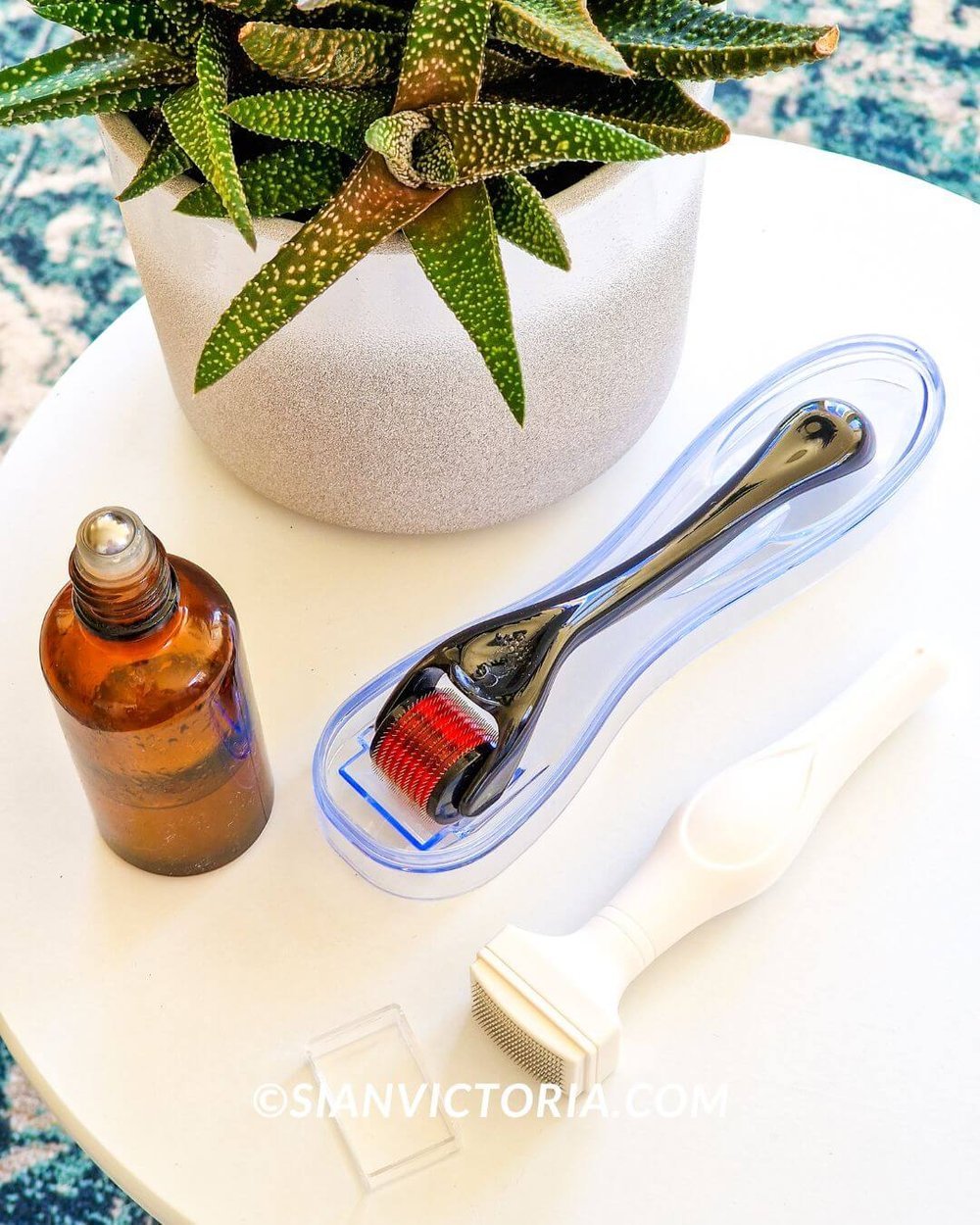
Sian Victoria © - Microneedling, derma stamp and roller
In recent years, an effective tool against hair loss has emerged in the form of derma stamps and derma rolling. These products work brilliantly to stimulate new hair growth, especially on bald patches and receding hair lines.
Derma stamps come in the form of a convenient, handheld device, and boast hundreds of small, microneedles. When stamped across the scalp, the device begins to create microscopic wounds which result in the production of collagen and increased blood flow to the scalp, and the subsequent regrowth of hair.
Microneedling – or collagen induction therapy (CIT) as its known can be done once a week at first to ensure your scalp doesn’t get irritated, and then up to twice a week from the second month until you start to notice hair growth in the stamped or rolled area. They can be cheaply bought for around £15, meaning you can enjoy this miraculous treatment for hair loss without breaking the bank.
Alternatively, derma rollers promote hair growth by being rolled across the scalp, rather than being stamped. Both microneedle tools do the same job. However, the stamp may be more suitable and comfortable to use if you have hair in the areas you’re using, as the roller can easily get caught in the hair. But if you have no hair in the area then using the roller is so much easier to use.
To make derma stamping and rolling even more effective I recommend applying a topical solution to the area before and after. As mentioned at the start I mix minoxidil with a variety of carrier oils and essential plant oils to create my hair-growing formula. The microneedles will then help to push the effective ingredients into the skin where they can get to work.
38. Infrared - Red light therapy

Sian Victoria © - Beurer red light therapy lamp
Red light therapy, or infrared, is a ground-breaking treatment that can be used to treat an incredibly extensive array of issues, such as acne, wrinkles, redness, scars and even sun damage. And, its benefits don’t stop there. In recent years, red light therapy has also been shown to be particularly effective in treating hair loss, notably caused by hereditary reasons.
This form of therapy works by shining red light on the scalp, which penetrates the skin and the hair follicles. The light also increases the production of collagen and capillaries, meaning more oxygen is brought to the scalp which results in the growth of thicker, denser hair. Thanks to its ability to promote regeneration and encourage cellular activity, red light therapy is greatly beneficial in stimulating new hair growth, meaning this treatment might just be the answer to your pattern baldness.
Red light therapy as a treatment for hair loss can be relatively expensive if you have the treatment done professionally, however, if your hair loss is quite severe or just isn’t showing signs of improvement after trying the other remedies on this list, you might want to consider it. It’s scientifically proven to transform hair, with improved hair density, thickness, and length after undergoing the therapy.
Thankfully, if your budget doesn’t accommodate this like mine, you can buy affordable infrared lamps for home use that are marketed towards its well-being benefits – but can still be used for the benefit of hair growth. I use the beurer infrared lamp, there are many others available however for its safety standards I feel this is one of the best options as you’ll often find many cheap unregulated versions which just aren’t worth the risk.
39. Scalp massagers
Another effective hair growth tool is a scalp massager. They are made to stimulate and massage the scalp and are available in a variety of shapes and sizes, including handheld gadgets, brushes, and even electric scalp massager bands. There are many advantages of utilising a scalp massager for hair growth:
Blood Circulation: A scalp massage helps enhance the scalp's blood flow. This increased blood flow provides the hair follicles with nourishment and oxygen, which may encourage hair growth.
Stress and tension reduction: Stress and tension are two factors that can lead to hair loss, and massaging the scalp can help. Since stress has been shown to interfere with the natural cycle of hair growth, lowering stress can aid in promoting stronger hair growth.
Exfoliation: Scalp massagers can also assist in exfoliating the scalp, eliminating dead skin cells, and encouraging healthy skin - healthy hair growth depends on a healthy scalp.
Better absorption: Hair care products, such as the hair-loving plant oils I’ve suggested, can be better absorbed by the skin when it is massaged into the scalp. This can make sure that these products are fully absorbed by the scalp and hair to enhance the effects of the oils.
Stress relief: Using a scalp massager can be a soothing and delightful experience. It can ease stress and encourage relaxation, which is good for one's general well-being and can therefore help to reduce the stress hormone, cortisol that can trigger hair loss.
Although there is little scientific evidence to support the idea that scalp massagers can directly increase hair development, the advantages mentioned above may indirectly help to make hair healthier and possibly encourage growth.
To conclude
So, there you go. That’s the end of my in-depth guide to hair loss and effective treatments to use. If you have noticed pattern baldness, hair thinning or hair loss, you can feel reassured in the fact that there are products and treatments for you. With so many remedies to choose from, see what on this list suits you and try them out – make sure to let me know the results.
As you can tell from this almost 12,000-word guide I’m very passionate and interested in this topic and have done lots of research over the years with these all being my tried-and-tested methods to reduce hair loss.


