28 Best Effective Skincare Ingredients For Acne & Ageing Skin

Sian Victoria © - Pixi, Facetheory, The Ordinary skincare, beauty cabinet
How to prevent acne & reduce premature skin ageing
Noticed some signs of skin ageing on your face? You’ve come to the right place. Although fine lines and wrinkles are a perfectly natural sign of getting older, they aren’t something we particularly want to be prominent. Because of this, the cosmetics market is bursting with anti-ageing skincare products that claim to slow down premature signs of ageing and promote a more youthful appearance for all.
Following on from signs of ageing, breakouts are certainly another common skincare concern many of us especially I am seeking remedies for. Whether it’s a breakout due to a poor diet and lifestyle, using comedogenic ingredients in skincare or because of hormones (something I’ve explained in my hair loss guide), there are plenty of skincare products backed up by dermatologists that are specifically designed to make your acne a thing of the past.
So, with many anti-ageing skincare products and treatments for acne-prone skin on the shelves today, how do we know which products truly live up to their claims when it comes to the ingredients? Fortunately, this post can be your go-to guide – here, I’ve compiled a list of the best tried and tested skincare ingredients and the products that contain them so that you can tackle these skincare concerns.
Here’s a list of the most beneficial ingredients to look out for when you next choose skincare for your acne-prone skin type or to reduce signs of premature skin ageing. These effective ingredients are beneficial for both common skin concerns.
1. Vitamin A – Retinol – retinoids

Sian Victoria © - Facetheory Regena-C Moisturiser M4, The Ordinary Retinol 1% in Squalane
Vitamin A is an incredibly effective nutrient, benefitting several functions in the body including supporting normal vision, growth and the immune system. Additionally, Vitamin A works wonders for the skin. Come in two forms, retinoids are powerful, synthetic forms of vitamin A that often require a prescription, while retinol is less potent, derived from retinoids and is used in several vitamin A skincare products.
So, why is Vitamin A so good for tackling skincare concerns? Stimulating collagen production, fine lines and wrinkles will be less prominent when a topical skincare product involving retinol is applied, while acne is targeted by encouraging cell turnover and preventing clogged pores. Because of these benefits, Vitamin A is a great natural skincare ingredient.
I’ve been using vitamin A skincare products since 2017 and haven’t gone a day without ever since, as you’ll see in my hormonal acne before and after post vitamin A was the answer to my skin concerns and helped me to get rid of painful hormonal acne on my face and jawline caused by a hormonal imbalance. Because of this retinol is an essential ingredient in my skincare as well as in my choice of natural wholefood ingredients to ensure I keep acne at bay and slow down premature skin ageing.
Since being introduced to retinol by Environ skincare over 6 years ago, two products I’ve used in the past two years as they are a lot more budget-friendly are The Ordinary Retinol 1% in Squalane for night-time use and the Facetheory Regena-C Moisturiser M4 for day time wear to ensure my skin soaks up this effective ingredient all day long.
It’s important to note that when using retinoids your skin will be extra sensitive to sun exposure so always ensure you don’t leave the house without applying an SPF face cream. Otherwise, it will have the opposite effect and cause damage to your skin and fuel the ageing process.
I also recommend working your way up to high concentrations of retinol to help your skin build a tolerance, so start with a low dosage such as The Ordinary Retinol 0.2% in Squalane and then progress to a 0.5% retinol> and eventually a 1% retinol and then finally a 2% Granactive Retinoid and 5% Granactive Retinoid over time.
2. Azelaic acid

Sian Victoria © - Facetheory Lumizela Azelaic Acid Serum A15, The Ordinary Azelaic Acid Suspension 10%
Perhaps less recognisable - but just as effective as the other natural ingredients on this list - is azelaic acid. Naturally occurring in grains, this acid’s antimicrobial and anti-inflammatory properties make it a great weapon against signs of ageing and acne on the skin.
Used as an active ingredient in several popular skincare products, azelaic acid gets to work by smoothing out the skin to reveal a more glowing, youthful-looking complexion while reducing dark patches and redness. On top of this, the acid exfoliates the skin and removes dead skin cells and blocked pores to prevent breakouts and acne-causing bacteria.
Two of the most popular skincare ingredients containing Azelaic acid that I’ve used and highly recommend are the Facetheory Lumizela Azelaic Acid Serum A15 and The Ordinary Azelaic Acid Suspension 10%. These products contain high amounts of this effective ingredient and are both from vegan and cruelty-free skincare brands so are a great choice if you are seeking kinder cosmetics that will make a noticeable improvement to your skin.
3. Collagen

Sian Victoria © - Facetheory PolyPep Collagen Boosting Serum S8, Pixi Botanical Collegen
Collagen is imperative in strengthening and providing elasticity to the skin, and although it’s naturally produced within the body, this slows with age. Because of this, fine lines and wrinkles become more prominent as collagen production declines.
Subsequently, collagen plays a key role in many anti-ageing skincare products. When applied topically, the ingredient locks in moisture and improves skin elasticity by stimulating blood flow. An improved more youthful and restored complexion can be achieved when applying collagen skincare, with fine lines and wrinkles being reduced.
You can discover more about this essential ingredient in my vegan collagen skincare and beauty tips post where I share the benefits of using collagen skincare alongside taking collagen supplements and eating foods that will naturally help the body to produce more collagen.
The collagen skincare products I’ve been using consistently over the past 2 years are the Facetheory PolyPep Collagen Boosting Serum S8, Ocuwake Eye Cream EYE1 and the Biovea Vegetarian Collagen supplements. And in the past six months, I’ve added a few Pixi Botanical Collagen products too such as the Pixi Botanical Collagen Tonic, Pixi Volume Sheet Mask, and the Pixi Botanical Collagen Eye Serum.
4. Glycolic acid

Sian Victoria © - Pixi Glow Tonic & Cleansing Gel, Glycolic Acid
A major component of many skincare products, glycolic acid is a highly effective exfoliator that targets visible signs of ageing and breakouts on the skin while removing dry and flaky dead skin cells to create a smoother skin base before applying makeup.
Working hard to unclog the pores, increase cell turnover and dissolve oils, glycolic acid fights active breakouts and prevents the possibility of new acne by transforming the complexion. And, with its ability to boost collagen production, your skin will feel firmer and look smoother and clearer. Plus, it’s incredibly hydrating, meaning it can do all of this without drying out your skin.
As you’ll find in my liquid face exfoliants post where I explain the skin benefits of AHA and BHA’s in more detail, using toners containing glycolic acid has been an essential ingredient I’ve used in my skincare regime for many years.
My favourites based on their effectiveness and for being purse-friendly are the Pixi Glow Tonic and The Ordinary Glycolic Acid 7% Toning Solution.
If you’re seeking effective and affordable skincare, then you may find my dedicated post on The Ordinary skincare for ageing & acne skin helpful too.
5. Vitamin C

Sian Victoria © - Pixi Vitamin C collection, tonic, lotion, serum, cleanser and caviar balm
Vitamin C is an essential vitamin, needed to protect the cells from free radicals and disease, obtained from fruit and vegetables in our diet. However, this vitamin is also incredibly beneficial in tackling skincare concerns.
Particularly effective in combatting visible fine lines and wrinkles, Vitamin C is an active ingredient in skincare and helps to boost collagen production and strengthen the structure of the skin to reduce visible signs of ageing.
On top of this, the vitamin neutralises potentially harmful free radicals such as sun exposure to prevent the possibility of premature skin ageing. This dermatologically backed ingredient should be your go-to if fine lines and wrinkles are plaguing you. However, if like me you have sensitive skin using Ascorbic Acid in skincare may sting your face, so introduce it gradually and dilute it with a moisturiser.
My go-to product is The Ordinary Vitamin C Suspension 23% + HA Spheres 2% helping to provide the skin with an antioxidant boost while brightening and evening out skin tones and reducing signs of ageing. I’ve also enjoyed using many items from the Pixi Vitamin C collection too.
6. Salicylic acid

Sian Victoria © - Pixi Clarity collection, The Ordinary Salicylic Acid 2% Solution
Salicylic acid is a prominent ingredient used in skincare products, particularly for those that target acne and skin texture. As a beta-hydroxy acid, the ingredient works as an exfoliant to encourage cell renewal while stimulating the production of collagen to reduce fine lines and wrinkles while improving the overall complexion when it comes to reducing acne, spots, whiteheads, and blackheads.
When applied topically, the acid has anti-inflammatory properties to reduce swelling, unclog the pores and increase cell turnover, in turn leaving the skin looking smooth, clear and glowing. These exfoliating properties also mean the acid can stimulate collagen production and prevent the sagging of the skin, as well as any prominent wrinkles. It’s no wonder why salicylic acid is the main ingredient in so many skincare products on the market today.
I was first introduced to Salicylic acid by my doctor who prescribed it to me as a teenager over 15 years ago to improve my breakouts, I was also given Benzoyl peroxide years before this. The medicated ointment was effective however it was horrendously drying to the skin and would dry in white patches so it was generally not a nice product to use.
Thankfully, modern alternatives are available to use in the form of The Ordinary Salicylic Acid 2% Solution and an entire skincare range containing the effective ingredient in the award-winning Pixi Clarity Collection formulated to improve acne skin.
The notable items I like to use from the collection are the Pixi Clarity Lotion as well as the Pixi Clarity Toner. I’m also a big fan of the Pixi Clarity Concentrate however it does have a fish-like scent but as it’s best to use this at night it’s not a problem.
7. Grapeseed oil

Sian Victoria © - Biovea Grapeseed oil
Derived from grape seeds, grapeseed oil is a natural ingredient that has an incredible array of benefits for the skin when added to skincare products or used in its 100% pure form.
With anti-inflammatory, antimicrobial and antioxidant properties, grapeseed oil couldn’t be more beneficial for the skin. Treating acne breakouts by unclogging pores and balancing out oil production, the oil also works hard to even out the skin tone and create a glowing complexion.
And, if wrinkles are a skincare concern for you, the natural plant oil fights premature signs of ageing by protecting the skin from sun damage, while also maintaining collagen levels and ensuring the skin remains as strong and flexible as possible.
So, if you have sensitive skin or simply want to try out a product that’s guaranteed to be gentle on the skin yet reap incredible results, grapeseed oil is the one for you. As shown in my how to get rid of hormonal acne post I’ve always used pure grapeseed oil alongside taking grapeseed oil supplements so that my skin is nourished with this skin-loving ingredient from the inside and out.
8. Niacinamide

Sian Victoria © - Facetheory Supergel Oil-free Moisturiser M3, The Ordinary Niacinamide 10% + Zinc 1%
A form of Vitamin B3, Niacinamide works effectively to treat acne thanks to its anti-inflammatory properties, while also working hard to reduce the visibility of fine lines and wrinkles.
Reducing the swelling and redness on the face, the ingredient soothes the complexion while also regulating the production of sebum – excess sebum is a major cause of acne breakouts. As well as fighting off breakouts, applying niacinamide to the face will also stimulate dermal collagen production to plump and firm the skin, while making sure to lock in moisture and keep the skin as hydrated and healthy as possible.
Two effective skincare products I enjoy using that contains Niacinamide are The Ordinary Niacinamide 10% + Zinc 1% and the Facetheory Supergel Oil-free Moisturiser M3 designed for oily skin types like mine that are prone to spots.
9. Seabuckthorn oil

Sian Victoria © - The Ordinary 100% Organic Virgin Sea-Buckthorn Fruit Oil
Extracted from the sea buckthorn plant, sea buckthorn oil is a completely natural yet amazingly effective ingredient that works miracles as a skincare product as well as a dietary supplement or simply drizzled into meals – or in my case adding sea buckthorn powder to breakfasts like overnight oats. I did previously take seabuckthorn oil supplements too.
This gentle ingredient can be used on the face to regulate sebum levels and control excess oil production to ensure new acne breakouts are less likely with its comedogenic rating of 1, while its anti-inflammatory properties soothe the skin and will calm active breakouts.
Even better, the oil can be used to target fine lines and wrinkles. Its rich omega-3 content is notorious for supporting cell regeneration and locking in moisture on the outer layer of the skin while providing antioxidant properties to prevent premature skin ageing and enabling the skin to soak up the benefits of omega 7 – a unique omega that you can’t get from many skincare products.
This natural plant oil rich in palmitoleic acid (omega 7) can only be found in macadamia oil and olive oil. However, since these two oils have a comedogenic rating above 2, they are not ideal for skin types prone to breakouts. Therefore, Seabuckthorn oil is one of the best omega-rich skincare products to use for those looking to reduce breakouts and reduce the appearance of ageing skin.
The Ordinary 100% Organic Virgin Sea-Buckthorn Fruit Oil is my preferred skincare item containing this effective ingredient. However, it’s important to note this orange oil will stain clothes, especially pillowcases as I’ve experienced far too many times when I forget I have it on.
So, to benefit from this oil, I recommend applying it to the skin when you have a couple of hours of downtime at home, as your face will be an Oompa Loompa shade of orange.
10. Hyaluronic acid

Sian Victoria © - The Ordinary Natural Moisturizing Factors + HA, Hyaluronic Acid 2% + B5
Commonly used in skincare today, hyaluronic acid is a brilliantly effective natural skincare ingredient that tackles several pesky skincare concerns. Although this acid occurs naturally in the body to provide elasticity and moisture to the skin and tissue, you can apply this acid topically to target your anti-ageing and acne concerns.
Its excellent moisturising properties mean the acid plumps and locks in moisture on the skin and targets dry and dull areas on the face. In turn, the acid increases the flexibility and firmness of the skin to reduce the appearance of fine lines and wrinkles.
Additionally, hyaluronic acid reduces excess sebum production and therefore prevents blocked pores and the possibility of further breakouts. Ultimately, the ubiquitous benefits of this acid make it a great addition to your skincare regimen.
You’ll often find Hyaluronic Acid (HA) added to many skincare products on the market, however, my favourite products containing HA are The Ordinary Natural Moisturizing Factors + HA and Hyaluronic Acid 2% + B5 serum.
11. Aloe Vera

Sian Victoria © - Erbology aloe vera leaf juice
Aloe vera is no stranger to the health and beauty market, being used topically to treat sunburn, and wounds and even as an effective shaving cream or soap. Its benefits don’t stop there – pure aloe vera gel can also be used to treat acne, fine lines, and wrinkles.
Following research, the natural ingredient is effective in removing acne-causing bacteria thanks to its antibacterial properties. As well as eliminating bacteria on the face, aloe vera has incredible anti-inflammatory properties meaning the face will be as smooth and healthy as possible. Your fine lines and wrinkles will also be targeted when using aloe vera topically, with it increasing collagen and elastin production to make the skin appear plumper and more youthful.
This wonderful plant-based ingredient is a staple in the health and beauty market, you’ll find it added to many skincare products to reap its benefits. Products that I use often that contain aloe vera are the Facetheory Freshening Face Wash. You may also find it as a replacement for water on the ingredients list in many other skincare items.
As you’ll find in my vegan supplement brands post I like to benefit from this natural plant-based ingredient in supplement and drink form too alongside applying it topically.
12. Green tea
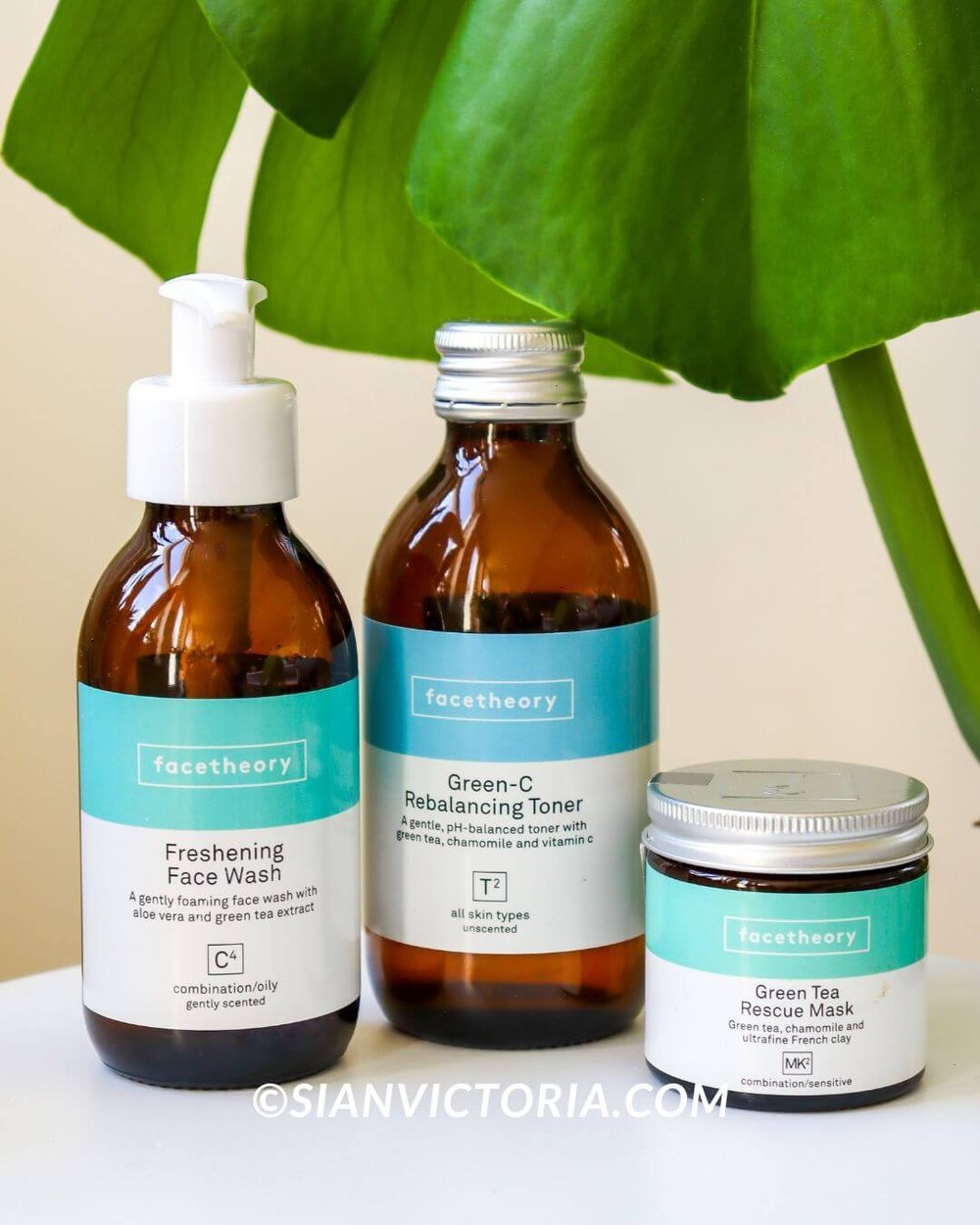
Sian Victoria © - Facetheory Freshening Face Wash, Green-C Rebalancing Toner and Green Tea Rescue Mask
Green tea is a powerful antioxidant rich in polyphenols. Besides enjoying the skin-loving benefits of this natural ingredient in the form of a drink it can also be applied topically to the face and found as an added ingredient in many skincare products on the market today.
This world-renowned tea boasts many health benefits but also works wonders on the skin thanks to its high vitamin content and antioxidant properties. Controlling sebum production levels, the tea also works to reduce inflammation and eliminate acne-causing bacteria to make your breakouts a thing of the past. Additionally, drinking green tea will prevent premature ageing caused by sun damage, with its antioxidant properties slowing the ageing process on the skin.
I’ve been promoting the beauty benefits of green tea since 2015 and today it is still an essential ingredient in my herbal loose tea pantry. If you are unsure about purchasing a new green tea skincare product to try out topically, why not drink green tea instead to reap its skincare benefits?
I prefer to nourish my skin from the inside and out by drinking green tea daily as well as applying skincare products that contain green tea, such as the Facetheory Green-C Rebalancing Toner and Green Tea Rescue Mask to benefit from this natural plant-based ingredient as much as possible.
13. Rosewater

Sian Victoria © - Pixi Rose water tonic, Rose ceramide cream
Another plant-based ingredient I’ve been promoting for almost a decade is the skin-loving benefits of rosewater. Recognised for its anti-inflammatory and antimicrobial properties, rosewater is a gentle, natural ingredient that is now commonly used in many skincare products on the market today.
With the ability to reduce redness and prevent swelling, active breakouts will be soothed while new breakouts are prevented as the rose water removes excess oil and unclogs the pores. You can also enjoy anti-ageing benefits when applying rosewater to the face, with its antioxidant content neutralising the free radicals that are recognised for causing fine lines and wrinkles. Perfect for sensitive skin, it’s clear to see why rosewater is integral in the skincare industry.
As you’ll discover in my summer skin at home and glowing skincare routine posts rosewater is an essential step in my everyday beauty regime. You can either use it as a standalone toner or benefit from this floral essence in the form of many popular skincare products, such as Pixi Rose Infused collection.
14. Lavender essential oil

Sian Victoria © - Pixi Skintreats Retinol & Jasmine collection
Although lavender essential oil is perhaps best recognised for its ability to soothe and improve relaxation – its benefits don’t stop there. Not only can you use lavender oil to improve your night’s sleep, but you can also use this natural ingredient in your skincare routine.
Its antiseptic properties mean the oil kills acne-causing bacteria on the face, which also unclogs pores and reduces inflammation and redness. You can even treat acne scarring as this ingredient promotes new cell and tissue growth, leaving your face looking clearer and smoother than ever.
And, if fine lines and wrinkles are a concern for you, lavender oil’s antioxidant content will protect the skin from free radicals such as sun exposure – a major cause of premature skin ageing.
To benefit from this plant-based ingredient I mix the lavender essential oil with a carrier oil such as grapeseed, argan or hemp oil and then apply it topically to the face. As it’s an essential oil it’s important to ensure you always dilute it with a carrier oil.
15. Tea tree essential oil

Sian Victoria © - Rosemary, tea tree, lavender and peppermint essential oils
A staple natural ingredient in the skincare scene, the tea tree oil has brilliant antiseptic, anti-inflammatory and antibacterial properties that make it a powerful ingredient in skincare products. Especially when it comes to preventing blemishes and minimising pores.
When applied topically, tea tree oil’s high antioxidant content protects the skin from free radical damage, while also removing sunspots. In turn, fine lines and wrinkles on the face will be minimised. In addition to this, the ingredient controls excess oil production and kills acne-causing bacteria to make breakouts a thing of the past. With so many benefits, it’s evident why tea tree essential oil is used to address so many skincare concerns.
Just like lavender, tea tree is an essential oil so to reap the benefits of this effective plant-based ingredient make sure to dilute it with a carrier oil. I recommend purchasing a roller ball cosmetics bottle, ideally made of glass and in a shade of amber to mix drops of essential oils and carrier oils so that you can conveniently apply it to the face to reap the benefits of these skin-loving plant oils.
Making an at-home DIY facial oil is a great way to enjoy a more sustainable beauty routine and enables you to make effective skincare products without the need for unnecessary added extras that can be found in mainstream beauty products that don’t benefit the skin.
16. Peppermint essential oil

Sian Victoria © - Peppermint essential oils and spearmint tea
Peppermint essential oil has incredible antimicrobial and antiseptic properties that make it highly effective in targeting inflammation, acne, and visible signs of ageing.
Its ability to eliminate acne-causing bacteria on the skin and regulate sebum production levels means peppermint oil reduces active breakouts and prevents new acne from forming. As well as unclogging pores and soothing irritated skin to reduce acne, the oil boasts anti-ageing properties.
Its rich Vitamin A and antioxidant content means the oil can neutralise free radicals and reduce the appearance of fine lines and wrinkles. Just like green tea, you can benefit from this ingredient in the form of drinking peppermint or spearmint tea as well as applying it topically to the face when diluted.
17. Vitamin E

Sian Victoria © - Pixi Hydrating Milky collection, serum, lotion, peel, tonic
Vitamin E is a powerful antioxidant, recognised for its ability to support the immune system and assist the brain and blood. However, the vitamin also works brilliantly to tackle several skincare concerns. When added to skincare products and used topically, it can reduce skin inflammation and prevent free radicals and UV exposure that cause premature skin ageing.
Plus, Vitamin E can increase cell regeneration and therefore reduce the appearance of acne scars, while also soothing present breakouts thanks to its anti-inflammatory properties. A major component in many cosmetic products, Vitamin E’s skincare benefits shouldn’t be overlooked. When seeking skincare containing vitamin E look out for its chemical name on the ingredients list, it is known scientifically as tocopherol or alpha-tocopherol.
To reap the benefits of this essential vitamin I use the Facetheory Argan Oil, which contains high amounts of vitamin E. I’ve been using argan oil haircare for years but never thought to use it on my face until I discovered it has a 0 rating on the non-comedogenic scale. Ever since argan oil has been an essential step in my beauty routine.
18. Rosehip oil & Rosemary essential oil

Sian Victoria © - Pixi Rose oil blend, Neals Yard Remedies Wild Rose AHA toner, The Ordinary Rose Hip seed oil
Rosemary is an essential oil and has several benefits when used on the skin. Used to detoxify the skin, the oil removes toxins and cleanses the complexion to leave your face feeling fresher and smoother than ever. Its antibacterial properties mean rosemary oil clears the pores and fights acne-causing bacteria, making this ingredient a brilliant weapon against breakouts.
Rosehip is a carrier oil, extracted from the seeds of the rose bush. Just as effective as rosemary essential oil, rosehip oil is packed full of skin-loving vitamins and fatty acids that are particularly effective in regenerating the skin–boosting collagen production and elasticity, rosehip oil fights signs of ageing and neutralises free radicals.
On top of this, rosehip oil has anti-inflammatory properties that reduce acne scarring and regulates sebum production, meaning it works effectively to combat signs of ageing and breakouts. It’s also rich in vitamins A, C and E as well as linoleic and linolenic acids which are essential fatty acids that help to hydrate skin cells.
If you want to use vitamin A in your skincare routine but have a youthful teen or twenty-something-year-old skin I’d recommend using rose hip before progressing to retinol form. To benefit from this flowering plant oil, I drink rosehip tea and apply The Ordinary 100% Organic Cold-Pressed Rose Hip Seed Oil to my face.
19. Borage seed oil

Sian Victoria © - The Ordinary 100% Organic Cold-Pressed Borage Seed Oil
Borage seed oil boasts essential fatty acids Linoleic Acid and GLA that, as well as working hard to support the immune system, also have several benefits when used topically on the skin.
The fatty acids in the oil regulate sebum production and dilute it, meaning the possibility of new breakouts is reduced. The oil also has beneficial anti-inflammatory properties, meaning the complexion will be soothed and any active breakouts will be treated.
You can even use borage seed oil to slow down the visible ageing process; gamma-linolenic acid in the oil prevents moisture loss, promotes new cell growth, and maintains skin elasticity, meaning your face will be left looking more youthful, clearer, and smoother.
Borage seed oil is another plant oil that I originally bought to benefit my scalp health and promote hair growth. I avoided using it on my face as some report this oil to be non-comedogenic and other findings say it has a comedogenic rating of 2.
Anyway, on a whim, I decided to test out the oil on my acne-prone skin alongside non-comedogenic oils such as hemp, argan, squalene and tea tree etc and thankfully it didn’t break me out in spots, so I’ve been using it ever since. If you fancy adding this skin-loving oil to your regime I recommend The Ordinary 100% Organic Cold-Pressed Borage Seed Oil.
20. Charcoal

Sian Victoria © - The Ordinary Salicylic Acid 2% Masque, Green People charcoal and bentonite clay purifying face mask
If you’ve been reading my blog since the beginning, you’ll know I’ve been utilising the benefits of charcoal in skincare since before 2010.
Charcoal is an extremely popular ingredient within the skincare market especially when it comes to facial masks, and for good reason. Its porous properties mean it's brilliant at detoxifying the skin to leave behind a clearer, purer complexion.
These porous properties can even be used to target acne, with the ingredient unclogging pores and absorbing acne-causing toxins and bacteria. In turn, acne on the skin will be reduced and the possibility of new breakouts is minimised as the complexion is purified.
The rich mineral content of charcoal also helps to stimulate collagen and elastin production to slow down the premature ageing process and reduce the appearance of fine lines and wrinkles on the skin.
If you want to enjoy tightened pores, clearer skin, and a more youthful complexion, why not try out charcoal skincare products? My favourite is The Ordinary Salicylic Acid 2% Masque. When using a charcoal face mask, I highly recommend using a deeply nourishing and hydrating moisturiser afterwards as it can dry out the skin since its absorbed excess oils.
21. Bentonite clay

Sian Victoria © - Apple cider vinegar, rose water, bentonite clay powder
Used as a key ingredient in many facial masks, just like charcoal bentonite clay powder has similar skin-loving benefits. I often mix together a homemade diy mask of apple cider vinegar, rosewater and bentonite clay and apply it to my scalp for its hair growth benefits. It’s a brilliant natural resource that should certainly be considered for your beauty routine.
With the ability to absorb toxins, the clay will remove impurities on the skin and remove excess oil and sebum responsible for causing breakouts. Enjoy tightened pores and a smoother skin texture after using the clay. As well as tackling breakouts, the ingredient regenerates cells and increases collagen production to maximise the elasticity and smoothness of the skin, leaving behind a clearer, firmer complexion.
Say goodbye to impurities with this incredible detoxifying ingredient, used as a popular skincare remedy for centuries. To benefit from both charcoal and bentonite clay I recommend the Green People charcoal and bentonite clay purifying face mask.
22. Argan oil

Sian Victoria © - Facetheory Argan Oil
Derived from the kernels of the argan tree, argan oil has been used in the cosmetic market for years, especially in the haircare industry.
With antibacterial and anti-inflammatory properties, argan oil regulates sebum production levels and eliminates acne-causing bacteria. As well as treating active breakouts, the oil increases cell turnover to heal previous acne scarring, leaving behind a cleansed and smooth complexion.
To add to this, argan oil can also be used to tackle fine lines and wrinkles thanks to its fatty acid and antioxidant content. Fighting free radicals and sun damage, locking in essential moisture, and strengthening the outer layer of skin, the plant oil minimises signs of ageing and prevents new wrinkles from forming. What’s not to love?
As previously mentioned argan oil has a high concentration of vitamin E, so I love to use the Facetheory Argan Oil to reap the most benefits of this wonderful natural ingredient. Within a short time of using it, I noticed a visible difference in my skin, especially when it came to reducing redness in my cheeks helping to even out my skin tone.
23. Squalane oil

Sian Victoria © - The Ordinary 100% Plant-Derived Squalane, Rose Hip, Sea-buckthorn oil
Squalane oil is an emollient that plays an active role in several skincare products today, perhaps most recognised for its hydrating properties.
Replenishing essential moisture and regenerating cells, squalene oil minimises the appearance of fine lines and wrinkles. additionally, the high antioxidant content of squalene oil means premature skin ageing by way of sun damage is reduced. You can even use squalene oil to treat acne. As a non-comedogenic oil, the ingredient doesn’t clog pores and eliminates acne-causing bacteria thanks to its antimicrobial properties.
With the ability to detoxify, lock in moisture and slow down the ageing process on the skin, you should certainly consider trying out squalene oil in your skincare routine. I use The Ordinary 100% Plant-Derived Squalane for day use and for night-time I benefit from this oil by using Retinol 1% in Squalane so that I benefit from two of my essential skin-loving ingredients in one.
24. Hemp Oil

Sian Victoria © - Hemp oil
Hemp oil has emerged as a versatile and highly effective skincare product, especially for individuals dealing with acne-prone and ageing skin concerns. Extracted from the seeds of the hemp plant, this natural oil boasts a wealth of skin-nourishing components that contribute to a radiant and youthful complexion.
For those battling acne, hemp oil's anti-inflammatory properties come to the rescue. Inflammation is a common trigger for acne breakouts, and the rich combination of omega-3 and omega-6 fatty acids in hemp oil helps to reduce redness, swelling, and irritation. By soothing the skin, hemp oil aids in the healing process of existing acne blemishes and promotes a calmer, clearer complexion.
Often, people with oily skin like me may hesitate to use oils on their face, fearing exacerbation of sebum production. However, hemp oil is non-comedogenic, meaning it won't clog pores or lead to greasiness. Instead, it helps regulate the skin's natural oil production, promoting a healthier balance. With consistent use preferably at bedtime, hemp oil can visibly reduce excessive oiliness and maintain a shine-free, yet well-moisturised appearance.
Hemp oil's impressive arsenal of antioxidants, including vitamin E and beta-carotene, acts as a powerful defence against premature ageing. Environmental factors like pollution and UV rays generate harmful free radicals that damage skin cells and lead to fine lines and wrinkles. Hemp oil's antioxidants neutralise these free radicals, protecting the skin from oxidative stress and preserving its youthful glow.
Overall, Hemp oil aids in promoting collagen synthesis, which helps rejuvenate the skin while being gentle, non-irritating, and suitable for all skin types. So, this natural plant-based oil may be the solution for many. It also does wonders to encourage hair regrowth when applied to the scalp.
25. Burdock Oil

Sian Victoria © - Burdock oil & tea
Burdock oil, which is derived from the roots of the Arctium lappa plant, is a remarkable natural elixir that offers an abundance of benefits for acne-prone and ageing skin. This herbal oil has been utilised in traditional medicine and skincare for centuries due to its therapeutic properties and its capacity to promote skin health.
The most prominent benefit of burdock oil is its exceptional anti-inflammatory characteristics. Inflammation is a considerable contributor to the development of breakouts in those with acne-prone skin, and burdock oil is effective in calming and reducing redness and swelling related to acne. Furthermore, its antibacterial qualities further help to combat acne-causing bacteria, leading to a clearer, healthier complexion.
The oil also acts as a mild astringent, helping to tighten and tone the skin. This can be extremely beneficial for those with oily or acne-prone skin, as it minimises the appearance of pores and curbs excessive sebum production, thus providing a more balanced complexion.
Burdock oil is also a fantastic source of antioxidants, such as phenolic acids, quercetin, and luteolin, making it an effective protection against premature ageing. Antioxidants neutralise free radicals which damage skin cells and contribute to ageing signs like wrinkles and sagging skin, aiding in keeping the skin youthful.
The oil also contains numerous essential nutrients, including vitamins B-complex, E, and C, as well as minerals like iron, zinc, and potassium. These nutrients feed and nourish the skin, promoting its overall health and vibrancy. The oil's emollient quality additionally helps to lock in moisture, guaranteeing the skin is adequately hydrated and supple.
In addition to its many benefits for acne, burdock oil has calming effects on several skin conditions. It can be beneficial in easing symptoms of eczema, psoriasis, and dermatitis, soothe irritation and promote skin healing, while also providing a gentle, natural skincare solution.
26. SPF

Sian Victoria © - Bobbi Brown SPF Face Lotion
SPF is an essential element of any skincare regimen, playing an integral role in protecting skin health and deterring premature ageing. Although anti-ageing products are advantageous for targeting specific skin problems, incorporating SPF is critical because unprotected exposure to UVA and UVB rays can neutralise the effects of such products, causing accelerated ageing.
The sun releases hazardous UVA and UVB rays that permeate the skin's surface, resulting in harm to collagen and elastin fibres. Collagen offers skin firmness while elastin grants its elasticity. When these fibres are impaired, the skin becomes fragile, leading to the formation of wrinkles, fine lines, and sagging. SPF serves as a defensive barrier, obstructing harmful UV rays from inflicting damage to the skin and in turn restraining premature ageing.
Though anti-ageing products may aid in managing existing indications of ageing, prevention is the ideal solution. Wearing SPF daily defends the skin from the sun's hazardous effects, mitigating the chance of acquiring age spots, patchy skin tone, and other sun-induced blemishes. Continuous use of SPF can greatly lessen the requirement for harsher anti-ageing treatments in the future.
Aside from its anti-ageing advantages, SPF is paramount in reducing the chances of skin cancer. Lengthy and unprotected sun exposure is a noteworthy factor for skin cancer such as melanoma, basal cell carcinoma, and squamous cell carcinoma. By regularly utilising SPF, individuals can protect themselves from damaging UV radiation and reduce their possibility of skin cancer.
Choose wide-spectrum SPF products that shield the skin from both UVA and UVB rays. UVA rays are responsible for permanent skin harm and ageing, whereas UVB rays cause sunburn. A broad-spectrum SPF offers complete defence against both types of damaging rays, preserving the skin's health and appearance.
SPF must be worn throughout the year, disregarding the weather. Even on gloomy days, destructive UV rays can pierce the clouds and touch the skin's surface. In addition, UV rays can reflect off surfaces like snow, water, and sand, magnifying their influence on the skin. As such, applying SPF as a regular habit is essential for ongoing protection.
27. MSM supplements (Methylsulfonylmethane)

Sian Victoria © - Silica & MSM supplements
MSM supplements, short for Methylsulfonylmethane, have gained popularity as a potential remedy for both acne and ageing skin concerns. MSM is a naturally occurring sulfur compound found in various foods and plants and is known for its beneficial effects on skin health when taken as a supplement.
Acne is often associated with inflammation, leading to redness, swelling, and discomfort. MSM has notable anti-inflammatory properties that can help reduce the inflammatory response in acne-prone skin. By reducing inflammation, MSM may aid in soothing and calming active acne breakouts, promoting a clearer and more even complexion.
Collagen is a crucial protein responsible for maintaining skin firmness and elasticity. As we age, collagen production naturally declines, leading to the appearance of fine lines and wrinkles. MSM supplements may play a role in supporting collagen synthesis, helping to improve skin's elasticity, and reducing the visible signs of ageing. By promoting collagen production, MSM can contribute to a more youthful and plump appearance of the skin.
MSM is believed to possess antioxidant properties that can neutralize free radicals, which are unstable molecules that cause oxidative stress and contribute to skin ageing. By reducing oxidative damage, MSM supplements can help protect the skin from premature ageing caused by environmental factors, such as UV radiation and pollution.
As with any supplement, it's crucial to consult with a healthcare professional before adding MSM to your daily regimen, especially if you have existing health conditions or are taking other medications. MSM supplements can be a valuable addition to your skincare routine, but individual results may vary. When used thoughtfully and appropriately, MSM may contribute to clearer, healthier, and more youthful-looking skin, providing a potential boost to your overall skin health journey.
28. DIM (Diindolylmethane)

Sian Victoria © - Skin Accumax (DIM) supplements
Diindolylmethane, commonly referred to as DIM supplements, has been widely discussed as a possible treatment for acne and the signs of ageing skin. DIM is a naturally occurring compound obtained from cruciferous vegetables such as broccoli and cauliflower, and when consumed as a supplement, it may help to promote hormonal balance and skin health.
Due to its hormone-balancing effect, DIM might aid in the metabolic process of androgens (male hormones, like testosterone) to forms which are more helpful and less powerful, which could help to diminish the frequency and intensity of breakouts caused by hormonal imbalances.
In addition, DIM exhibits antioxidant and anti-inflammatory characteristics that could be beneficial for the skin's overall health. It could reduce oxidative stress, which is a contributing factor to premature ageing, as well as reduce inflammation. DIM could also assist with collagen production, an essential protein for skin elasticity, thus enhancing skin elasticity and softening the visible signs of ageing.
Finally, DIM supplements could support the body's natural detoxification process, helping to get rid of toxins and impurities that can result in skin eruptions.
To conclude
There we go – a collection of some of the best and most effective skincare ingredients that can be used to improve your skincare concerns. As mostly natural ingredients, these oils, clays and formulas can be used on even the most sensitive of skin types and will completely transform your skin and beauty routine to make acne and wrinkles visibly reduced with consistent use.