Sian Victoria © - Srebreno beach, Croatia
Beach Selfie Guide: How to Get the Perfect Shot
Taking photos at the beach sounds easy enough until you actually try it. The sun is in your eyes, your hair is blowing everywhere, and somehow the sea looks amazing in real life but completely washed out in your photos. I have definitely found that getting a nice beach selfie can take a little more effort than you might expect.
The good news is that you do not need a fancy camera or someone who knows all about photography to get some lovely shots. Your phone is perfectly capable of taking great beach photos, provided you know a few simple tricks.
Whether you are heading off on holiday, spending the afternoon by the sea, or looking for some nice photos to share on Instagram, a little thought about lighting, angles, and where you stand can make all the difference.
I have put together 12 tips for taking a good beach selfie in sunlight, including how to find the best lighting, get more natural poses, and make the most of your surroundings. These are all simple things you can try without turning your beach day into a full photography session.
1. Find the Best Light for Your Beach Selfie
One thing that can make or break a beach selfie is the lighting. You might think a bright, sunny day would be perfect for photos, but direct sunlight can actually make them harder to get right. It can leave you squinting, create dark shadows under your eyes, and make your skin look a little washed out.
If you have the time, try taking your photos in the morning or later in the afternoon. The light tends to be softer, and everything has a warmer glow. This is particularly lovely if you are taking holiday photos with the sea in the background.
You have probably heard people talk about golden hour. This is the period shortly after sunrise or before sunset, when the sunlight takes on a softer, golden colour. It is one of my favourite times for photography because it can make even a fairly ordinary beach look beautiful.
Of course, you cannot always plan your day around the weather or the time of sunset. If you happen to be on the beach at midday, try finding a spot with some natural shade or turn slightly away from the strongest sunlight.
A small change in where you stand can make a surprising difference to how your photos turn out.
2. Stop Squinting Into the Sun
We have probably all taken a photo where we look as though we are struggling to keep our eyes open. Bright sunlight is not exactly flattering when you are trying to get a relaxed holiday selfie.
Rather than facing the sun directly, try turning your head slightly to one side. You can still get plenty of light on your face without having to stare straight into it.
Another option is to position yourself so the sunlight falls gently across your face from the side. This can add a little definition to your features and create a more natural-looking portrait.
If the sun is particularly strong, look just beside the camera instead of directly into the lens. You could also take a few photos while looking out towards the sea. These often look less posed, which is nice if you prefer a more relaxed style of photography.
Sunglasses are another obvious but useful option. They make bright conditions much more comfortable and can look great in beach photos, especially when paired with a sun hat or a simple summer outfit.
The main thing is to find a position where you feel comfortable. There is no point trying to get the perfect shot if you are too busy squinting to enjoy it.
3. Experiment With Different Camera Angles
If your selfies never seem to look quite right, try changing the angle before you start blaming your camera or your appearance; there’s only so much a flawless primer can do to get you selfie-ready.
The way you hold your phone can make a big difference. For a close-up beach selfie, holding your phone slightly above eye level and tilting it down a little can create a flattering perspective while still showing some of the scenery behind you.
Try not to hold your phone too close to your face, either. Smartphone cameras can make features look slightly different when you photograph yourself from very close up. Extending your arm a little further away can help create a more balanced picture.
It is worth taking a few photos from different angles rather than sticking to the same position every time. Turn your head slightly, move your shoulders, or change the direction you are looking. You might find that a small adjustment makes the whole picture look better.
For full-body beach photos, I would suggest asking someone to take the picture from a little further away or using your phone's timer and a tripod. This gives you more room in the frame and lets you include the beach, sea, and sky without everything feeling cramped.
You do not have to get the angle right straight away. Take a few test shots and see which ones you prefer.
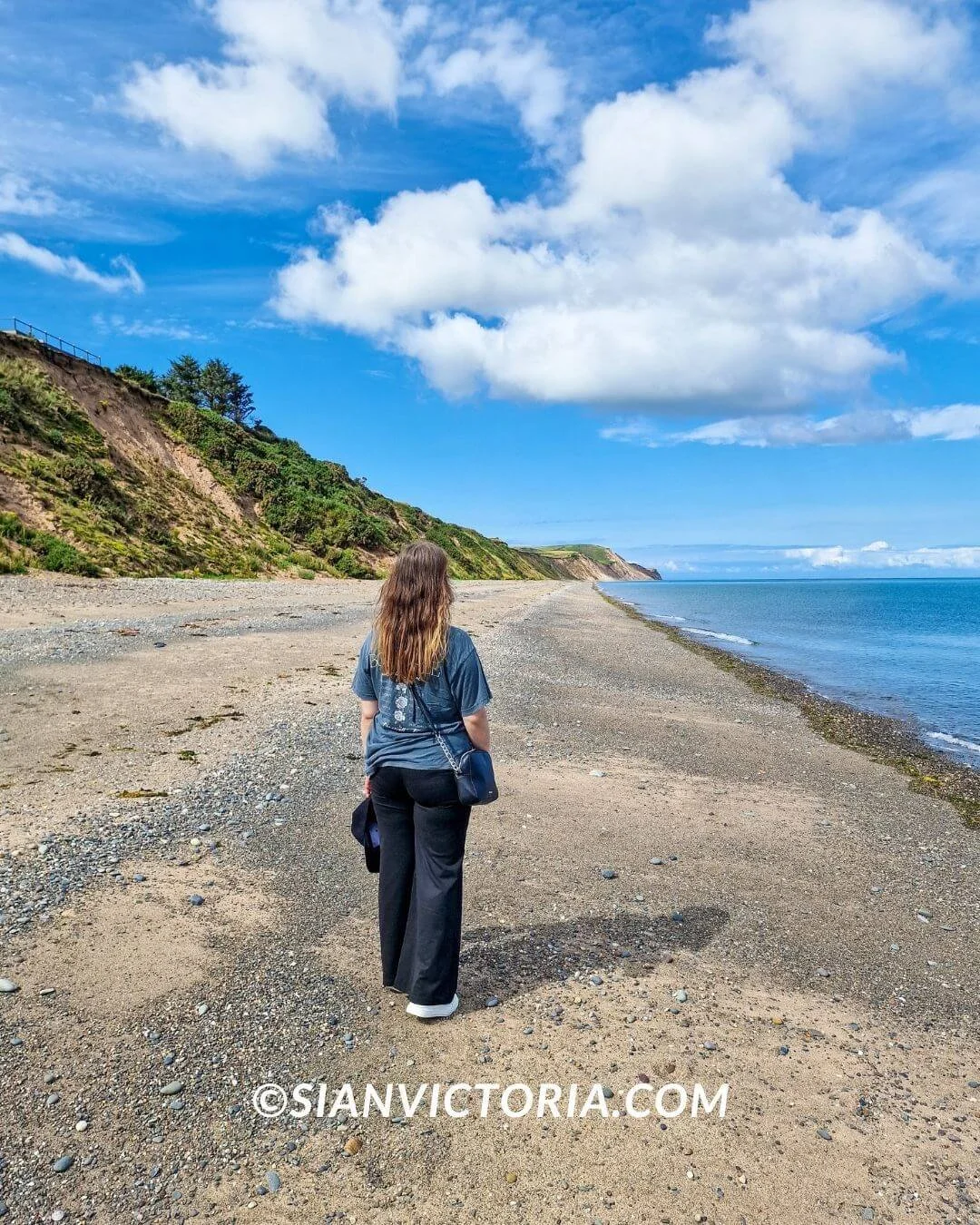
Sian Victoria © - Walking along the beach
4. Make the Most of the Beach Scenery
One of the best things about taking photos at the beach is that you already have a beautiful backdrop. There is no need to find a fancy location when you have the sea, sand, and coastline around you.
Before taking your selfie, have a quick look at what is behind you. Sometimes moving just a few steps to the left or right can give you a much nicer view.
You might want the turquoise water behind you, a stretch of golden sand, or some interesting cliffs in the distance. If you are visiting somewhere particularly scenic, try including a little more of the landscape rather than cropping everything tightly around your face.
I also like the idea of mixing up the types of photos you take. A close-up selfie is nice when you want a picture of yourself, but a wider shot can capture more of the place you are visiting.
Think about the shoreline, too. Standing at an angle to the water can create a more interesting composition than having a completely straight line running behind your head.
If you are taking photos for Instagram or a travel blog, having a mixture of portraits and wider beach shots can make your pictures feel more varied.
Just remember to check the horizon before taking the photo. A wonky sea line can be surprisingly distracting, even when everything else looks lovely.
5. Use Your Phone's Timer for More Natural Photos
You do not have to hold your phone in your hand to take a good beach selfie. In fact, using the timer can give you much more freedom to move around and experiment with different poses.
Most smartphones have a timer setting that gives you a few seconds to get into position before the photo is taken. You can use a small tripod or place your phone somewhere stable, provided it is secure and away from the water.
This works particularly well if you want to take full-body photos or include more of the scenery. You can stand back, walk towards the camera, or look out to sea without having to stretch your arm out in front of you.
Try taking a few photos while moving naturally rather than standing completely still. You could walk along the sand, turn towards the camera, or brush your hair away from your face.
Sometimes the photos taken between poses turn out better than the ones where you are trying your hardest to look good. A short burst of pictures can also help you capture a natural smile or a moment when the wind catches your hair.
Just make sure your phone is somewhere safe from people and the elements. Sand, saltwater, and expensive electronics are not a great combination, so it is worth checking your setup before stepping away.
6. Edit Your Photos Without Going Overboard
Once you have taken your photos, a little editing can help bring out the colours and make everything look closer to how you remember it. You do not need to download lots of different apps or spend ages adjusting every detail. The editing tools already on your phone are often enough.
Start by checking the brightness and contrast. If the photo looks a little dull, a small adjustment can help. You might also want to add a touch of warmth to bring out the golden tones in the sand and sunlight.
If the sea looks less vibrant than it did in person, increasing the saturation slightly can help. Just be careful not to overdo it, as bright blue water and overly orange skin can make the whole photo look unnatural.
Cropping or using the removal brush are both very useful photography tools too. You can remove distracting objects around the edges, straighten the horizon, or change the composition so your face sits in a better position.
When it comes to skin editing, I think it is best to keep things fairly natural. There is nothing wrong with adjusting the lighting, but heavy filters and smoothing can make your face look completely different. If you feel that the photos are a little unflattering, there are photo editors that can make your face look thinner, but try not to overdo it.
The idea is to improve the photo, not change everything about it. A few small adjustments are usually all you need to bring out the best in your beach selfies.

Sian Victoria © - Overlooking Man o' War Cove, Dorset
7. Keep Your Poses Simple
Knowing how to pose for a photo can feel a little awkward, especially when you are taking pictures on your own. Sometimes you end up standing there wondering what to do with your hands or trying the same smile over and over again.
My advice would be to keep things simple and do something you would naturally do at the beach. You could walk along the shoreline, look out at the sea, adjust your sunglasses, or tuck your hair behind your ear. These little movements give you something to do and make the photos feel less staged.
If you are standing still, try putting your weight on one leg and turning your body slightly to the side. This often looks more relaxed than facing the camera squarely. You could also sit on your beach towel, stand with your feet in the shallow water, or hold your hat while looking towards the camera. There are plenty of options without having to copy complicated poses you have seen online.
Do not feel that you need to smile in every photo, either. A little smile, a candid expression, or a picture of you looking away can all work nicely. The important thing is to find poses that feel comfortable for you. If you are constantly thinking about what your face or body is doing, it will probably show in the photo.
8. Embrace a Little Wind in Your Hair
Anyone who has spent time at a British beach will know that the weather does not always cooperate with your plans. You can arrive with your hair looking lovely and end up looking as though you have been standing in a wind tunnel ten minutes later, with knotted hair feeling impossible to brush out.
Rather than fighting every little gust, try working with it. A gentle breeze can actually make beach photos look more natural, particularly when your hair moves slightly in the sunlight. Turn towards the wind and take a few photos while looking out to sea. You could also bring your hair over one shoulder or tuck one side behind your ear if it keeps falling across your face.
If it is particularly windy, a loose braid, ponytail or bun might be easier. You can always let your hair down again when the wind settles. It is worth keeping a hair tie and a small comb in your beach bag, especially if you are planning to take photos throughout the day.
I would not worry too much about every strand being in place, though. Beach photos do not need to look perfectly styled, and a slightly windswept look can be part of their charm. Besides, you are at the beach to enjoy yourself. Spending the whole time trying to keep your hair perfect would take some of the fun out of it.
9. Get to Know Your Phone Camera
You do not need to be a photography expert to get better results from your phone. A few small adjustments can make your beach selfies look clearer and more balanced.
First, give your camera lens a quick wipe before taking photos. It sounds like a very basic tip, but fingerprints and sunscreen can leave your pictures looking hazy, especially when the sun is shining directly into the lens.
Next, tap your face on the screen so your phone knows where to focus. Many smartphones also let you adjust the exposure by moving a slider next to the focus point. If your face looks too dark against a bright background, try increasing the exposure slightly. If the sand looks almost white or your skin appears washed out, lower it a little.
You might also want to experiment with HDR, which stands for high dynamic range. This feature can help your phone balance the bright sky with darker areas in the same photo.
Portrait mode is another option for close-up selfies. It can soften the background and make your face stand out, although it does not always work perfectly around loose hair or complicated backgrounds.
Have a play with the settings before you start taking your main photos. Once you know what your phone can do, you will find it much easier to get the results you want.

Sian Victoria © - Standing on a beachfront balcony
10. Add a Few Beach Accessories
Sometimes it is the little details that make a photo more interesting. A pair of sunglasses, a straw hat, or a simple linen shirt can add a bit of personality without making the picture look as though you have planned an entire photoshoot.
Sunglasses are particularly useful when the sun is bright, and they work well if you want a relaxed, summery look. Try taking a few photos with them on and a few without to see which you prefer. A hat can also be useful because it provides some shade for your face. Just check that the brim is not casting a heavy shadow across your eyes.
If you are wearing a beach cover-up, try letting it move naturally in the breeze. The same goes for a loose shirt or dress, as a little movement can make a photo feel more spontaneous. You could even hold your sunglasses or a hat in your hand if you are struggling to find a comfortable pose.
There is no need to buy anything specifically for your photos. Use whatever you already have with you and choose accessories that suit your usual style. The aim is to capture the feeling of a day at the beach, rather than make your photos look overly arranged.
11. Play Around With Reflections on the Water
If you want to make your beach photos a little more interesting, have a look at how the sunlight falls across the water. On a calm day, the shallow water near the shoreline can reflect the sky and create a lovely effect around your feet. Standing in the water can also add a little depth to your photos, particularly when the sea is clear.
You could try taking a portrait with the waves gently washing around your ankles or position yourself so the sunlight sparkles on the water behind you. Reflections can work particularly well in the early morning or late afternoon, when the light is softer, and the colours are a little warmer.
If you are photographing directly towards the sun, keep an eye on the exposure. Reflections can be very bright, and your camera may struggle to capture the detail in both your face and the water. Do not worry if the sea is not perfectly calm, either. Ripples and moving waves can add texture and make the photo feel more natural.
Just be sensible about where you stand. Check the tide and avoid slippery rocks or areas where waves could catch you off guard. You can get some lovely photos without venturing very far into the water. Never risk your safety for the gram; it's not worth it!
12. Take Plenty of Photos and Enjoy Yourself
My last tip is probably the simplest one. Do not put too much pressure on yourself to get the perfect picture. It is easy to compare your photos with the beautiful beach portraits you see on Instagram, but you rarely see all the attempts that went into getting those shots. People try different angles, move around to find better lighting, and take plenty of photos before choosing their favourites. So, there is no reason you cannot do the same. And honestly, so many photos on the gram these days are fake, so don’t overthink it.
Take a few close-up selfies, try some wider shots, and experiment with looking at the camera or away from it. You might find that the photo you like most is one you would never have planned.
If you are visiting somewhere new, remember to capture the scenery as well. The coastline, the colour of the water and the little details that make the place special are all part of the memory.
I would also avoid checking every photo immediately after taking it. It can become a bit of a distraction, especially when you keep retaking the same picture because something looks slightly different from how you imagined it. Take your photos, enjoy the beach, and have a proper look through them afterwards.
Some of the nicest pictures are the ones where you are laughing, looking away, or simply enjoying the moment rather than trying to look perfect.
To conclude
Taking a good beach selfie in sunlight does not need to be complicated. A few small changes to your lighting, camera angle, and position can make a real difference, even if you are only using your phone.
Also, make sure you have enough phone storage before you begin, because there is nothing more annoying than taking lots of photos on location and suddenly being notified of insufficient mobile storage and having to organise your files in the middle of a photoshoot.
Try taking photos when the sunlight is softer, avoid looking directly into bright sunshine, and experiment with different angles until you find what works for you. Make use of the scenery, keep your poses natural, and do not be afraid to take a few extra pictures.
If the wind is blowing or the sun is stronger than expected, do not let it spoil your plans. Some of the best beach photos have a slightly windswept look or capture a moment that was never meant to be posed.
You will also get better with practice. The more photos you take, the easier it becomes to work out which lighting, angles and settings you like best. Whether you are taking holiday selfies for Instagram, updating your blog or simply keeping a few memories of a day by the sea, the most important thing is to enjoy yourself.
You do not need every photo to be perfect. Sometimes, a picture that captures a lovely day and brings back good memories is worth far more than one that has been carefully edited and posed.