Tips on Choosing the Right Facial Self-Tanner for Your Skin Type
*Product bought by me
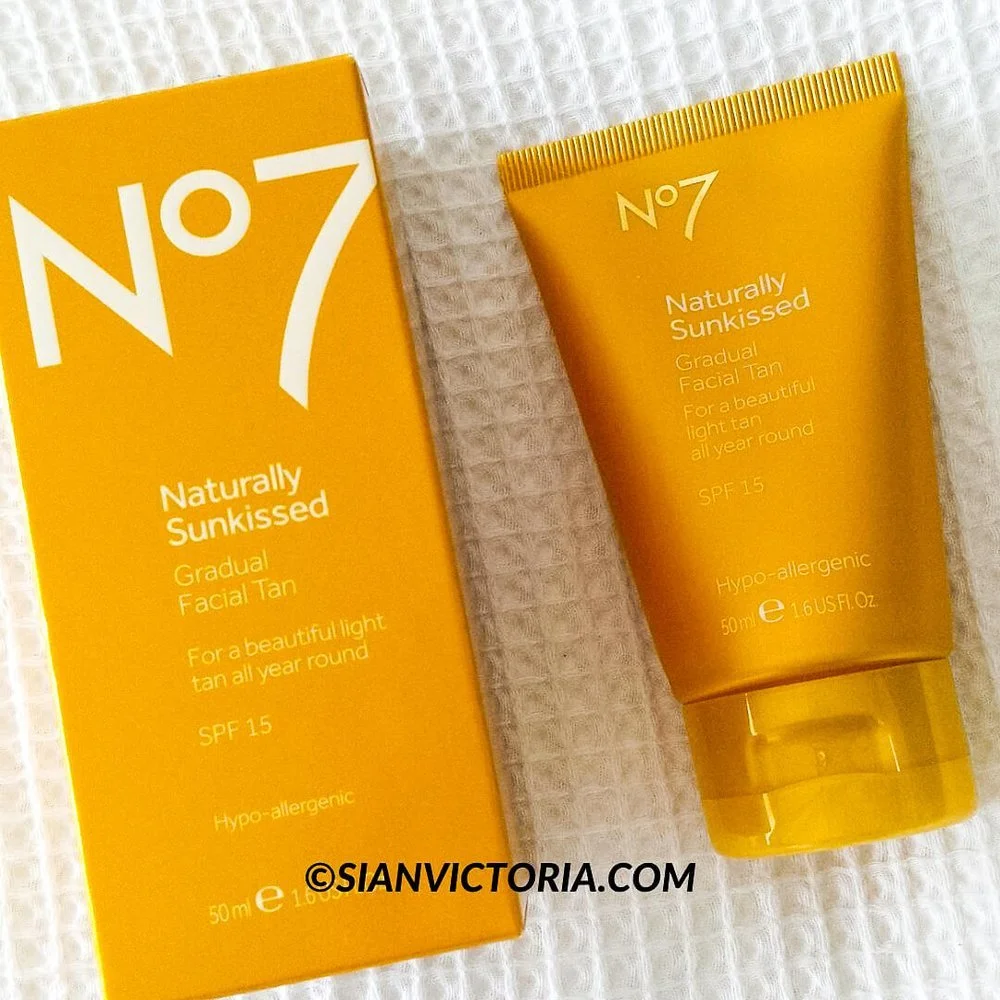
Sian Victoria © - No7 Gradual Facial Tan Lotion SPF15
Guide to Picking the Best Facial Fake Tan: How to Tan Your Face
Self-tanning products have gained popularity as a means of achieving a radiant, sun-kissed complexion. However, it is crucial to select a facial self-tanner that caters to your unique skin type. Doing so not only guarantees a natural-looking tan, but also prevents any potential skin irritation or breakouts.
In this blog post, we will provide valuable tips on selecting the ideal facial self-tanner for your specific skin needs. Whether you possess dry, oily, sensitive or combination skin, continue reading to discover the perfect self-tanner to suit your skin's individual requirements.
Understanding Your Skin Type
Selecting the ideal facial self-tanner for your skin is vital, and to do that, it is crucial to comprehend your skin type. Every skin type has its unique characteristics and requires different care. Hence, we have broken down the different skin types and their traits to help you get to know your skin better:
1. Dry Skin: Dry skin often appears flaky or dull and feels tight. It lacks moisture and may be susceptible to rough patches. Dry skin necessitates additional hydration to maintain a healthy complexion. So when picking a facial tanner go for moisturising products that provide hydration.
2. Oily Skin: Oily skin is prone to producing excess sebum, leading to a shiny or greasy appearance. It is susceptible to enlarged pores and more prone to acne and breakouts. Oily skin types require lightweight products that do not clog pores or worsen oiliness. So, when choosing a facial tan oily skin types should look for oil-free formulas that are lightweight and will not clog pores.
3. Sensitive Skin: Sensitive skin gets irritated easily and reacts to particular components or environmental factors. It may look red, blotchy, or vulnerable to inflammation. Sensitive skin types need gentle, fragrance-free products to reduce the likelihood of irritation. For this reason, pick fragrance-free and hypoallergenic alternatives.
4. Combination Skin: Combination skin involves a mix of oily and dry areas. The T-zone, which consists of the forehead, nose, and chin, usually is oily, while the cheeks and other areas might be dry or normal. Combination skin types need products that can balance oil production without dehydrating the skin. Therefore, choose products that cater to both oily and dry areas.
By understanding your skin type, you can pick a facial self-tanner that meets your particular requirements. Keep in mind that understanding your skin type is the first step towards achieving a perfect and natural-looking tan. It will help you select the appropriate products and ensure that your skin remains healthy and glowing.
Factors to Consider When Choosing a Facial Self-Tanner
When deciding on a facial self-tanner, it's important to take into account several key factors to ensure you get the best possible outcome for your skin type. Here are some critical aspects to bear in mind:
- Ingredients: The first step is to inspect the ingredients list and opt for self-tanners that are free from harsh chemicals and irritants. Instead, choose products that feature natural and nourishing ingredients such as aloe vera, vitamin E, or green tea extract.
- Shade: The shade of the self-tanner is also crucial in creating a natural and complimentary look for your skin tone. If you have fair skin, select a lighter shade to avoid an unnatural or overly dark look. On the other hand, if you have medium to dark skin, go for a deeper shade to enhance your complexion.
- Application: The application process of your self-tanner is equally important. Choose a formula that provides a smooth and effortless application process. You should also consider your preference for a lotion, gel, or mousse texture.
- Drying Time: Consider the drying time of your self-tanner, particularly if you have a busy schedule or limited time for application. While quick-drying formulas may be more convenient, slower drying options provide more time for blending and achieving a uniform finish.
- Longevity: The duration of your tan is another factor to take into account. Certain self-tanners provide a temporary tan that fades away after a few days, while others offer a more prolonged result. There's also instant and gradual tan types, so choose the product that aligns with your desired tan duration.
- Fragrance: Finally, pay attention to the fragrance of your self-tanner. While some products have a strong scent that lingers on the skin, others are fragrance-free or have a pleasant smell. Pick the product that best suits your preference and won't irritate your senses.
By taking into account these essential factors, you can choose a facial self-tanner that not only matches your skin type but also produces the best results for a seamless and natural-looking tan.
Recommended Facial Self-Tanners for Different Skin Types
To ensure a natural-looking and radiant tan that complements your skin type, there are various facial self-tanners to choose from. Here are some expert tips for selecting the right self-tanner based on your skin type:
1. Dry Skin: Moisturising and hydrating self-tanners with hyaluronic acid and aloe vera can help replenish moisture, preventing flakiness and patchiness.
2. Oily Skin: Lightweight and oil-free formulas with mattifying ingredients like clay or silica can control shine and avoid clogging pores, reducing breakouts.
3. Sensitive Skin: Hypoallergenic and fragrance-free self-tanners with natural or organic ingredients are a safe bet for avoiding irritation and redness.
4. Combination Skin: Consider using a self-tanner formulated for combination skin or customisable coverage options. Use a lighter self-tanner on oily areas and a more hydrating one on dry areas.
Ultimately, picking the appropriate facial self-tanner for your skin type is crucial to achieving a healthy and protected tan.
How to Apply a Facial Self-Tan Correctly
Achieving a flawless and natural-looking facial tan relies heavily on the application process. To ensure your self-tanning experience is a success, follow these tips for applying a facial self-tan correctly.
- Prep your skin: Start by exfoliating your face to remove any dead skin cells, allowing for a smooth and even application. Focus on areas prone to dryness, such as the forehead, nose, and chin. Be sure to also moisturise any dry patches before applying the self-tanner.
- Use a light hand: Apply the self-tanner in small amounts, working in circular motions. Start from the centre of your face and blend outwards towards your hairline, ears, and neck. Be careful around your eyebrows and hairline to avoid any dark or uneven patches.
- Don't forget your neck: To create a seamless look, extend the self-tanner down to your neck, blending it in gently. This will prevent any stark contrast between your face and neck, giving you a more natural appearance.
- Wash your hands: After applying the self-tanner, wash your hands thoroughly to avoid staining your palms. Pay extra attention to the areas between your fingers and around your nails.
- Be patient: Allow the self-tanner to dry completely before touching your face or applying any makeup. This will prevent smudging and ensure an even result.
Remember, practice makes perfect. If you're new to self-tanning, start with a lighter formula and gradually build up to your desired tan. With a little patience and the right technique, you'll be able to achieve a radiant and sun-kissed complexion.
Taking Care of Your Skin Post-Self-Tan
After achieving a beautiful sun-kissed complexion through facial self-tanning, it is crucial to care for your skin properly to preserve its radiance. Follow these essential tips for post-self-tan skin care:
- Keep your skin moisturised by applying a hydrating moisturiser. This prevents dryness or patchiness and prolongs the life of your tan.
- Avoid over exfoliating your skin post-self-tan to prevent fading your tan prematurely. Instead, focus on gentle cleansing and moisturising.
- Even with a tan, it is vital to shield your skin from harmful UV rays by applying a facial broad-spectrum sunscreen with an SPF of 30 or higher. This helps to prevent sun damage and maintain skin health.
- Maintain an even complexion by using a gradual tanning lotion or a specific touch-up self-tanner to boost certain areas as your tan naturally fades.
By following these post-tan care tips, you can ensure a long-lasting and flawless complexion. Remember that proper care is essential for enjoying your beautiful tan for as long as possible.
Best Drugstore Face Fake Tan SPF Lotion
Having learnt the correct method of applying a self-tan to your face and identifying the most appropriate product for your skin type, here is my review of a drugstore face tanner that I have personally selected based on my skin type, which can often fit into all categories.
If you're in search of other facial self-tanning products, you may find my review of the Utan & Tone Self Tan useful.
No7 Gradual Facial Tan Lotion SPF15 - Review
In my pursuit of a natural-looking tan, I turned to Garnier Summer Body Gradual Tan lotion which I reviewed in my post on how to apply self-tan on the body. However, I hesitated to use it on my face due to its oily consistency. To bridge the gap between my newly tanned body and face, I searched for a natural facial tanner and stumbled upon No7 Naturally Sunkissed Gradual Facial Tan, which boasts a SPF 15 and excellent reviews. Being a fan of No7 beauty products, I decided to give it a try.
After showering and exfoliating, I apply both the Garnier body lotion and No7 facial tanner to achieve an even tan. While the facial tanner is slightly greasy, I don't mind as I usually apply it on days when I don't have to leave the house. So far, I've only experienced a few whiteheads and no major breakouts after a couple of weeks of using it, which makes me quite pleased with the results.
The addition of the facial tanner has allowed me to wear less foundation, and on days when I'm just running errands, I simply apply a tinted BB cream. It's a relief not having to wear heavy makeup, especially in the hot summer months. In addition, the gradual tanner has evened out my skin tone, which has boosted my confidence in leaving the house with less coverage.
To understand the importance of wearing SPF and the potential harm of not doing so, you can refer to my before and after Environ skincare results to see the extent of sun damage on my face after years of neglecting SPF.
*SHOP THE POST
Here are some tips for achieving your perfect sun-kissed look with facial self-tanner:
- If you have dry skin, use a hydrating tanning lotion with hyaluronic acid for a radiant, flake-free tan.
- For oily skin, try a lightweight tanning gel for a matte finish.
- If you have sensitive skin, use a fragrance-free tan mist with aloe vera to soothe and nourish your skin.
- To achieve a gradual tan, customise your glow with self-tanning drops.
- If you're in a rush, try a self-tanning sleeping mask to get a beautiful tan while you sleep.